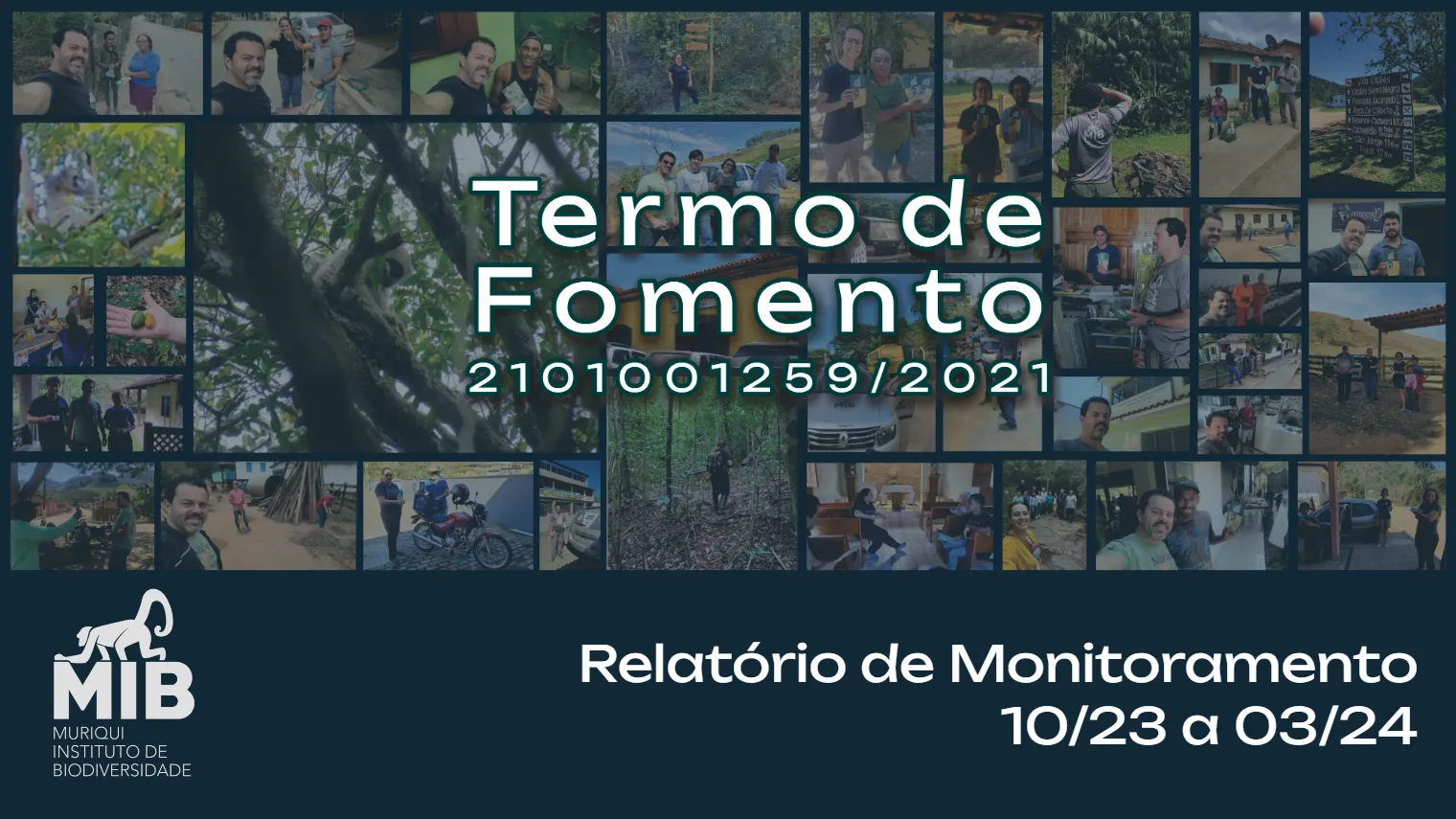
Funding Agreement with IEF/MG – Report from 10/23 to 03/24
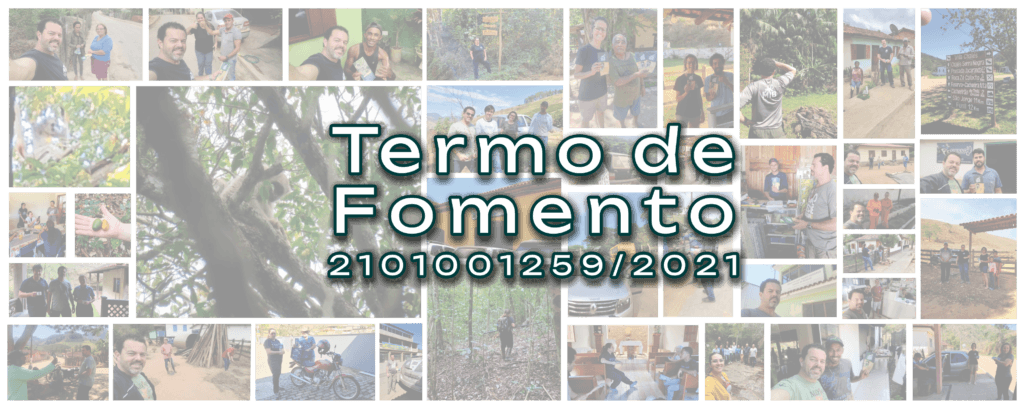
Period: October 2023 to March 2024
Team in Charge: Marcello Silva Nery and Fernanda Pedreira Tabacow (Muriqui Instituto de Biodiversidade)
Progress in the Search for Muriquis
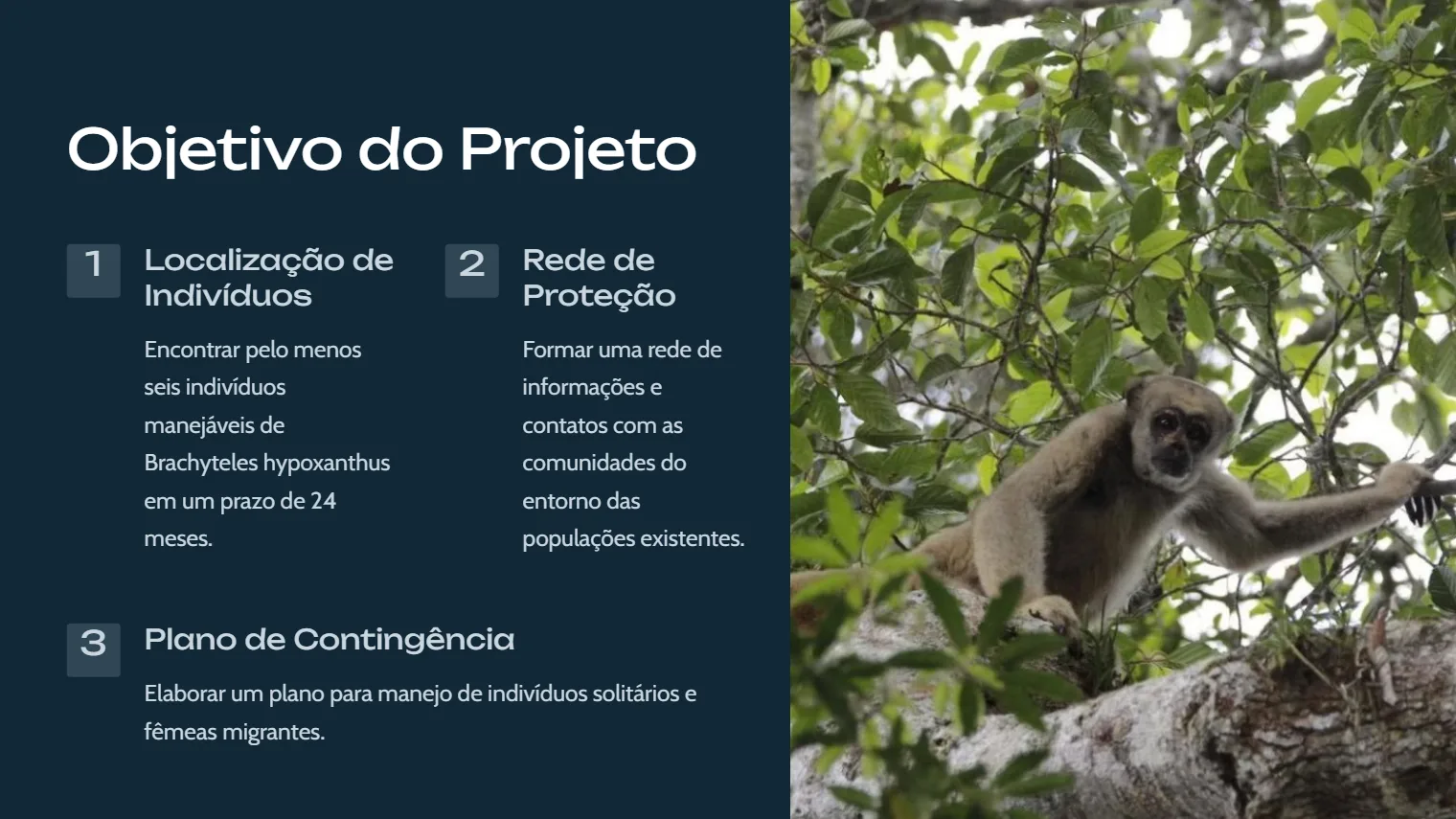
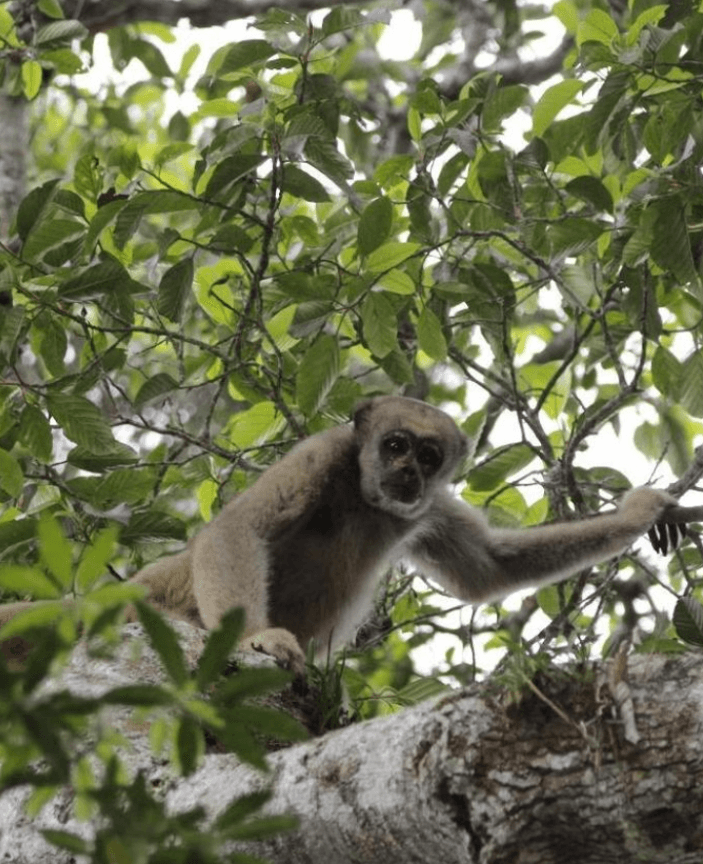
The Muriqui Project continues to advance its mission to protect the northern muriqui (Brachyteles hypoxanthus), one of Brazil's most threatened primate species. During the second semester of activities, the Muriqui Instituto de Biodiversidade team stepped up the search for isolated individuals and significantly expanded the Pro-Primate Citizen Network, now also known as “Rede Muriqui” (Muriqui Network).
This second monitoring report presents the results obtained between October 2023 and March 2024, a period marked by important discoveries and by stronger institutional and community partnerships.
New Discoveries: A Significant Step Forward
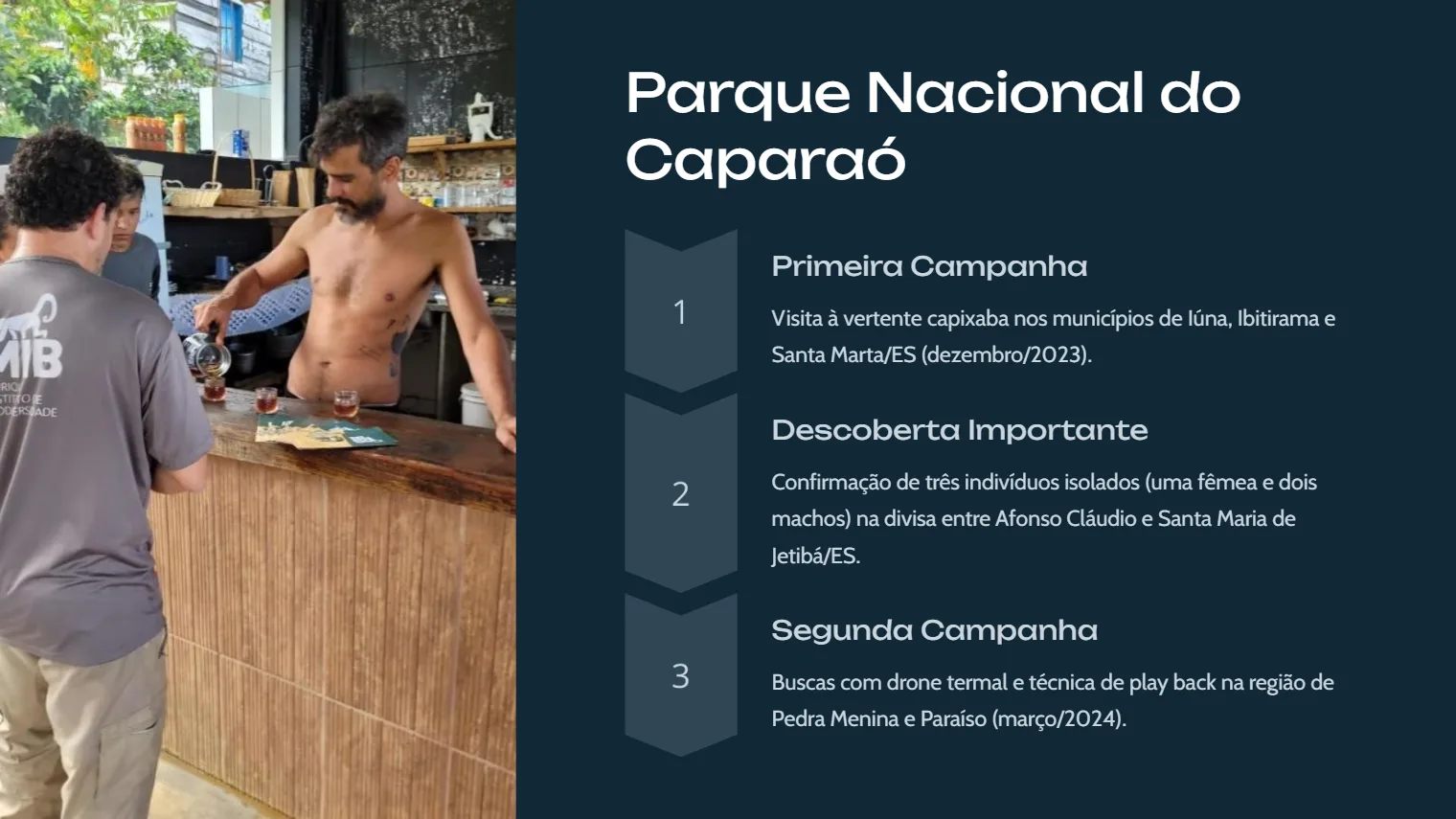
One of the most important discoveries of this period was the confirmation of three isolated northern muriqui individuals (one female and two males) on the border between the municipalities of Afonso Cláudio and Santa Maria de Jetibá, in Espírito Santo. Together with the two individuals already identified in Mata de Peçanha during the previous period, the project has now located five of the six manageable individuals set as the target for March 2025.
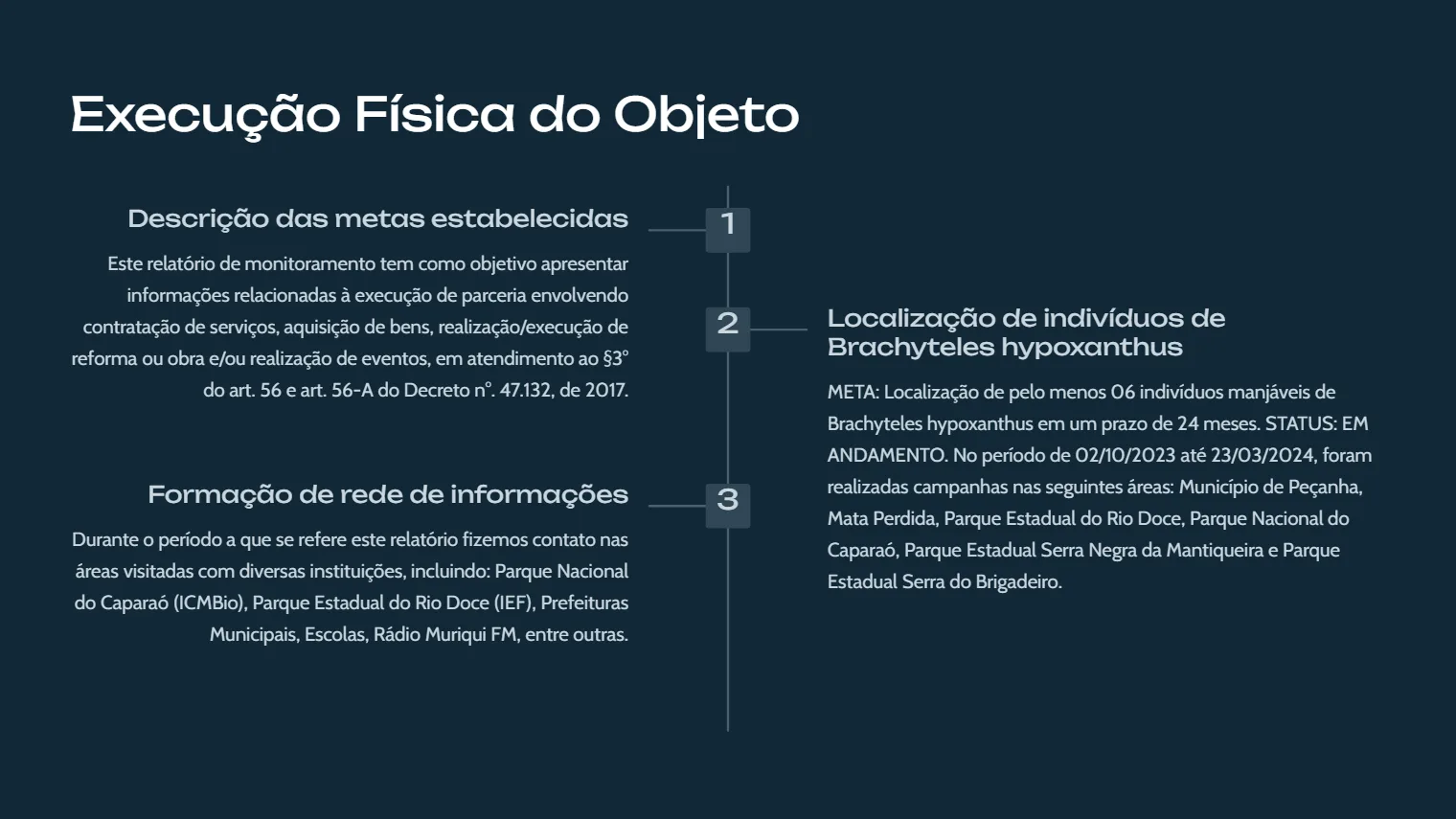
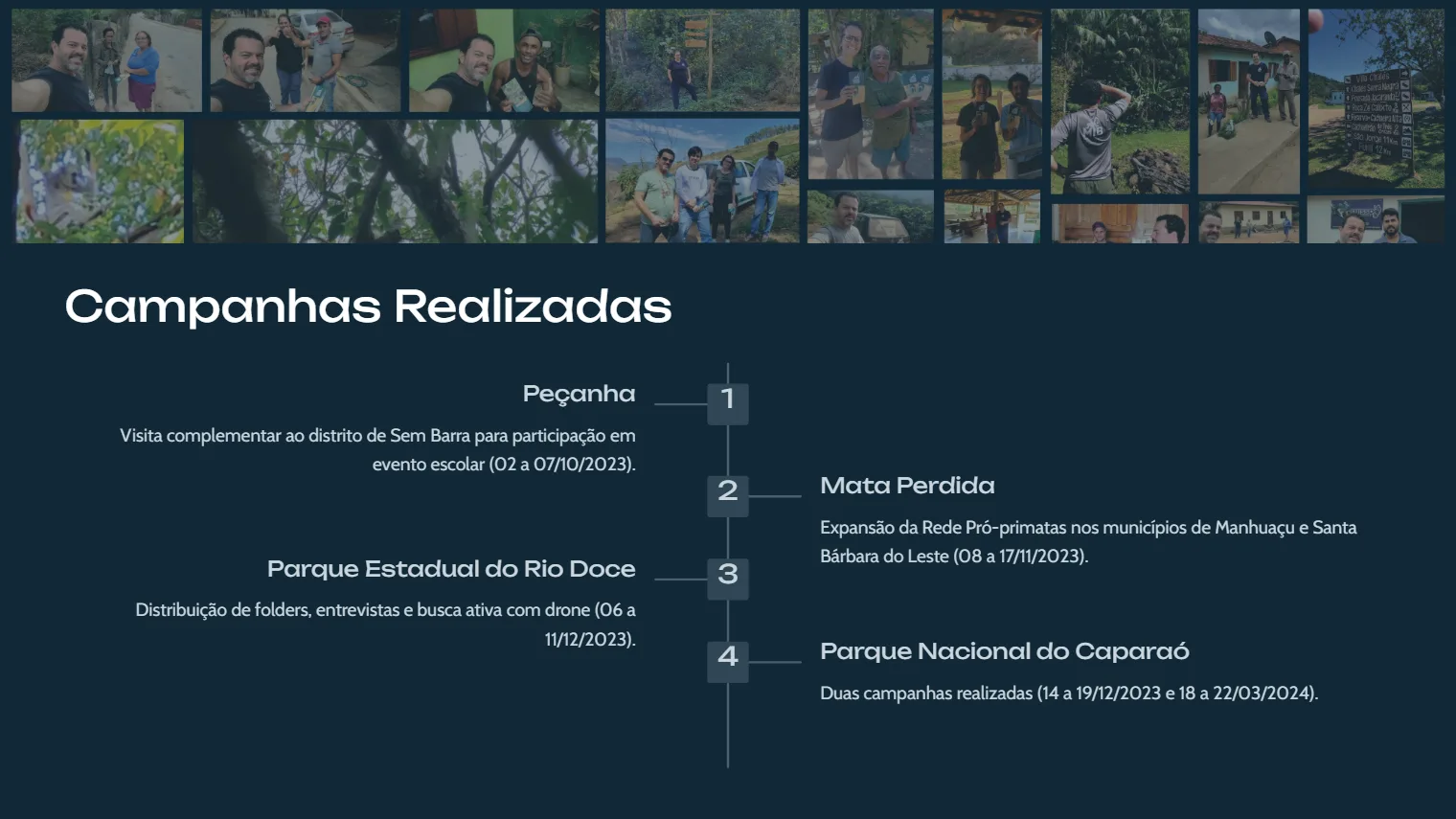
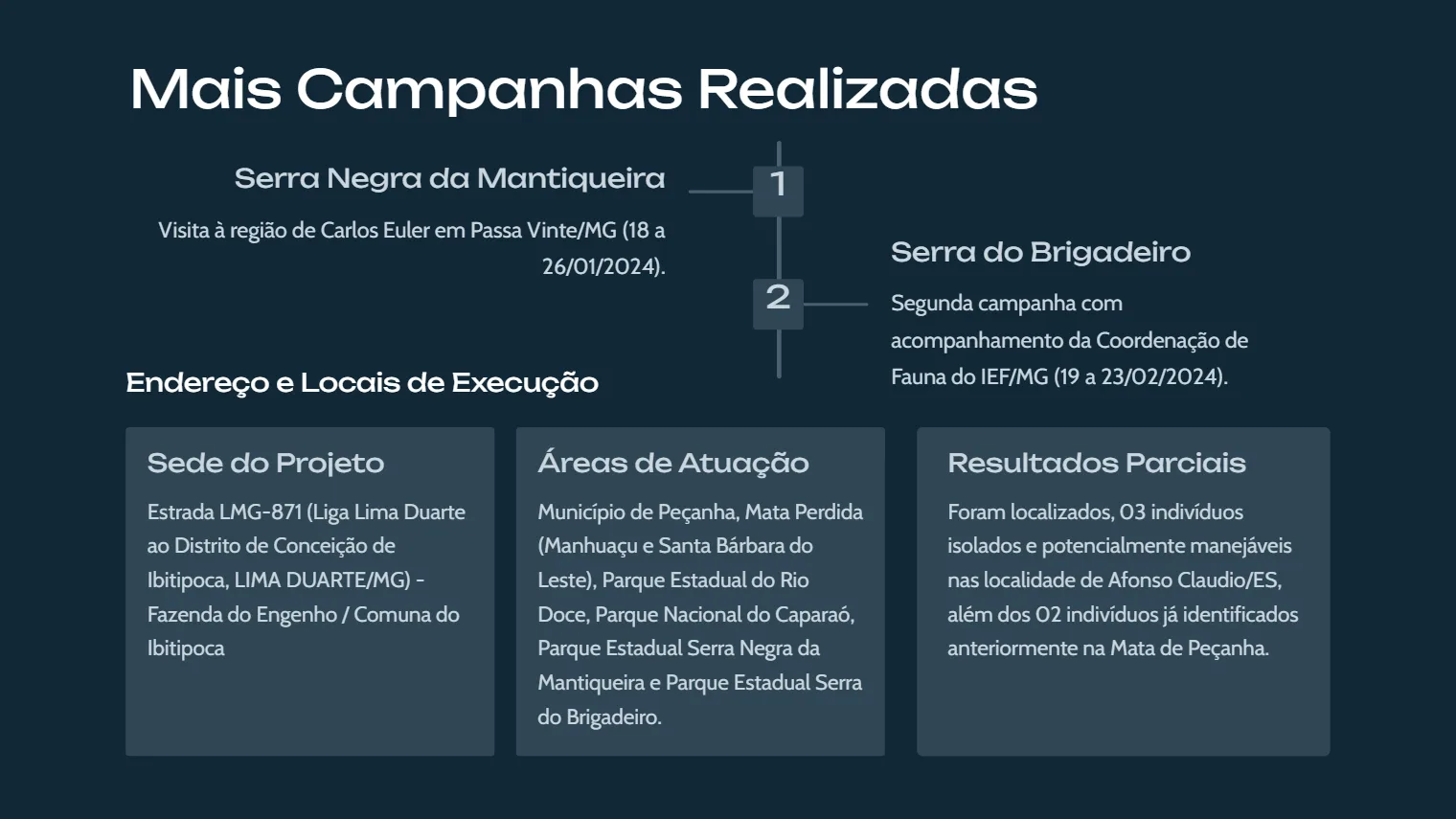
Field campaigns were extended to new areas, including:
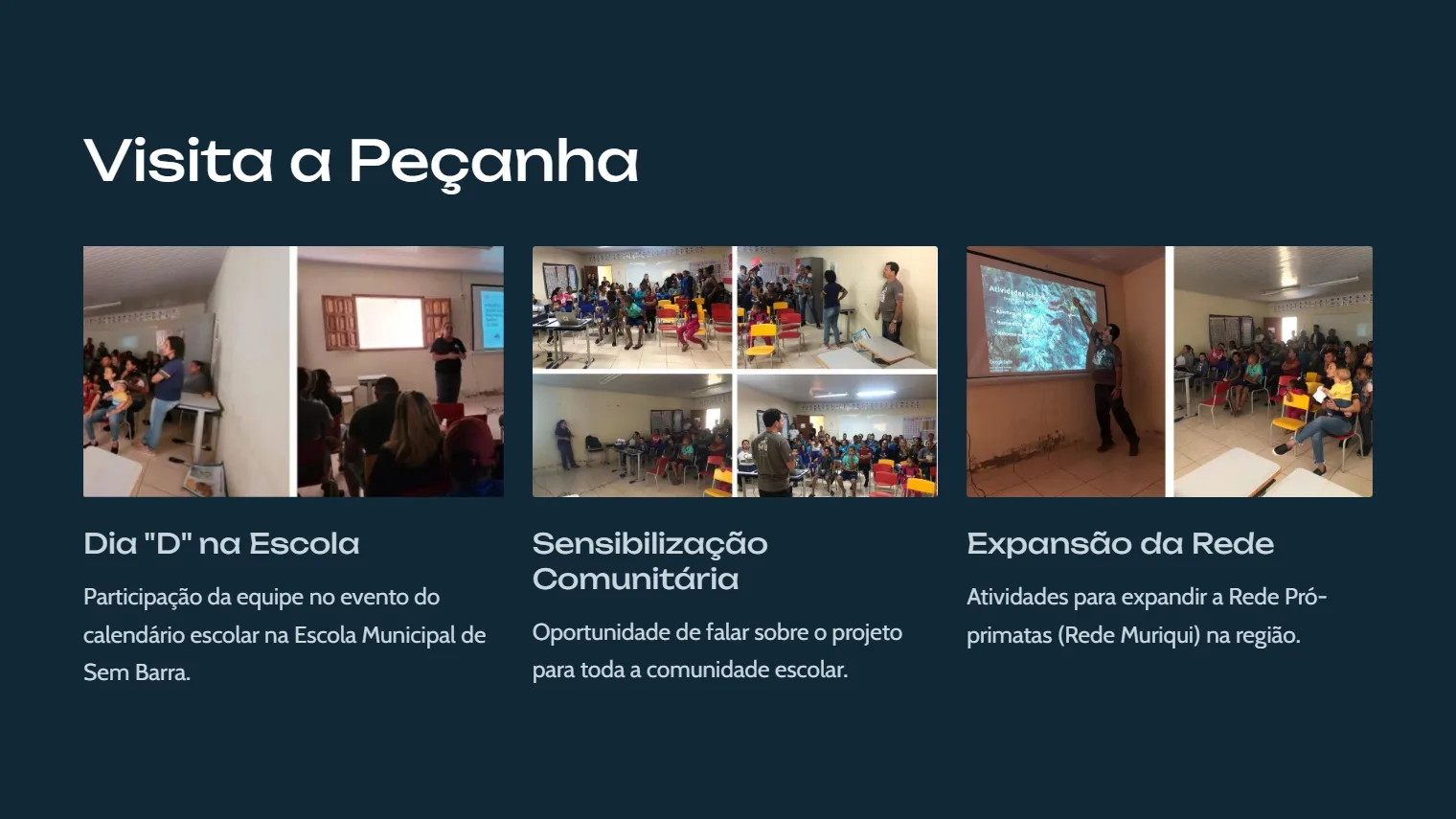
- Municipality of Peçanha (follow-up visit)
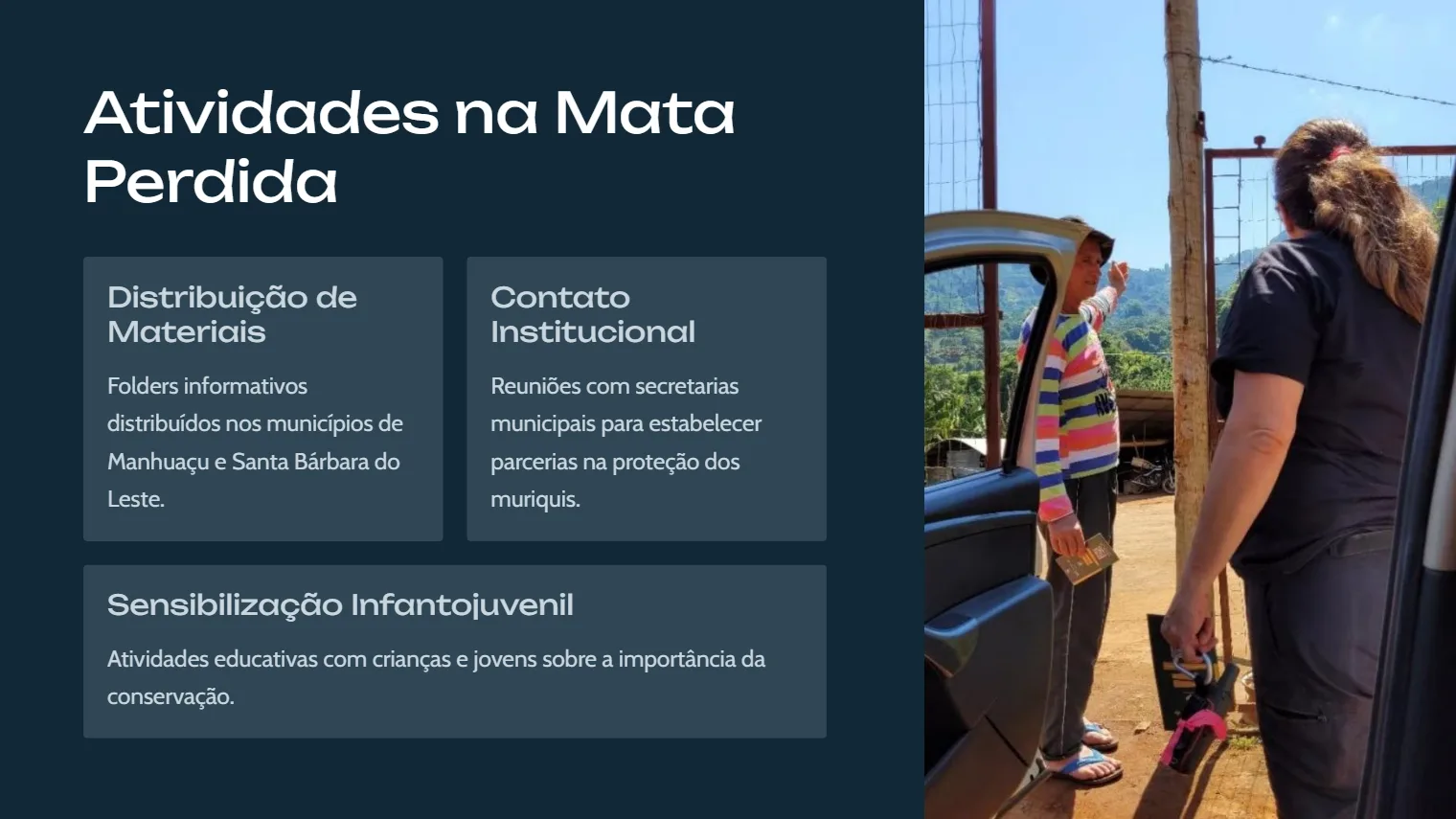
- Mata Perdida (Manhuaçu and Santa Bárbara do Leste)
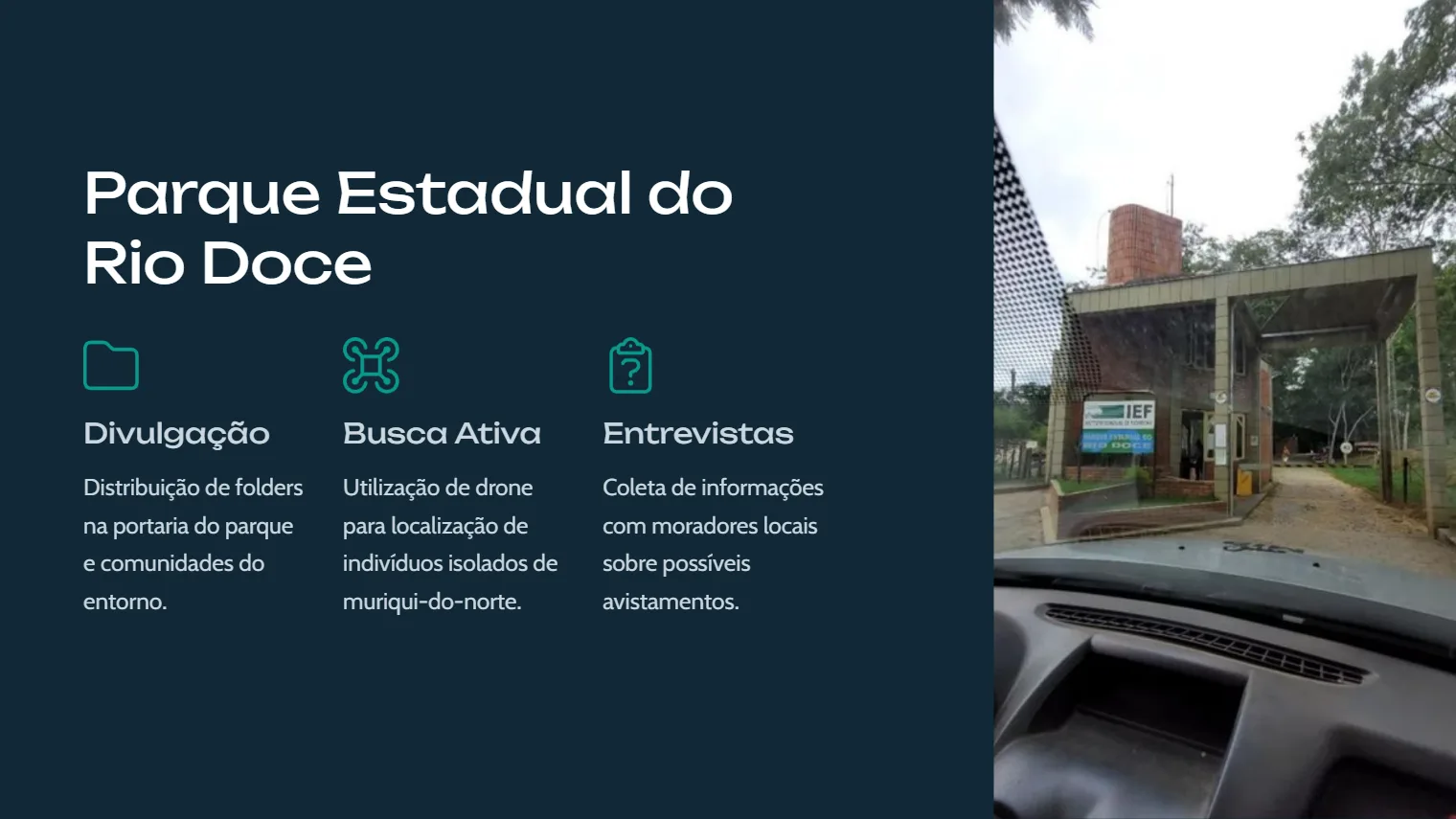
- Parque Estadual do Rio Doce
- Parque Nacional do Caparaó (two campaigns)
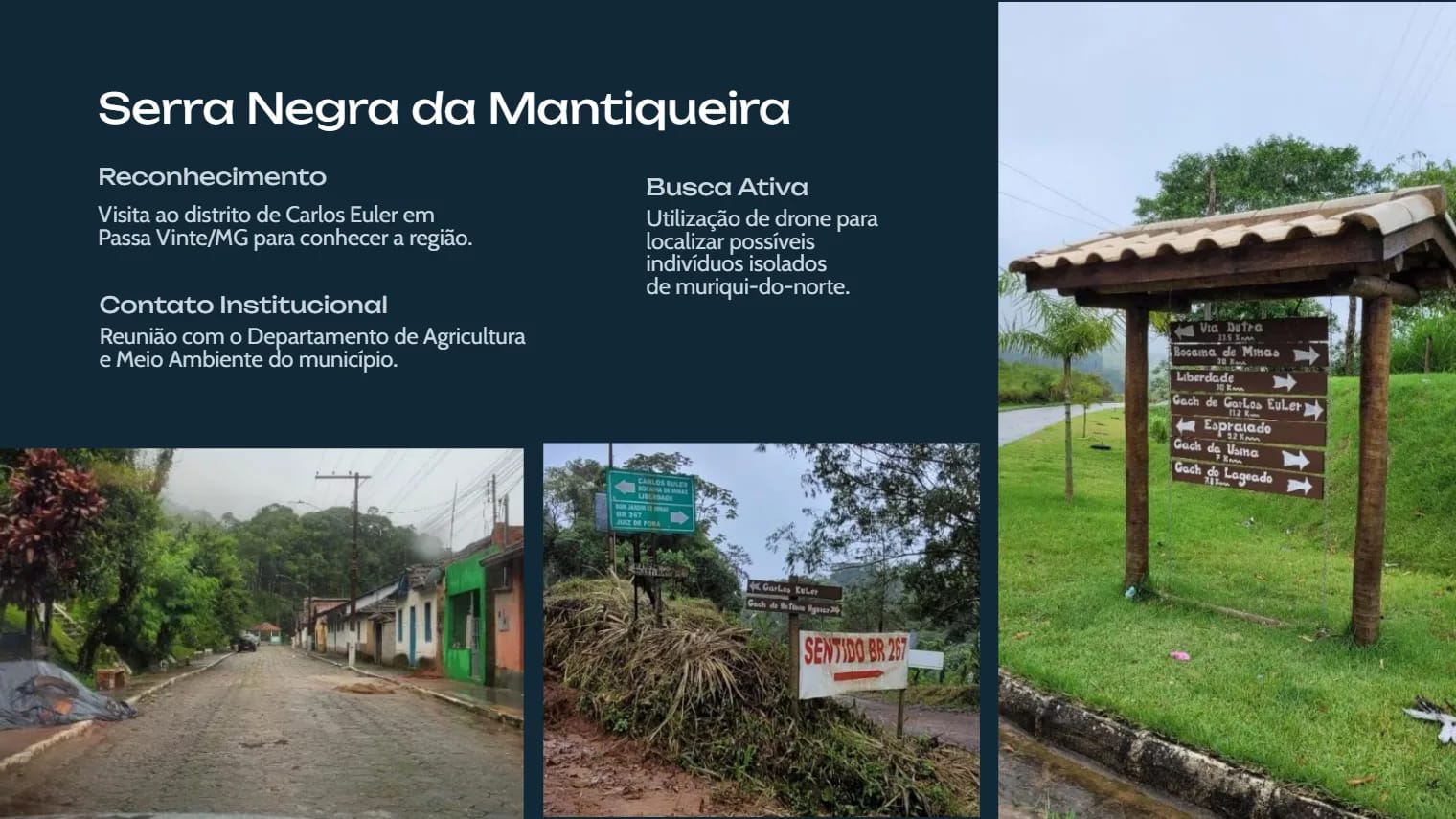
- Parque Estadual Serra Negra da Mantiqueira
- Parque Estadual Serra do Brigadeiro (second campaign)
Technology Serving Conservation
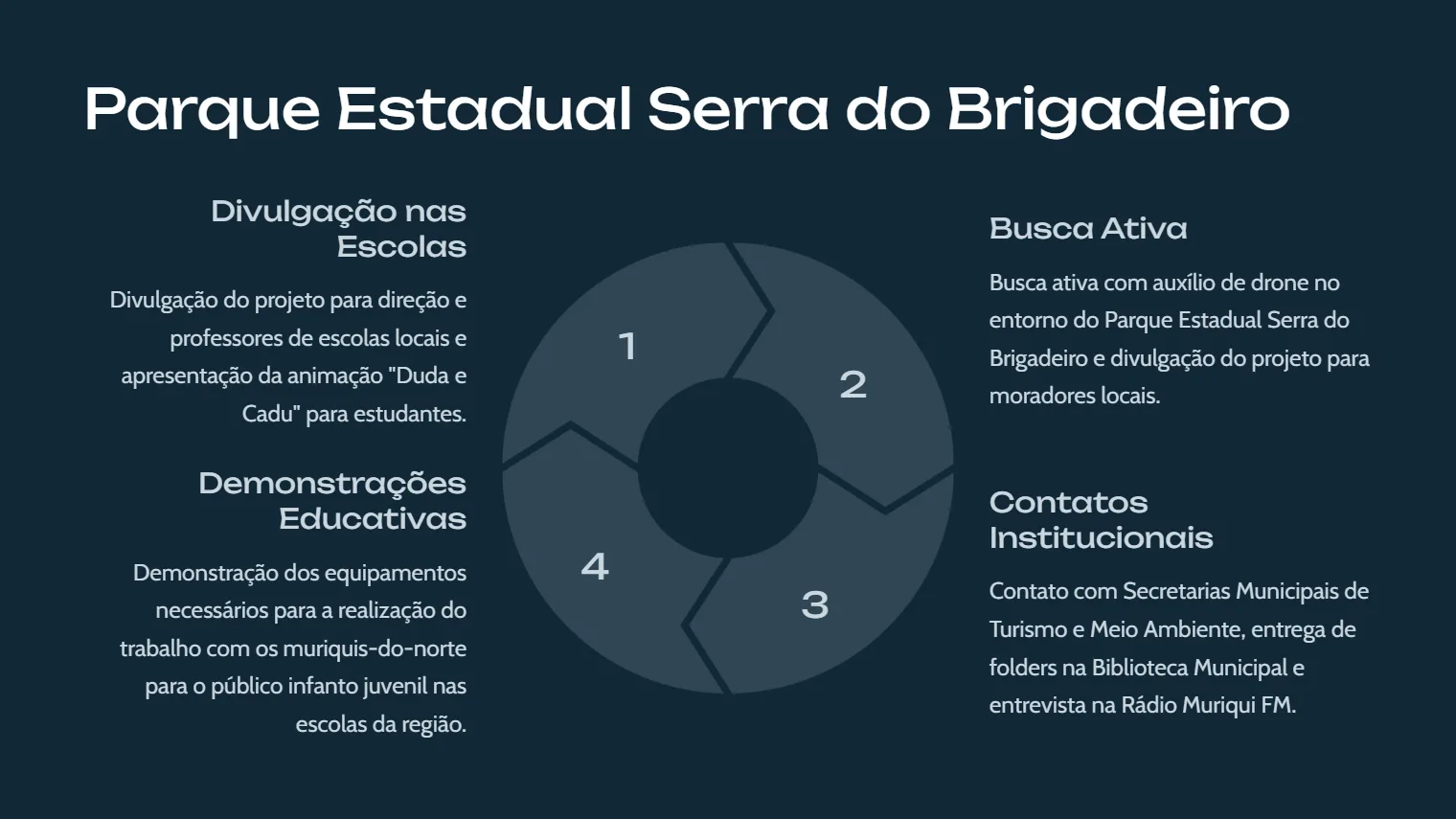
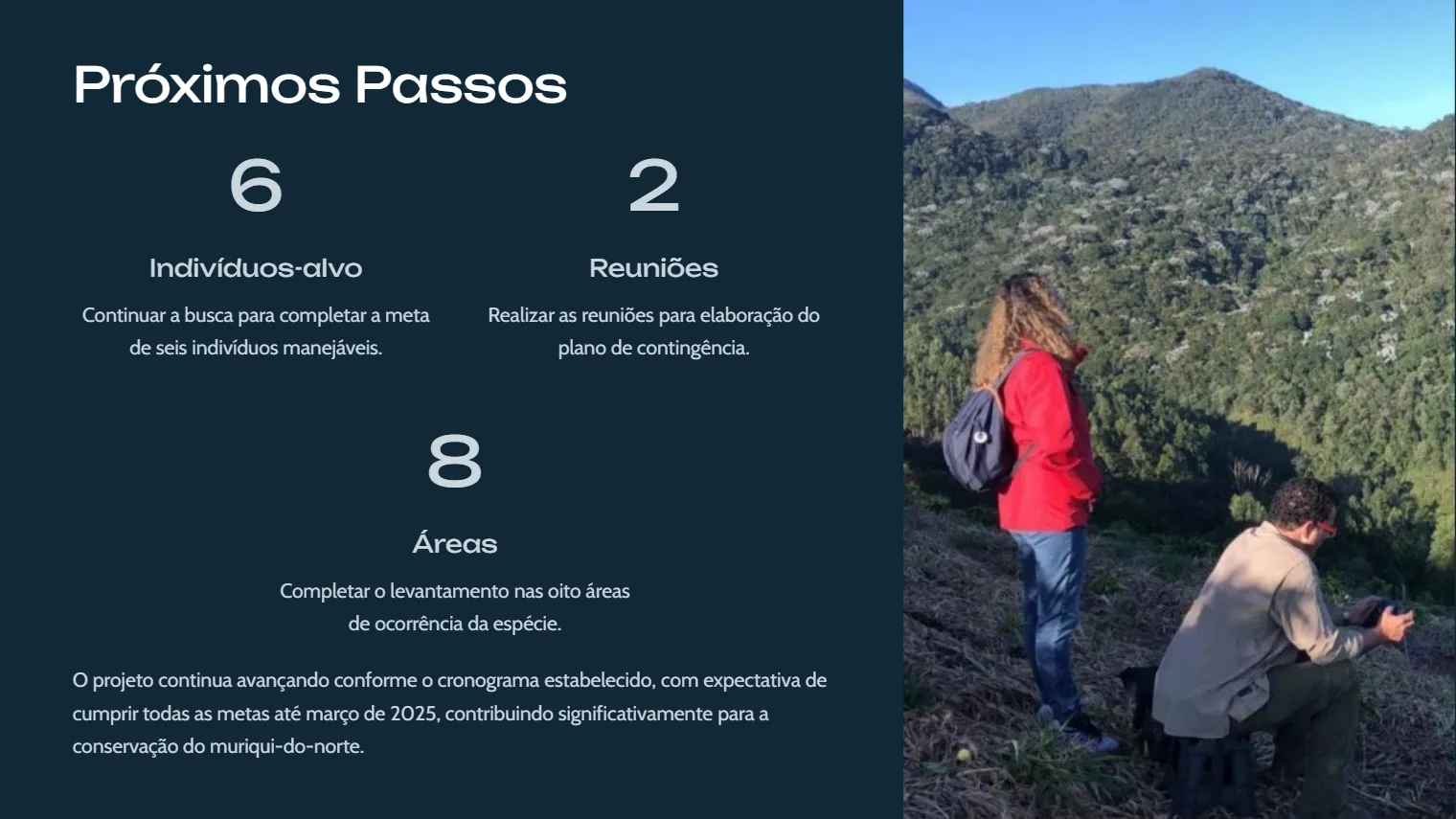
This period saw increased use of advanced technologies to locate the primates. Drones equipped with thermal cameras were used in several areas, mainly in Parque Estadual do Rio Doce, Serra do Brigadeiro and Parque Nacional do Caparaó.
The “playback” technique (broadcasting recorded vocalizations) was also used in the Pedra Menina and Paraíso area during the second campaign in Parque Nacional do Caparaó, increasing the chances of detecting isolated individuals.
Expansion of the Pro-Primate Network
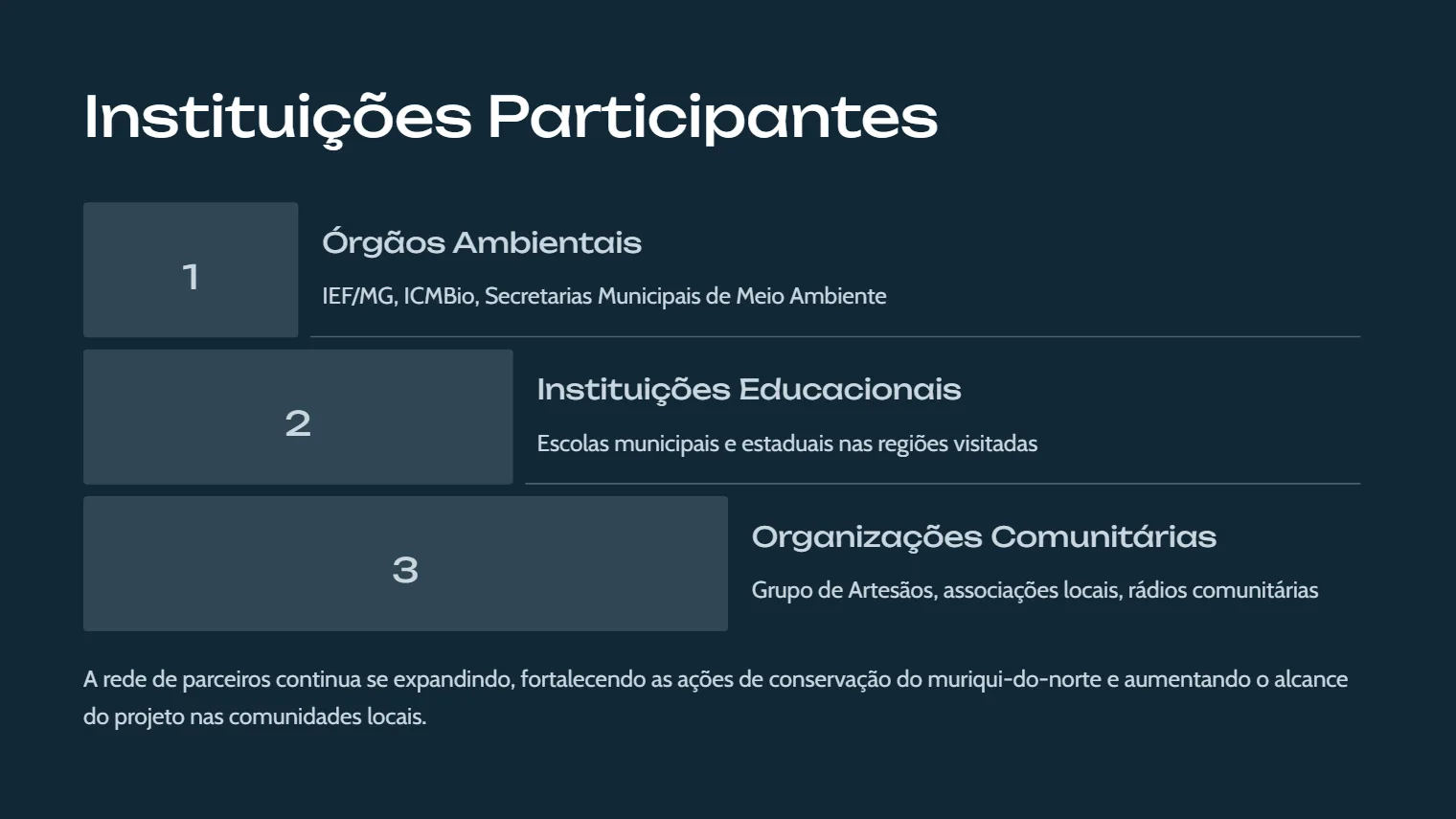
The protection and information network kept growing, with new contacts established in every area visited. Highlights include partnerships with:
- ICMBio (Parque Nacional do Caparaó)
- IEF/MG (Parque Estadual do Rio Doce and Serra do Brigadeiro)
- Municipal Departments of Environment, Tourism and Education
- Municipal and state schools
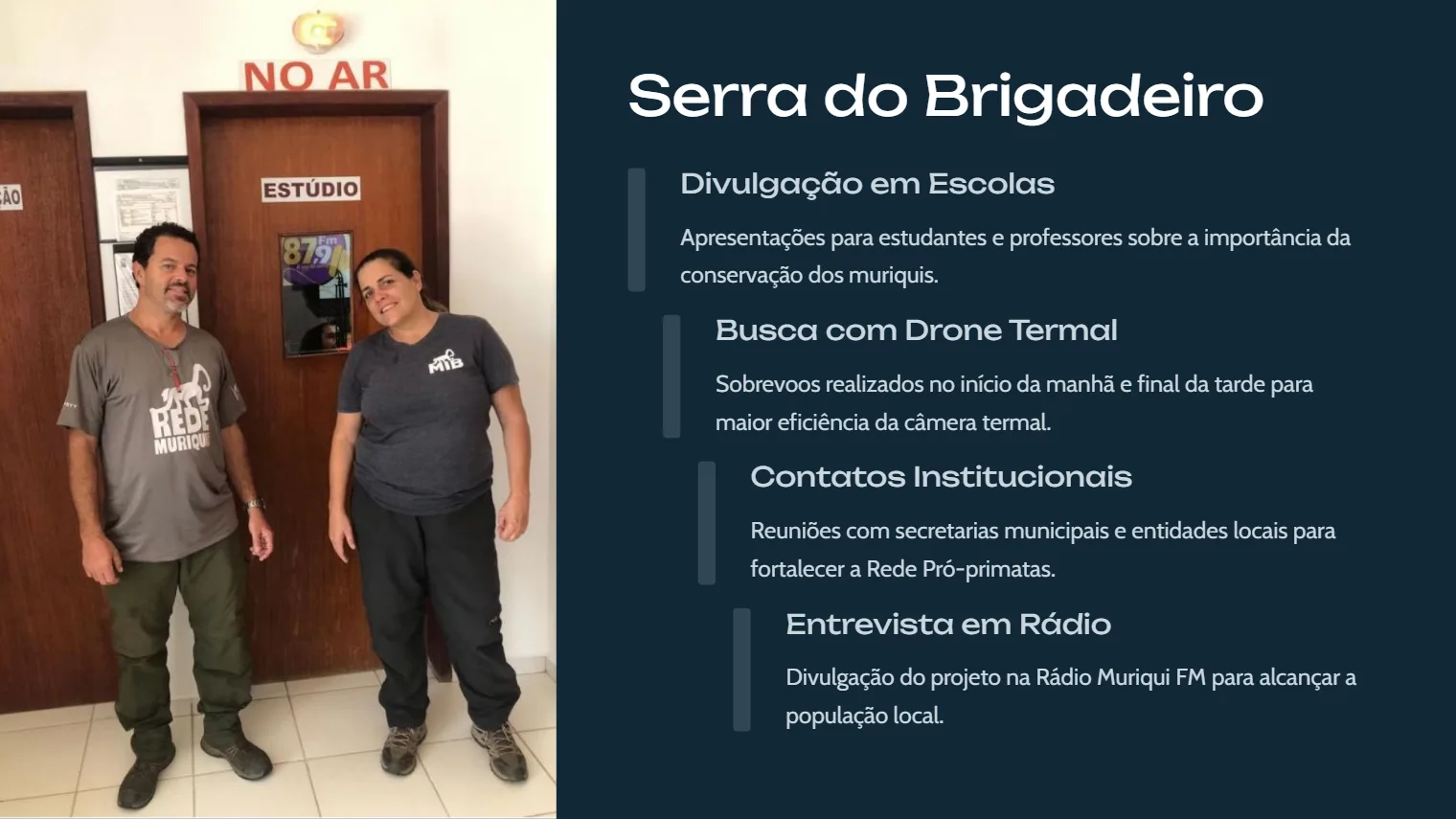
- Rádio Muriqui FM (regional outreach)
- Local associations and artisan groups
Environmental Education and Community Awareness
Educational activities were stepped up during this period, notably:
- Participation in “D-Day” at the Sem Barra Municipal School, in Peçanha
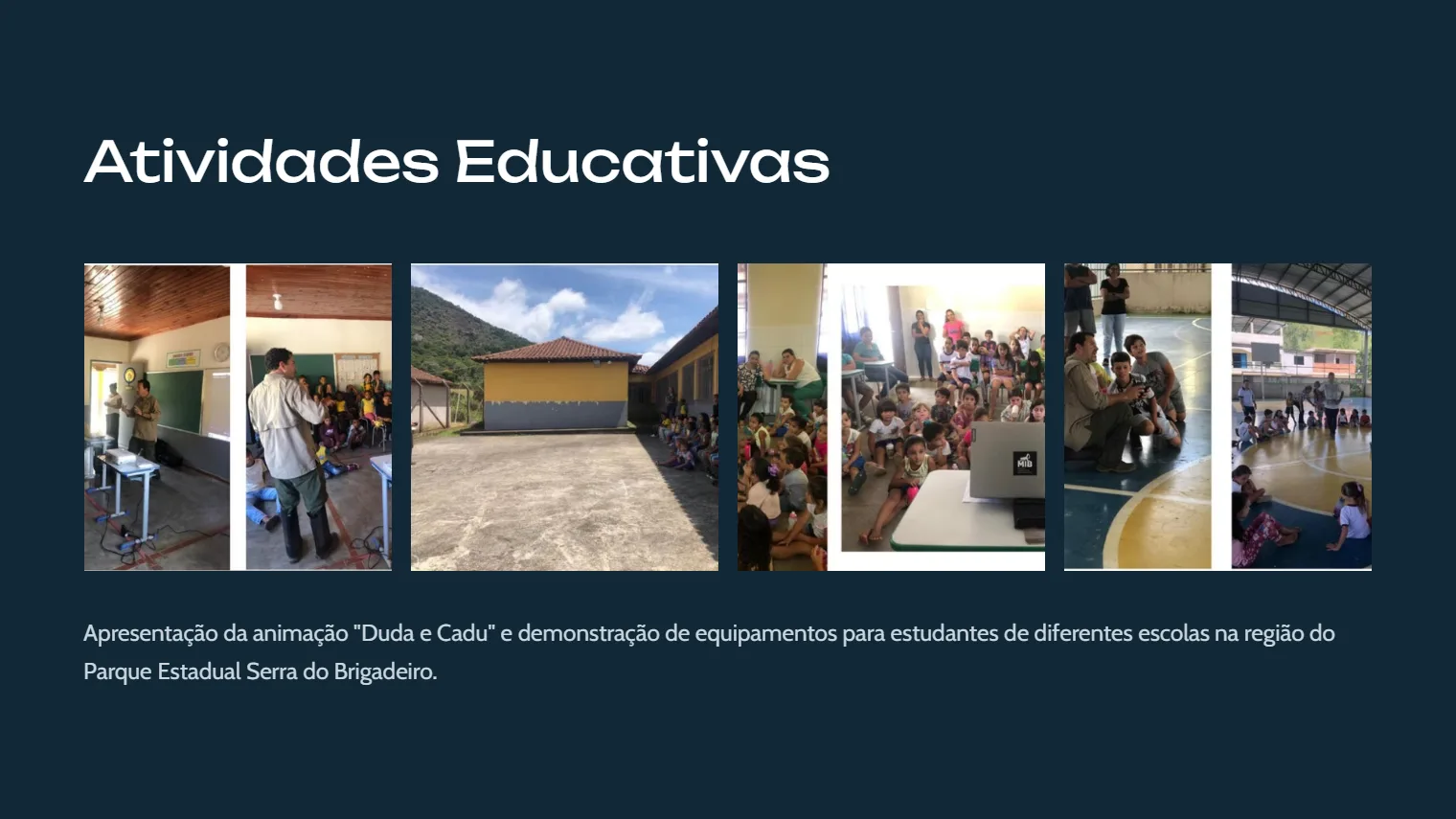
- Screenings of the animated film “Duda e Cadu” in several schools in the Serra do Brigadeiro region
- Educational demonstrations of the equipment used to monitor muriquis
- Distribution of informational materials in communities around the areas where the species occurs
- Interviews on local radio stations to broaden the reach of conservation messages
Methodological Advances
The active search methodology was improved by combining:
- Drones with thermal cameras: Flights carried out early in the morning and late in the afternoon, when temperature gradients make it easier to spot the animals
- Playback techniques: Broadcasting the species' typical vocalizations to prompt responses from isolated individuals
- Interviews with local residents: Systematic collection of information on recent sightings
- Searches in priority areas: Identified from historical records and habitat characteristics
Next Steps
With five of the six individuals needed to meet the main target now located, the project will focus on:
- Continuing the search to locate at least one more manageable individual
- Holding the scheduled meetings to draw up the contingency plan for solitary individuals and migrating females
- Completing the survey in the eight areas of occurrence of the species included in the schedule
- Consolidating the Pro-Primate Network to ensure it continues after the project ends
A Promising Horizon
The Muriqui Project continues to advance on schedule, delivering concrete results in identifying potentially manageable individuals and in building a protection network that involves both institutions and local communities.
The combination of scientific research, advanced technologies and a strong environmental education component is laying the foundations for an effective northern muriqui conservation program that could be replicated for other threatened species.
Expecting to meet all its targets by March 2025, the project reaffirms its commitment to protecting this symbol of Brazilian biodiversity, contributing to a safer future for muriquis and for the communities that share their habitat.
Below is the presentation of this report: