SOS Muriqui – the power of Citizen Science to save the Muriquis
The SOS Muriqui initiative is more than a project: it is a living movement that connects communities, researchers and partners to protect one of the most emblematic species of the Atlantic Forest. Its story began simply, but with an ingenious methodology: Citizen Science.
A field form that became a calendar
At first, we registered 50 families in the communities around the muriqui areas and handed out a “wall calendar sheet” — a simple monthly field form — that residents used to record sightings of these migrant females. It was a spontaneous, popular system that residents embraced for its simplicity and visual appeal. The sheet featured an illustrated calendar with the four species, inviting people to mark it whenever they saw an animal.
This material turned out so well that it became a beautiful annual calendar, developed in partnership with a private school network that handled the editing and layout, taking the project to a new level.
The role of Citizen Science
Citizen Science is a well-established methodology, used for decades by birdwatchers and other groups to map large areas and collect data with the help of local people. It was the perfect solution for SOS Muriqui, making it possible to cover a huge region with little individual effort from the researchers.
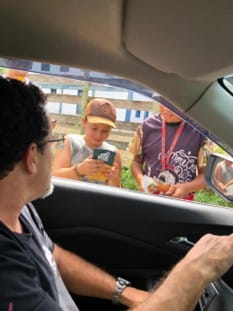
A team visits the families every month to collect the forms and tabulate the data, which are then analyzed together with photos and detailed information. This creates a robust database, useful for monitoring the muriquis and planning conservation actions.
Engagement through local networks: churches, schools and grocery stores
One of the key lessons from SOS Muriqui was understanding the dynamics of rural communities — here, access to information and engagement happen within local social networks. The church, for example, is a powerful channel: when the priest or pastor speaks, the community listens and acts. That is why taking materials and information to these spaces was essential to multiply the reach of the message.
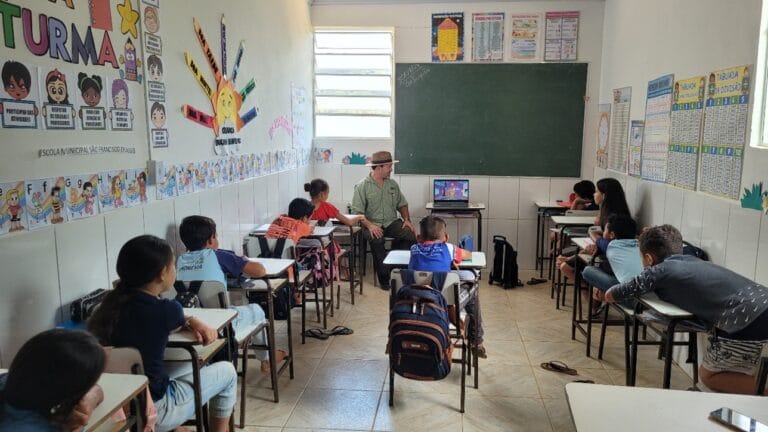
In schools, environmental education activities also helped encourage young people to take part in Citizen Science, building a culture of muriqui protection.
Rede Muriqui (Muriqui Network) and the future of conservation
Today, SOS Muriqui is part of the Rede Muriqui project, which brings together efforts for the survival of these primates. With advancing technologies, such as the development of bots for automated responses, the program is becoming even more efficient and expanding its capacity to respond.
If you follow MIB, you can help by sharing these stories, supporting the project and strengthening ties with the communities so that SOS Muriqui keeps growing, always with the participation of each and every one of us.
Background
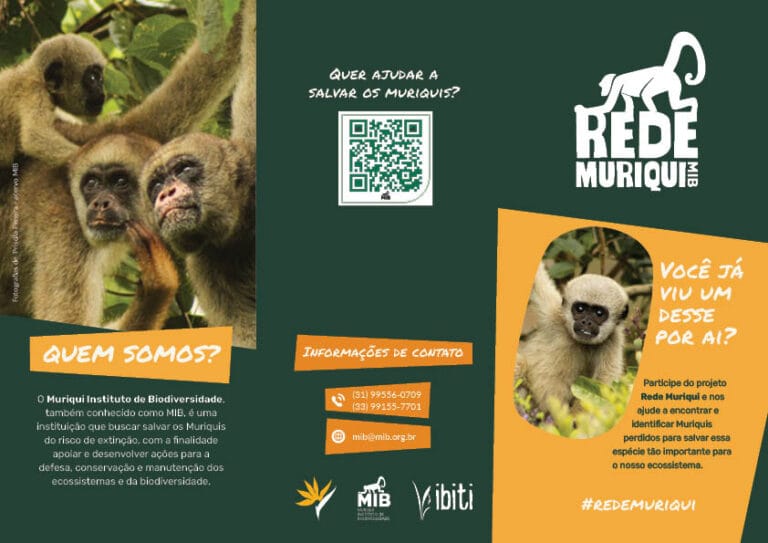
Did you know that people living in the regions where muriquis live can be great allies in conserving this rare species? The Rede Muriqui was created precisely to connect ordinary people to this cause through citizen science — an approach that involves the general public in recording and monitoring wildlife.
It all began in 2017, in Brazil's Southeast region, near the Reserva Particular do Patrimônio Natural (RPPN) Feliciano Abdala, where a yellow fever outbreak seriously threatened the local primates. To understand the impacts of the outbreak outside the reserve, a citizen science project was created. For two years, 50 families from the surrounding area took an active part, observing, listening to and recording the primates, and helping to map the decline and recovery of these populations.
The success of this initiative led to its expansion to the entire municipality of Caratinga — and later to the 12 areas where the northern muriqui occurs, which span some 50 municipalities and one million inhabitants.
How does the Rede Muriqui work today?
Through digital tools, social media, WhatsApp and printed materials, community members are invited to observe and record sightings of muriquis and other species. Each record is a key piece in building a large protection network, alerting specialists to isolated migrant females or other situations that need attention.
The Rede Muriqui proves that nature conservation can — and should — be done in partnership with local communities. After all, together we are stronger in protecting the muriquis and securing their future in the Atlantic Forest.