Funding Agreement – Report from 04/24 to 09/24
Period: April 2024 to September 2024
Team in charge: Marcello Silva Nery and Fernanda Pedreira Tabacow (Muriqui Instituto de Biodiversidade)
Significant Progress in Northern Muriqui Conservation
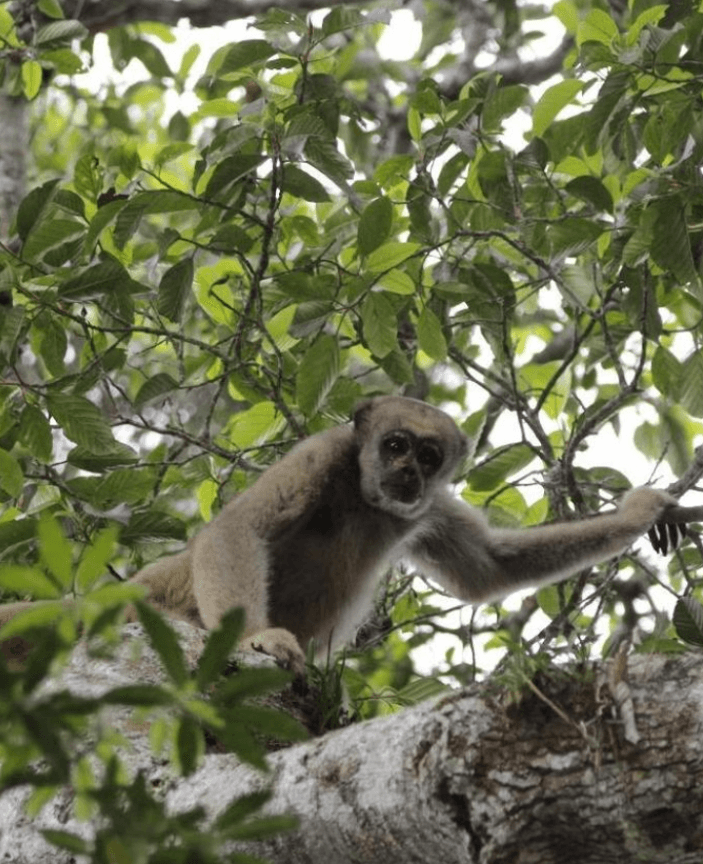
The third semester of the Muriqui Project, carried out under a Funding Agreement with IEF/MG, marks a period of consolidated results and maturing conservation actions for the northern muriqui (Brachyteles hypoxanthus). Between April and September 2024, the Muriqui Instituto de Biodiversidade team stepped up its activities on every front, coming significantly closer to meeting all of the established targets.
This third report presents the progress made in the search for isolated muriquis and in consolidating the Rede Pró-Primatas (Pro-Primate Network), now also called “Rede Muriqui” (Muriqui Network), as well as progress in drafting the Contingency Plan for solitary individuals and migrant females.
Rede Muriqui: Target Exceeded and Continued Expansion
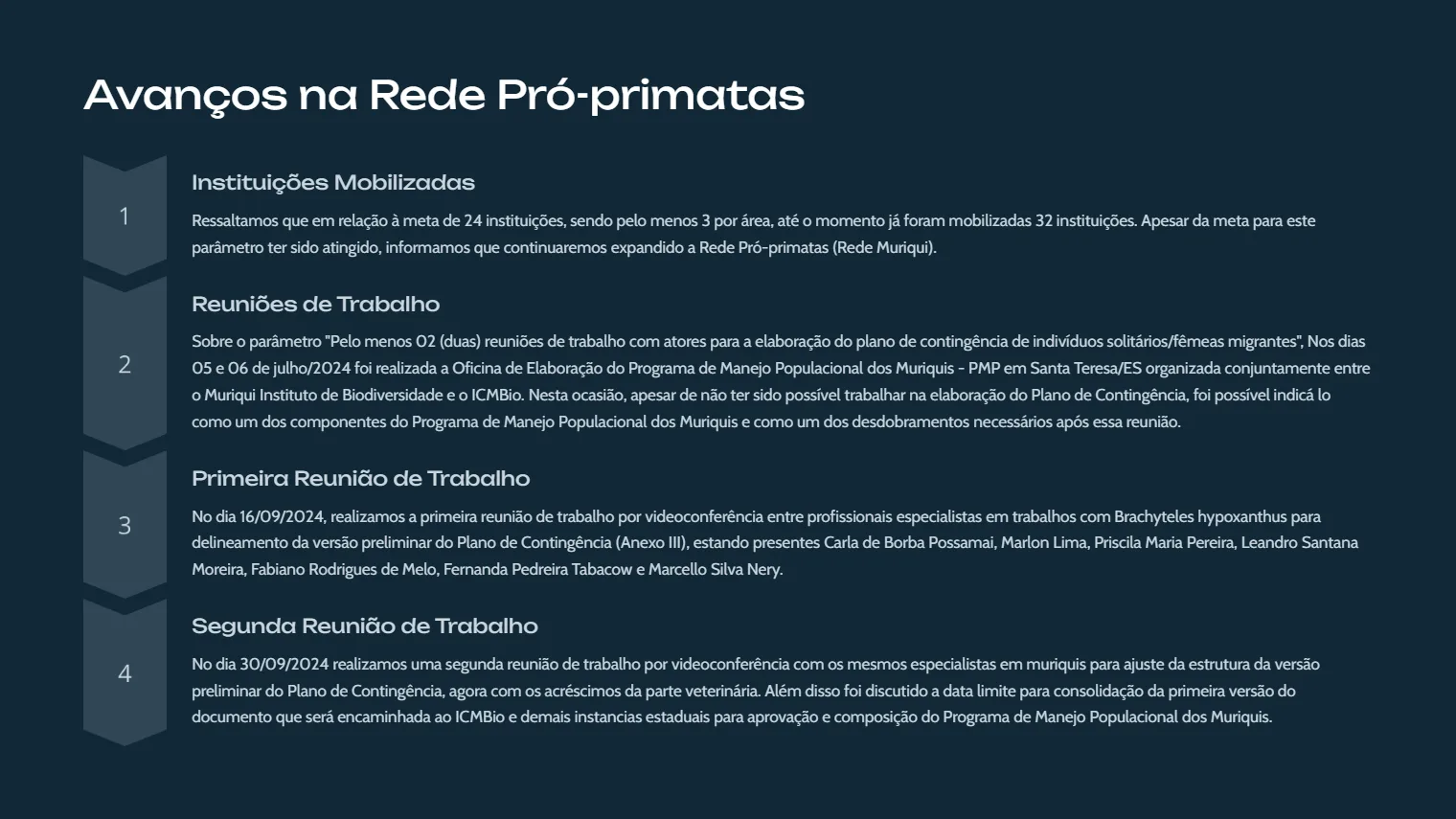
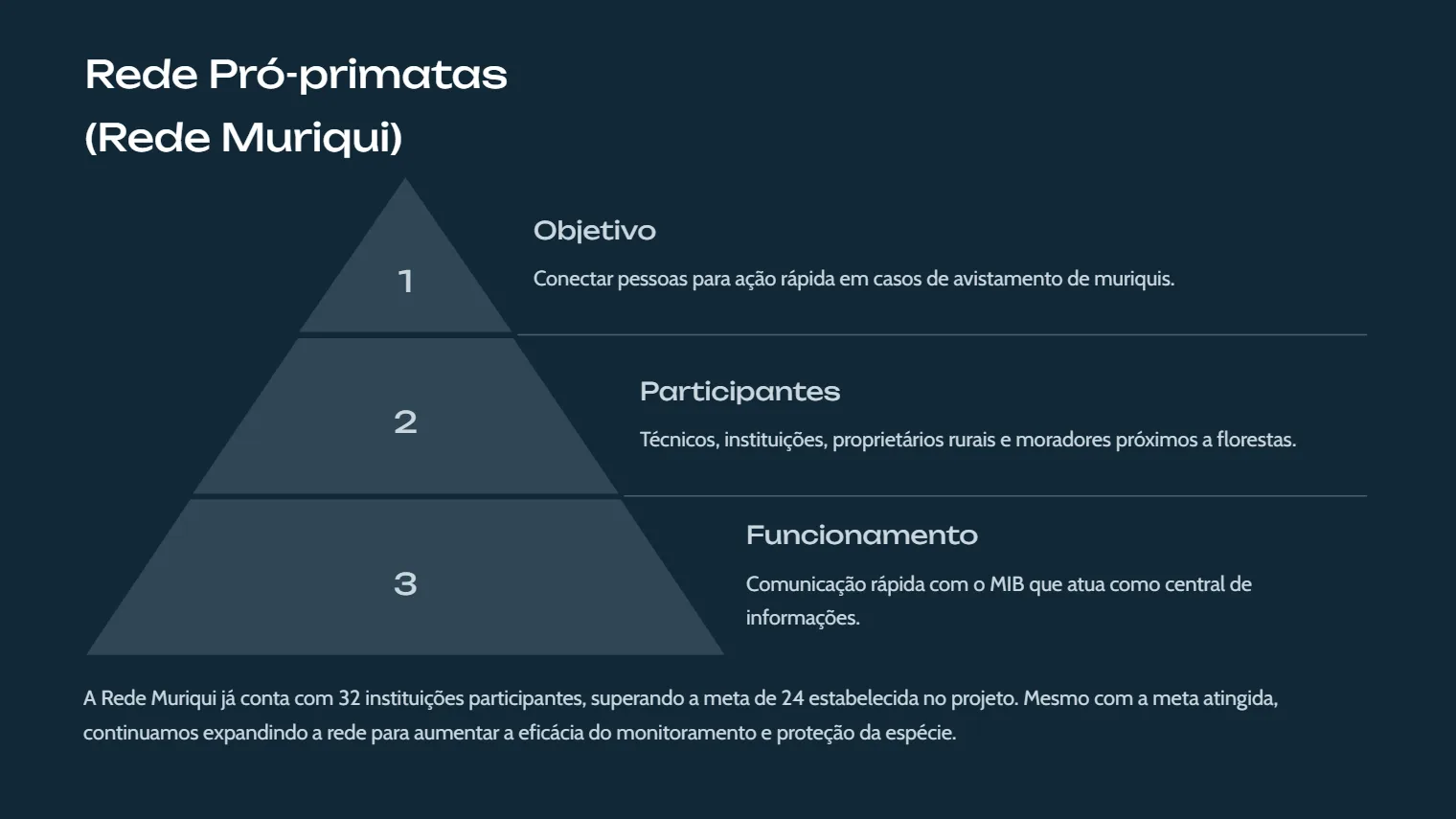
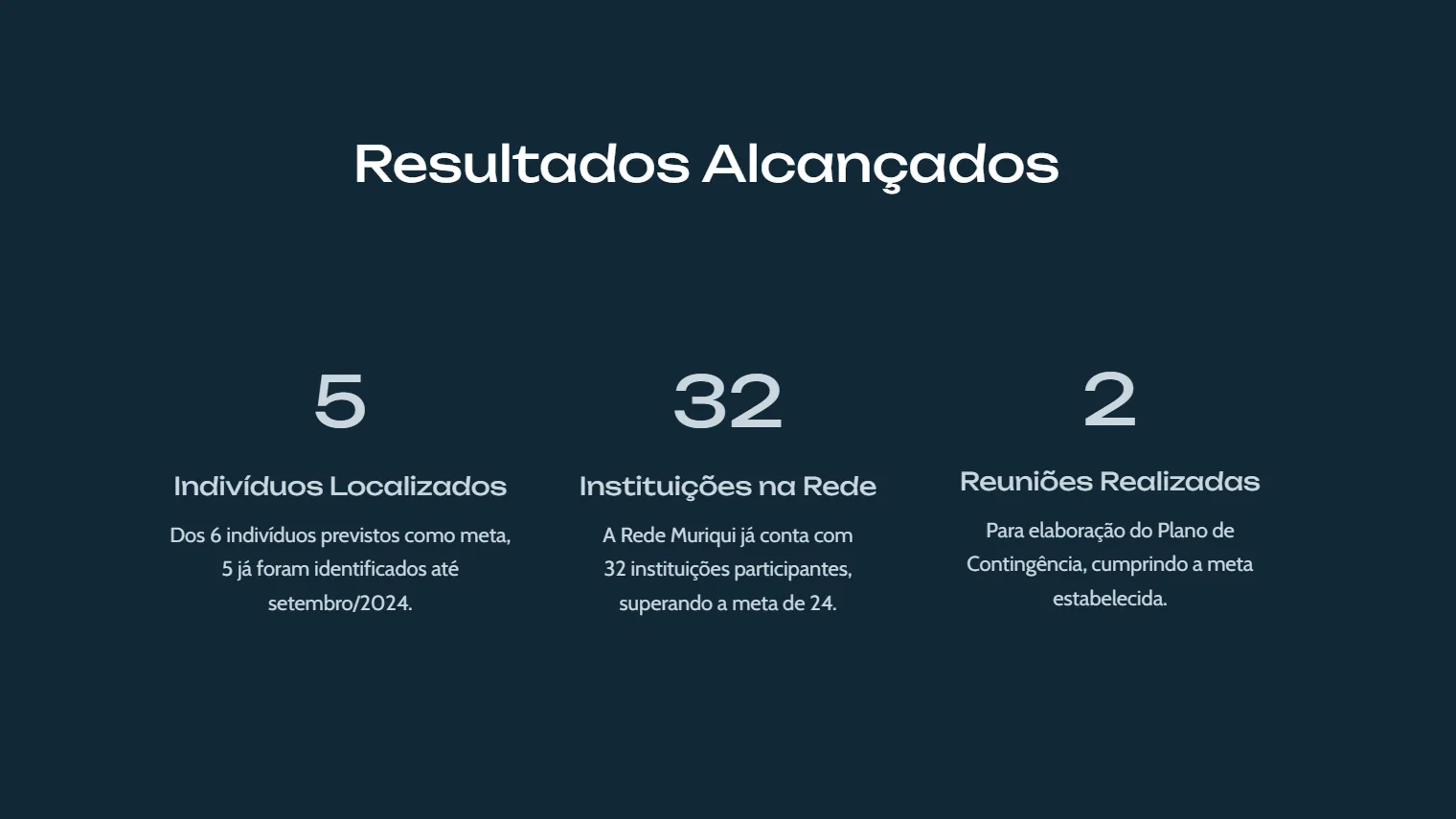
One of the most notable results of this period was exceeding the target for mobilizing institutions for the Rede Pró-Primatas. The project now has 32 participating institutions, surpassing the initial goal of 24. Even with the target met, work to expand the network continues, aiming to increase the reach and effectiveness of the species’ monitoring and protection system.
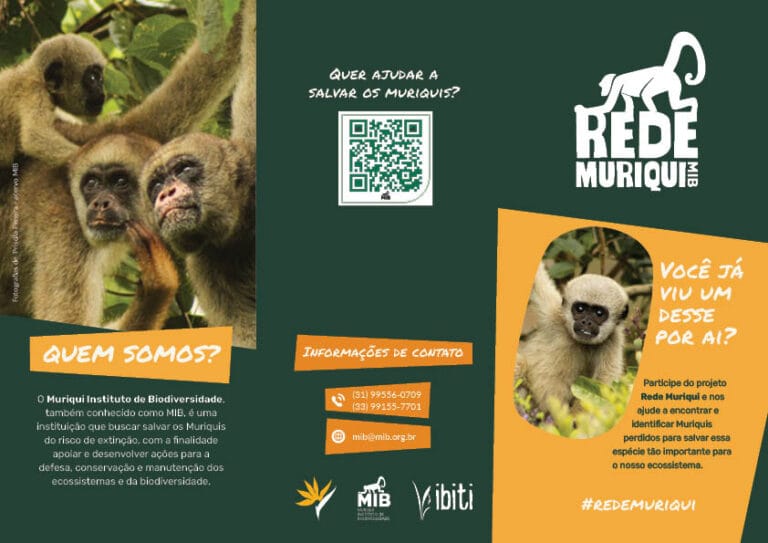
The Rede Muriqui aims to connect people for a rapid response whenever muriquis are sighted, including technicians, institutions, rural landowners and residents living near forests. The Muriqui Instituto de Biodiversidade acts as the information hub, facilitating communication among all participants.
Drafting the Contingency Plan
A major milestone of the period was holding working meetings to draft the Contingency Plan for solitary individuals and migrant females. Activities included:
- Workshop to Develop the Muriqui Population Management Program (PMP) – Held on July 5 and 6, 2024 in Santa Teresa/ES, jointly organized by the Muriqui Instituto de Biodiversidade and ICMBio.
- First Working Meeting – On September 16, 2024, by videoconference, with specialists in Brachyteles hypoxanthus to outline the preliminary version of the Contingency Plan.
- Second Working Meeting – On September 30, 2024, also by videoconference, to adjust the structure of the preliminary version, including additions to the veterinary section and setting deadlines for completing the document.
Field Campaigns: Intensified Searches
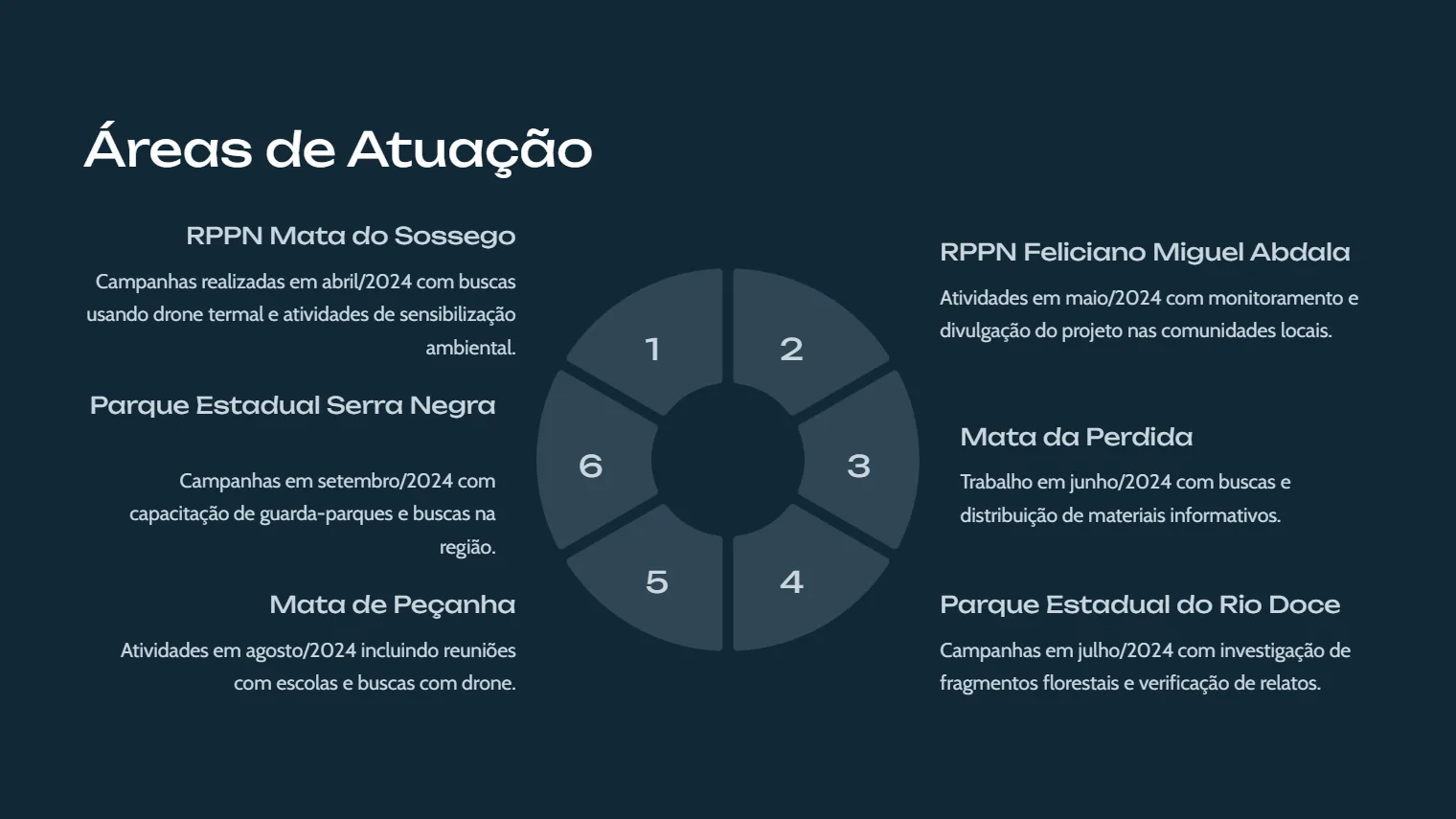
Field activities were stepped up during this period, with campaigns in six strategic areas:
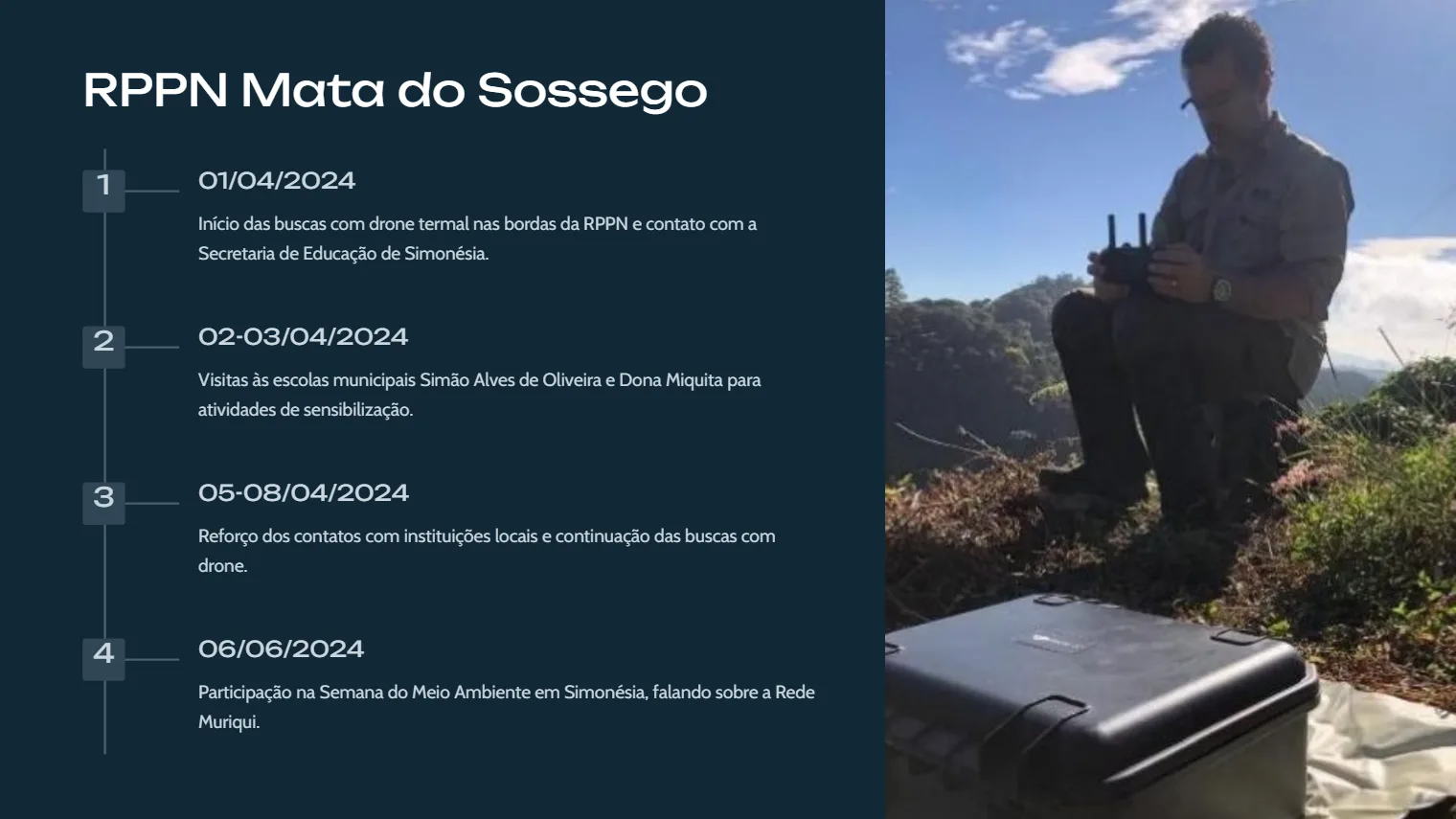
RPPN Mata do Sossego (April and June/2024)
- Thermal drone searches along the edges of the RPPN
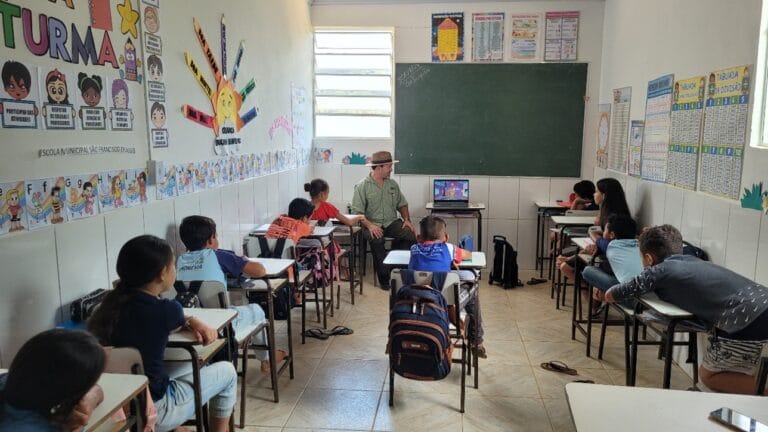
- Visits to municipal schools for awareness activities
- Participation in Environment Week in Simonésia
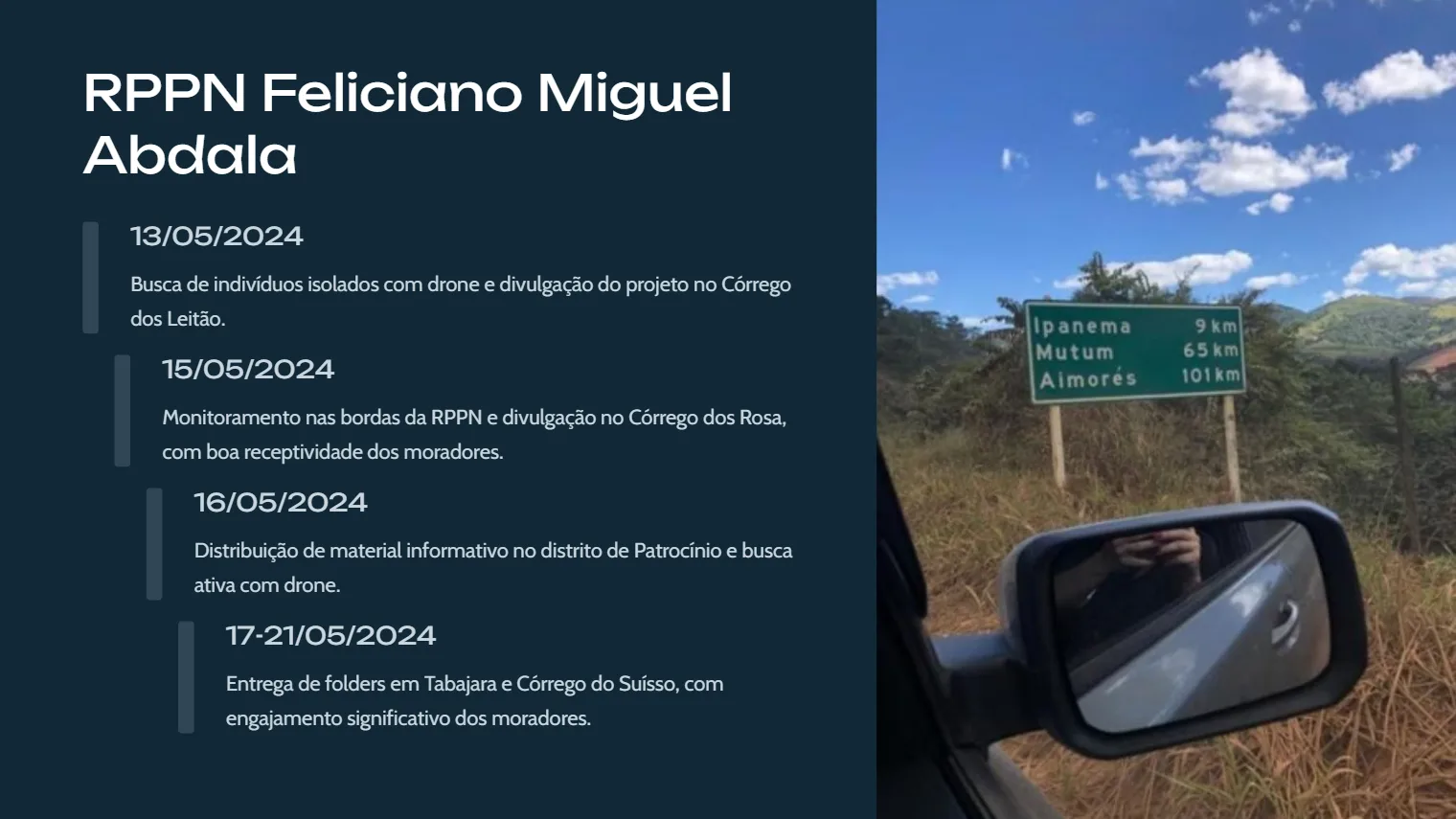
RPPN Feliciano Miguel Abdala (May/2024)
- Drone monitoring along the edges of the RPPN
- Outreach about the project in several communities (Córrego dos Leitão, Córrego dos Rosa, Patrocínio district, Tabajara and Córrego do Suísso)
- Distribution of informational materials, well received by local residents
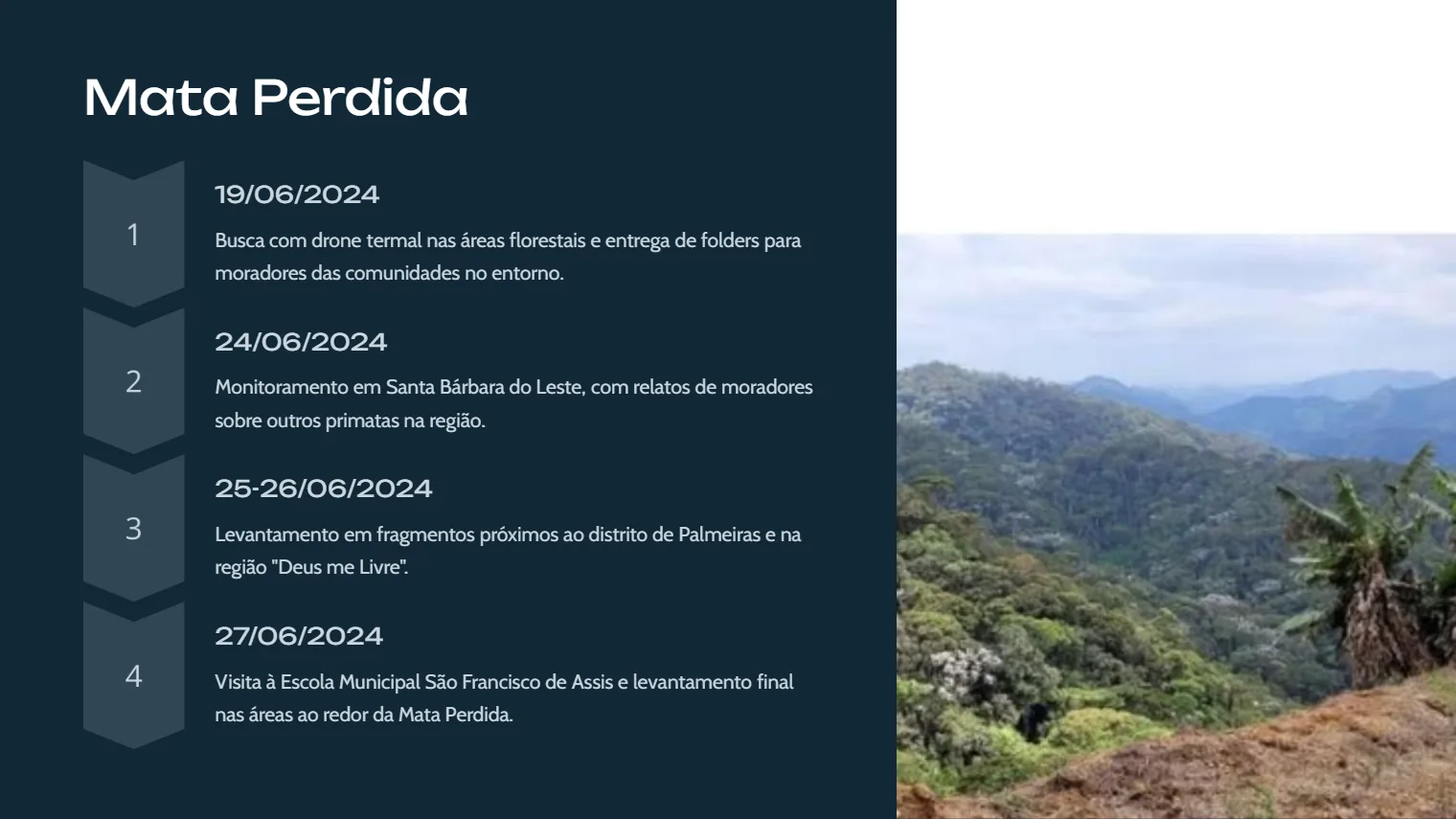
Mata Perdida (June/2024)
- Thermal drone searches in forest areas
- Monitoring in Santa Bárbara do Leste
- Surveys of fragments near the Palmeiras district and in the “Deus me Livre” area
- Visit to Escola Municipal São Francisco de Assis
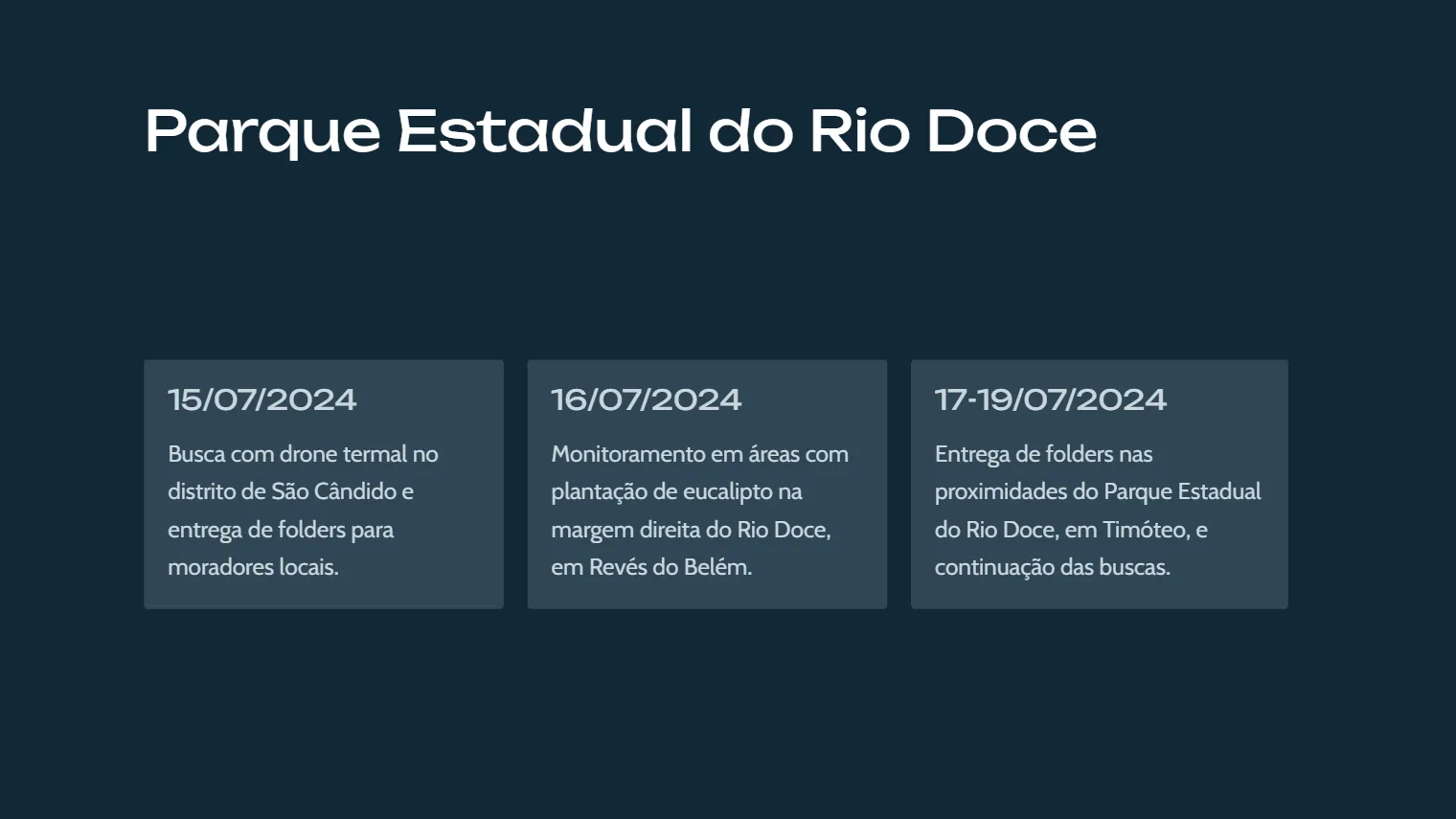
Parque Estadual do Rio Doce (July/2024)
- Thermal drone search in the São Cândido district
- Monitoring of eucalyptus plantation areas on the right bank of the Rio Doce
- Distribution of leaflets near the Park, in Timóteo
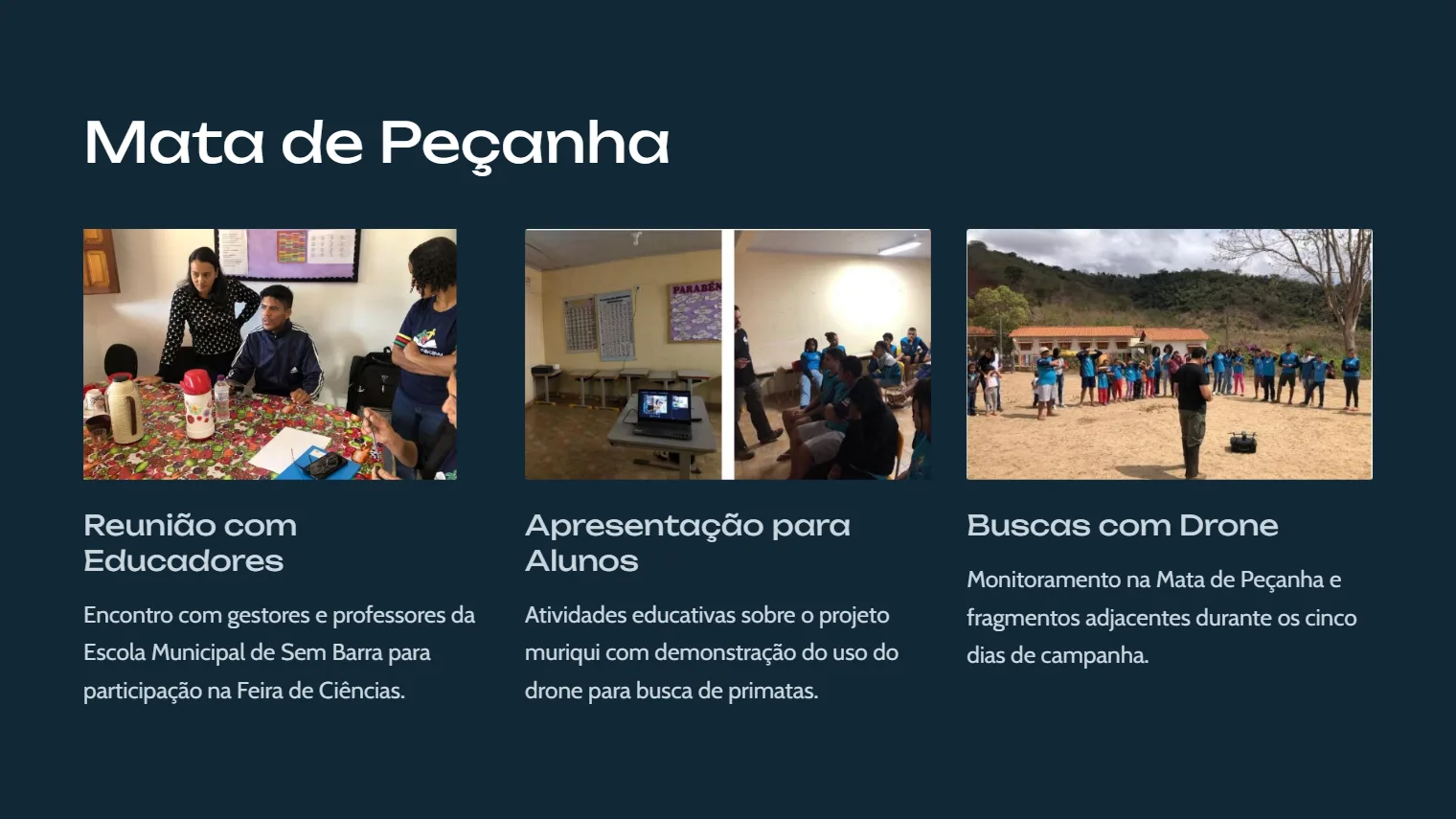
Mata de Peçanha (August/2024)
- Meeting with administrators and teachers at the Escola Municipal de Sem Barra
- Educational activities demonstrating the use of drones to search for primates
- Monitoring in Mata de Peçanha and adjacent fragments
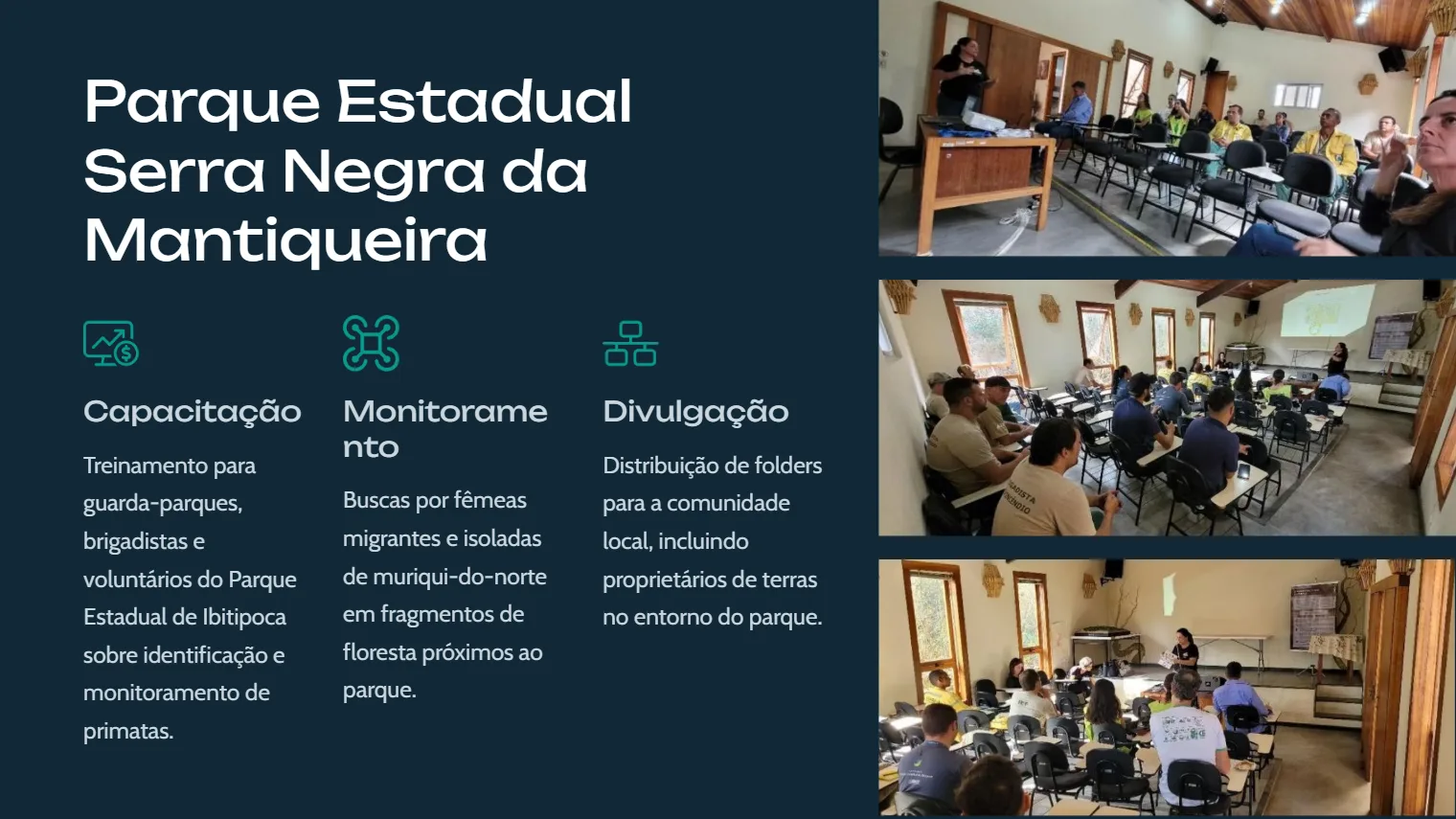
Parque Estadual Serra Negra da Mantiqueira (September/2024)
- Training for park rangers, fire brigade members and volunteers of Parque Estadual de Ibitipoca
- Searches for migrant females and isolated individuals in forest fragments
- Distribution of leaflets to the local community, including landowners
Results and Next Steps
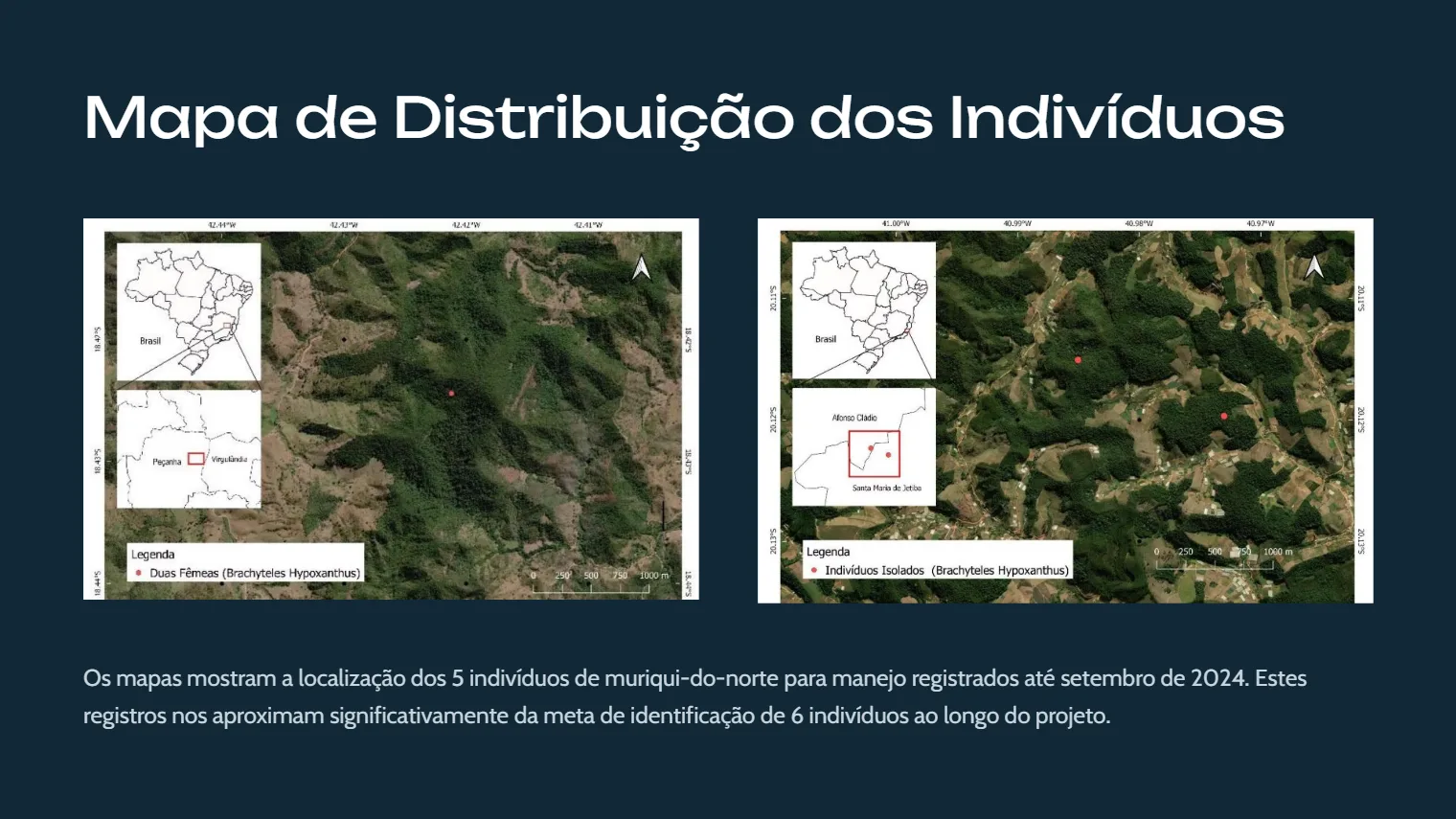
By September 2024, the project had already located five of the six manageable individuals set as its target, coming significantly closer to its main objective. In addition, the Contingency Plan is at an advanced stage, with completion expected by October 30, 2024.
Planned for the coming months:
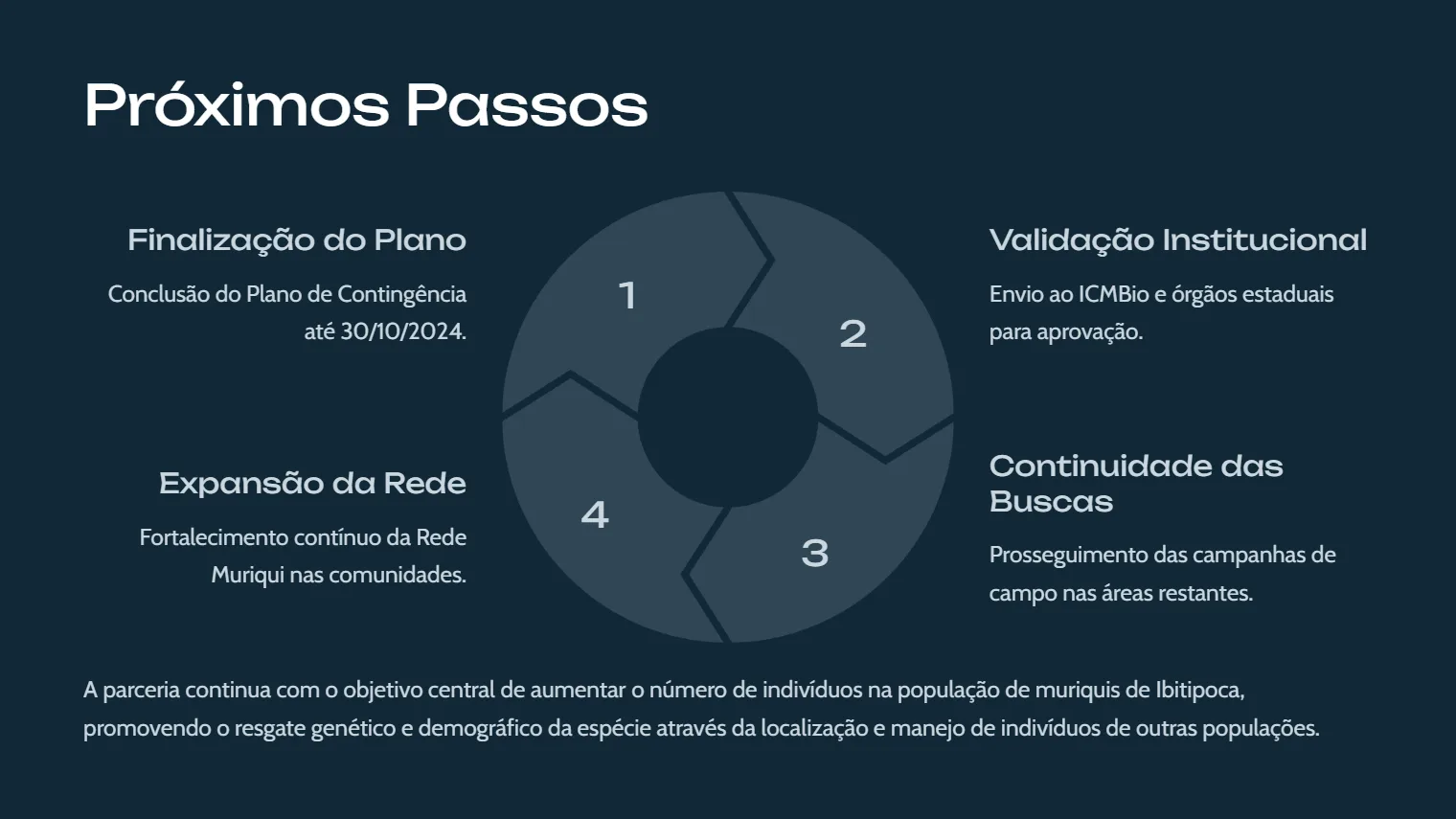
- Finalizing the Contingency Plan and submitting it for approval by ICMBio and state agencies
- Continuing field campaigns in the remaining areas
- Ongoing expansion of the Rede Muriqui in local communities
- Preparing the final distribution map of the individuals located
Growing Benefits for Communities
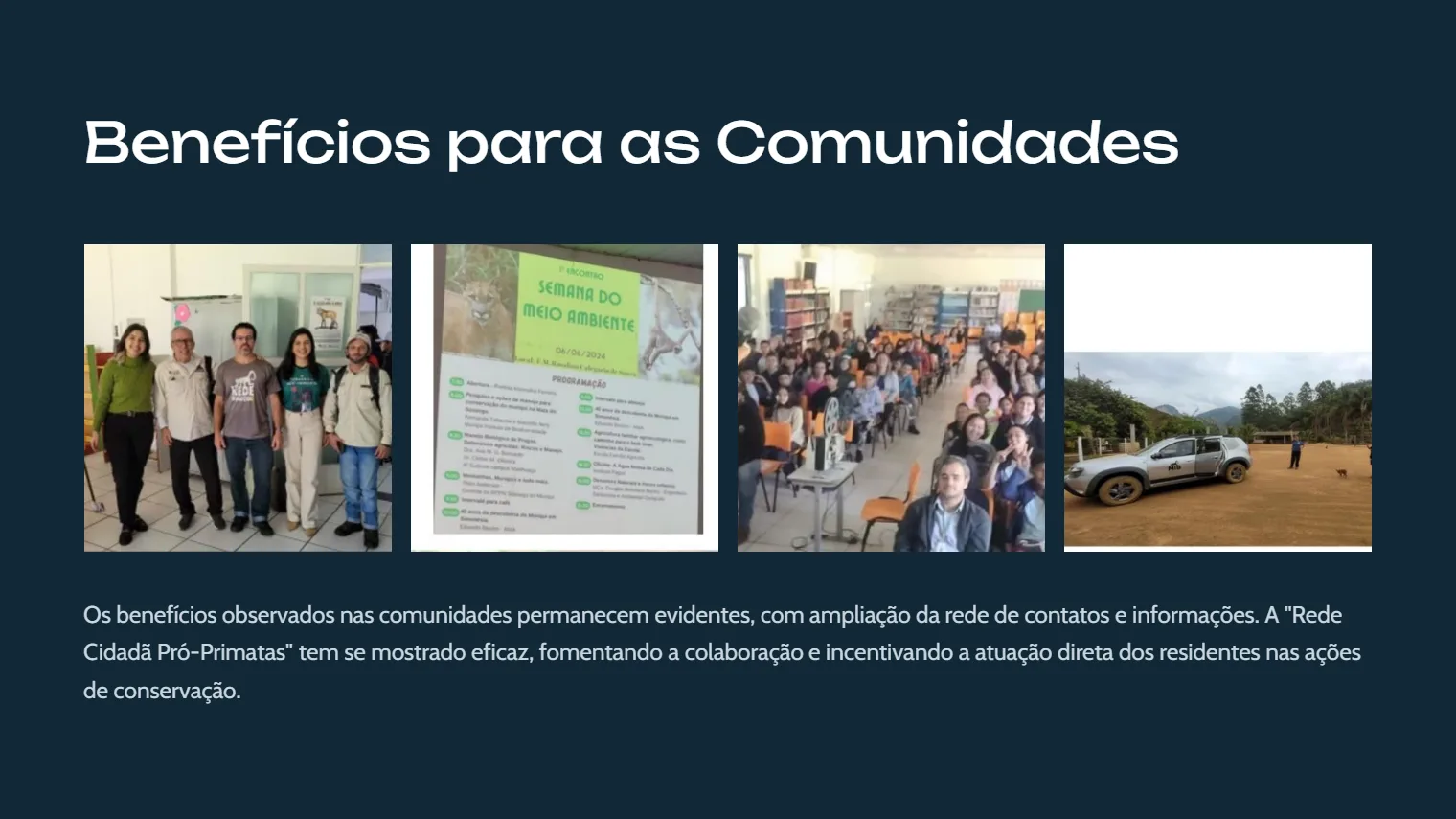
The benefits for the communities involved remain clear, with a broader network of contacts and information. The project has strengthened community cohesion around shared environmental goals and encouraged residents to take an active part in conservation efforts.
Educational activities in schools and the training of local stakeholders (such as park rangers and fire brigade members) have created a favorable environment for long-term conservation, laying solid foundations for these actions to continue even after the project ends.
Consolidating the Legacy of the Muriqui Project
As it approaches its final semester, the Muriqui Project already shows a significant legacy for the conservation of the northern muriqui. The combination of scientific research, advanced technologies (such as drones with thermal cameras), community involvement and institutional coordination has proven to be an effective model for protecting this critically endangered species.
The Rede Muriqui, which has already exceeded expectations in terms of institutional participation, is a sustainable mechanism for continuing monitoring and protection efforts, while the Contingency Plan will provide essential technical guidelines for managing isolated individuals.
With five of the six target individuals located and the Contingency Plan nearly complete, the project is making great strides toward fully meeting its goals, contributing decisively to the future of the northern muriqui in the forests of Minas Gerais and Espírito Santo.
This exemplary initiative shows how science, local communities and institutions working together can create effective solutions to the challenges of conserving Brazil’s biodiversity.
See the presentation of this report below: