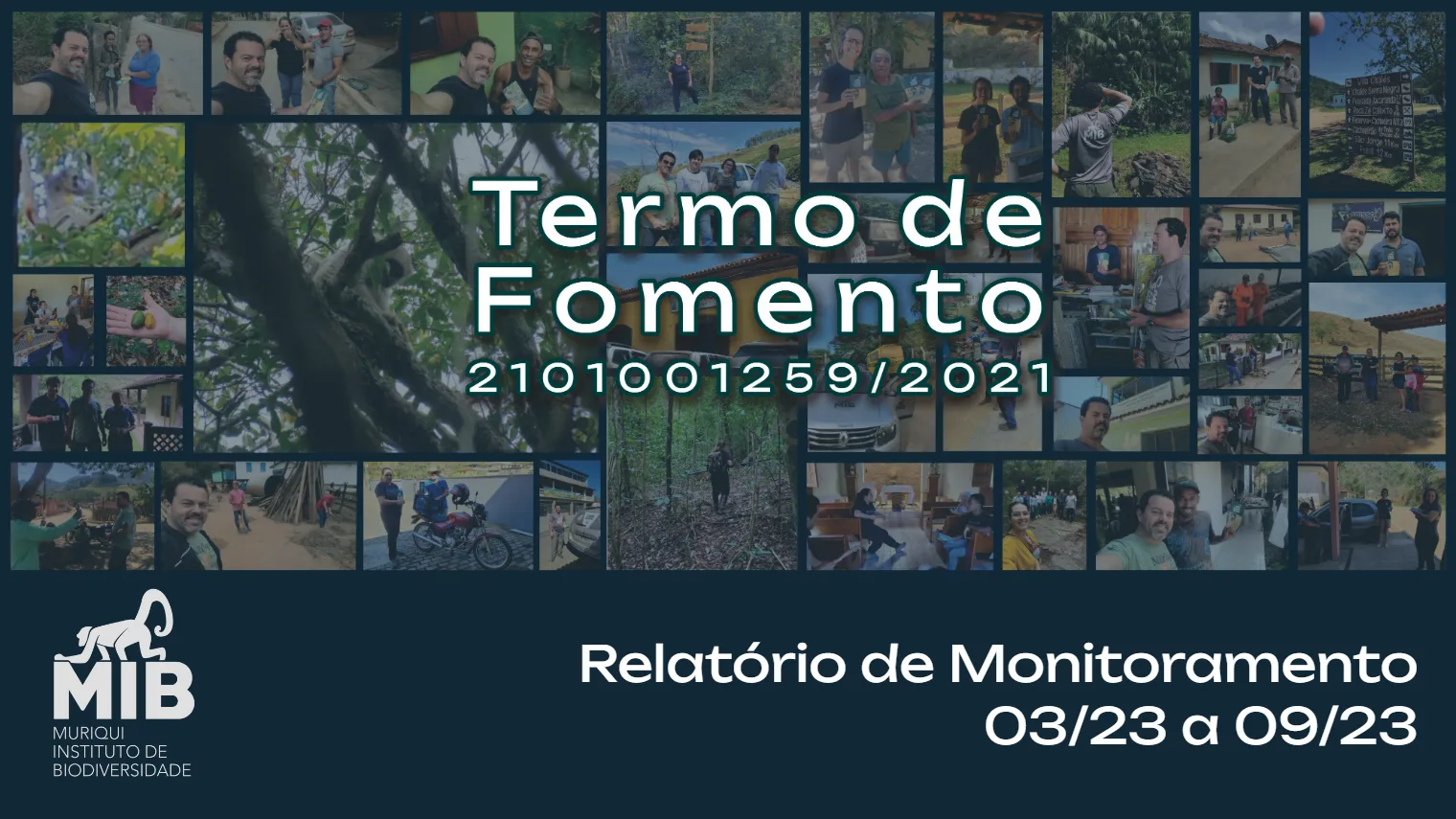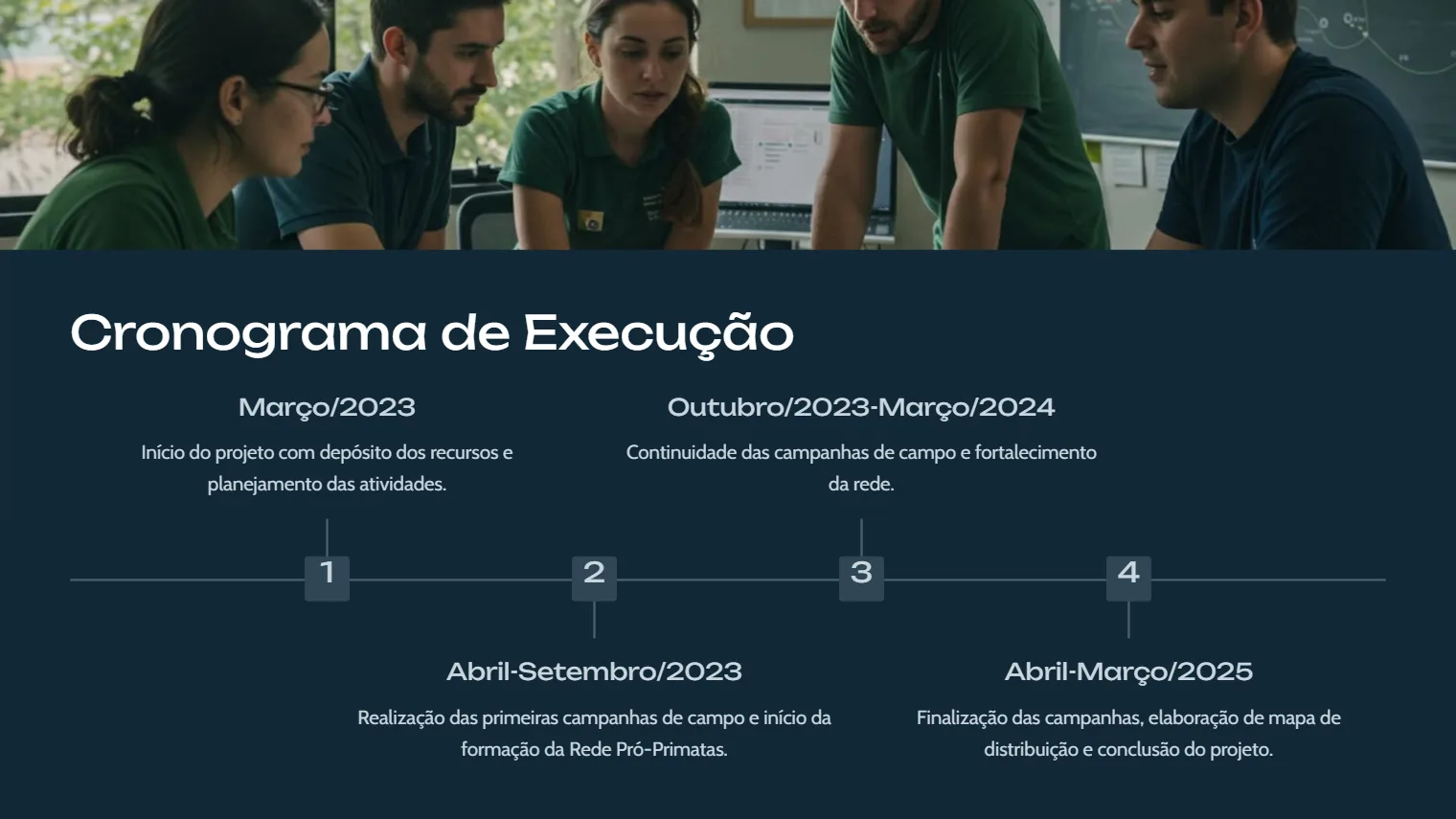
Funding Agreement – Report from 03/23 to 09/23
Period: March 2023 to September 2023
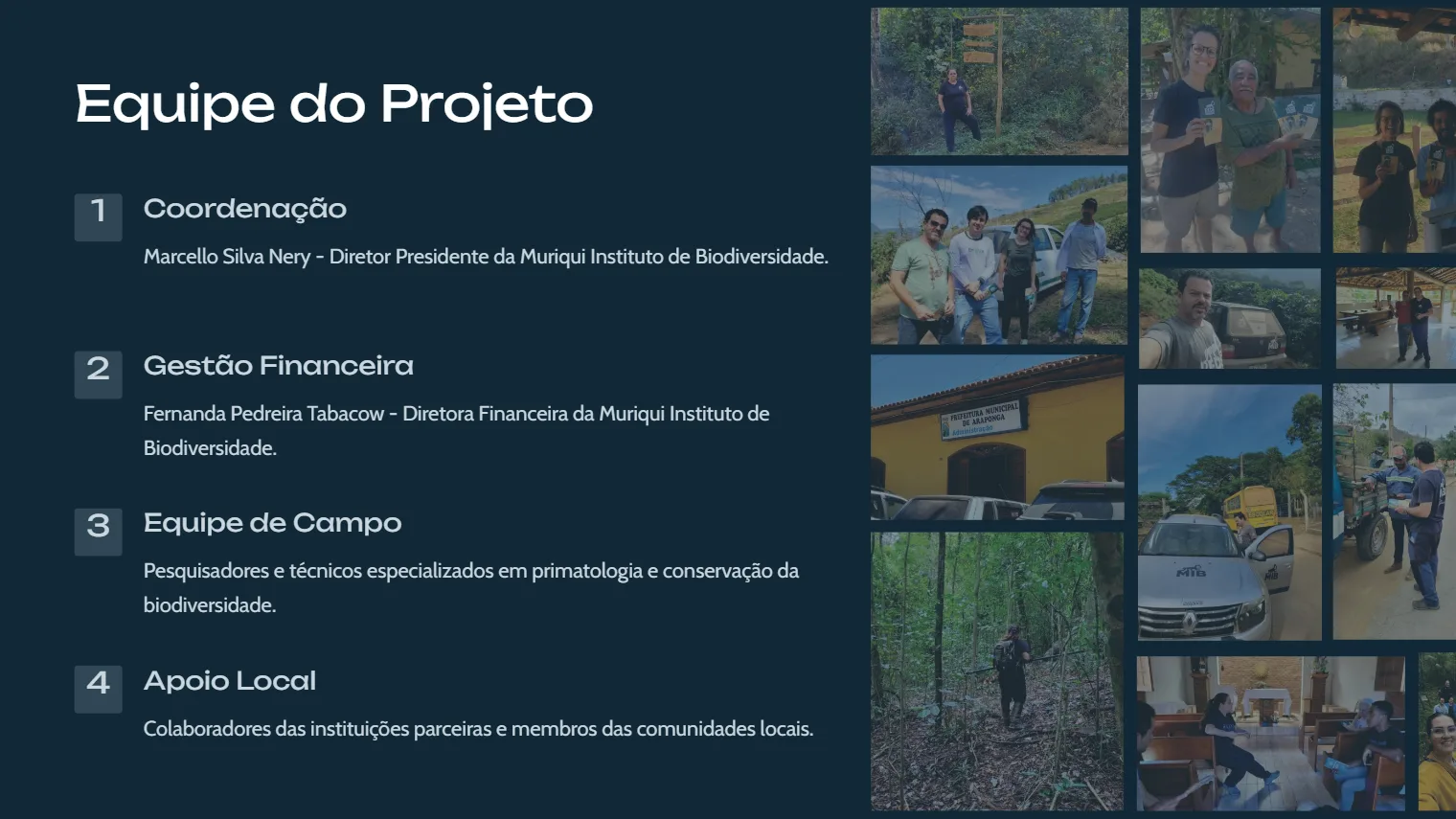
Team in charge: Marcello Silva Nery and Fernanda Pedreira Tabacow (Muriqui Instituto de Biodiversidade)
The Mission to Save the Northern Muriqui
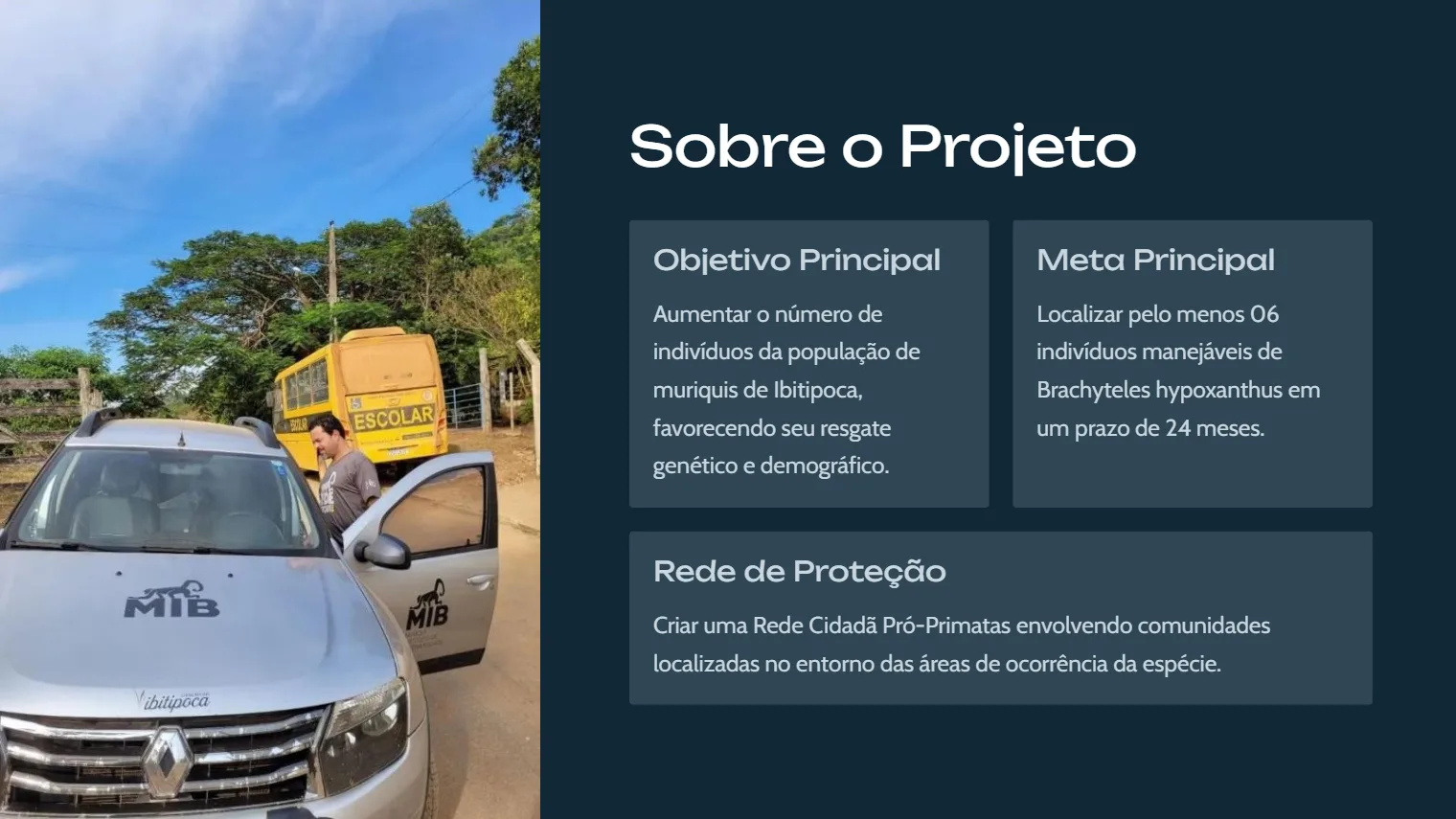
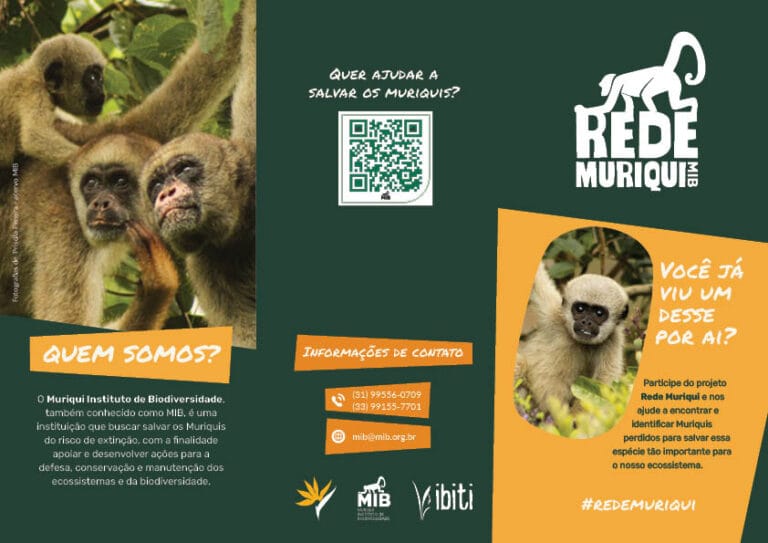
Deep in the dense forests of Minas Gerais, an important conservation initiative is under way. The Muriqui Project, coordinated by the Muriqui Instituto de Biodiversidade under a Funding Agreement with IEF/MG, aims mainly to increase the number of individuals in the Ibitipoca muriqui population, supporting its genetic and demographic rescue, and to create a Rede Cidadã Pró-Primatas (Citizen Pro-Primate Network) involving local communities.
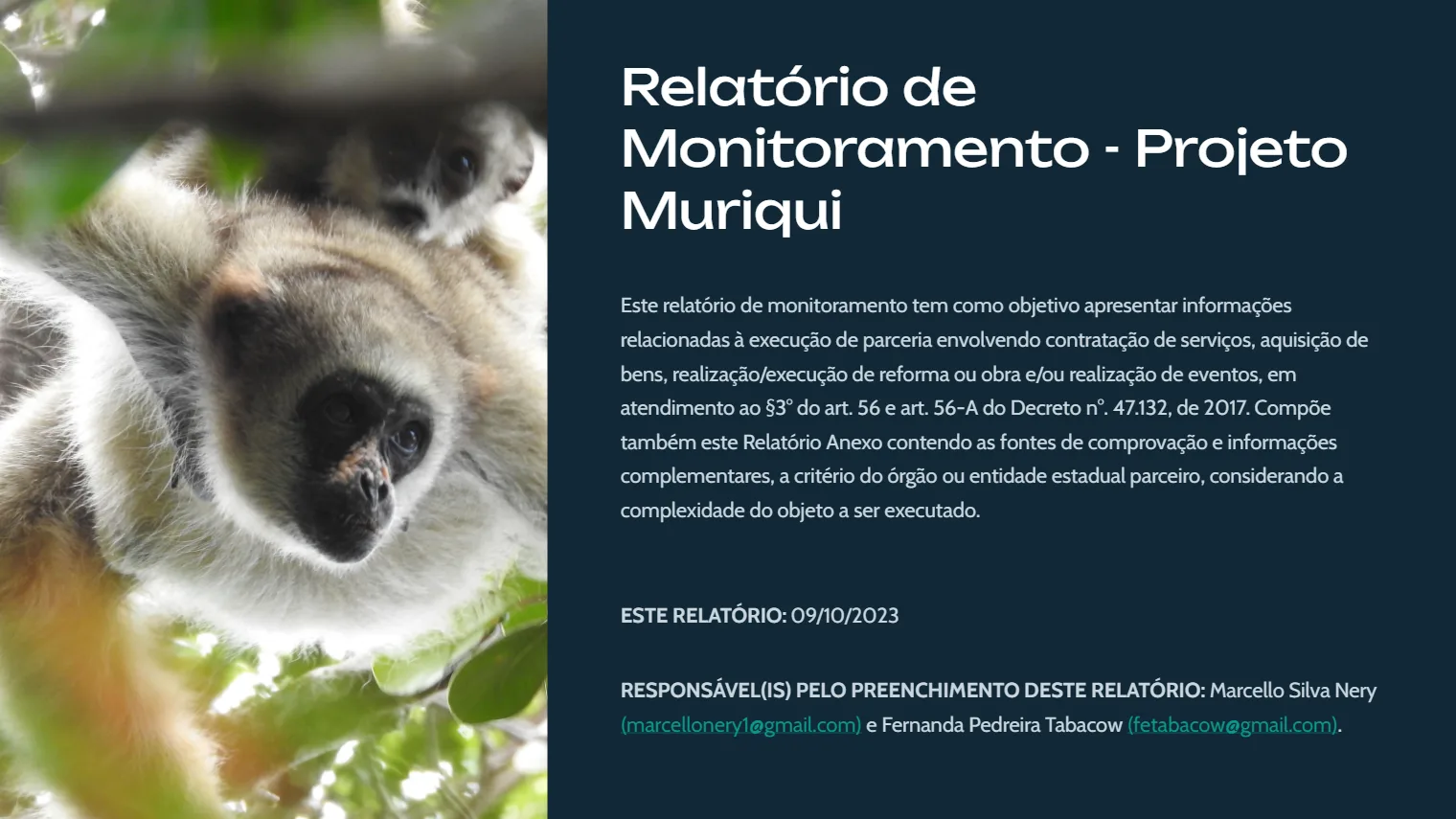
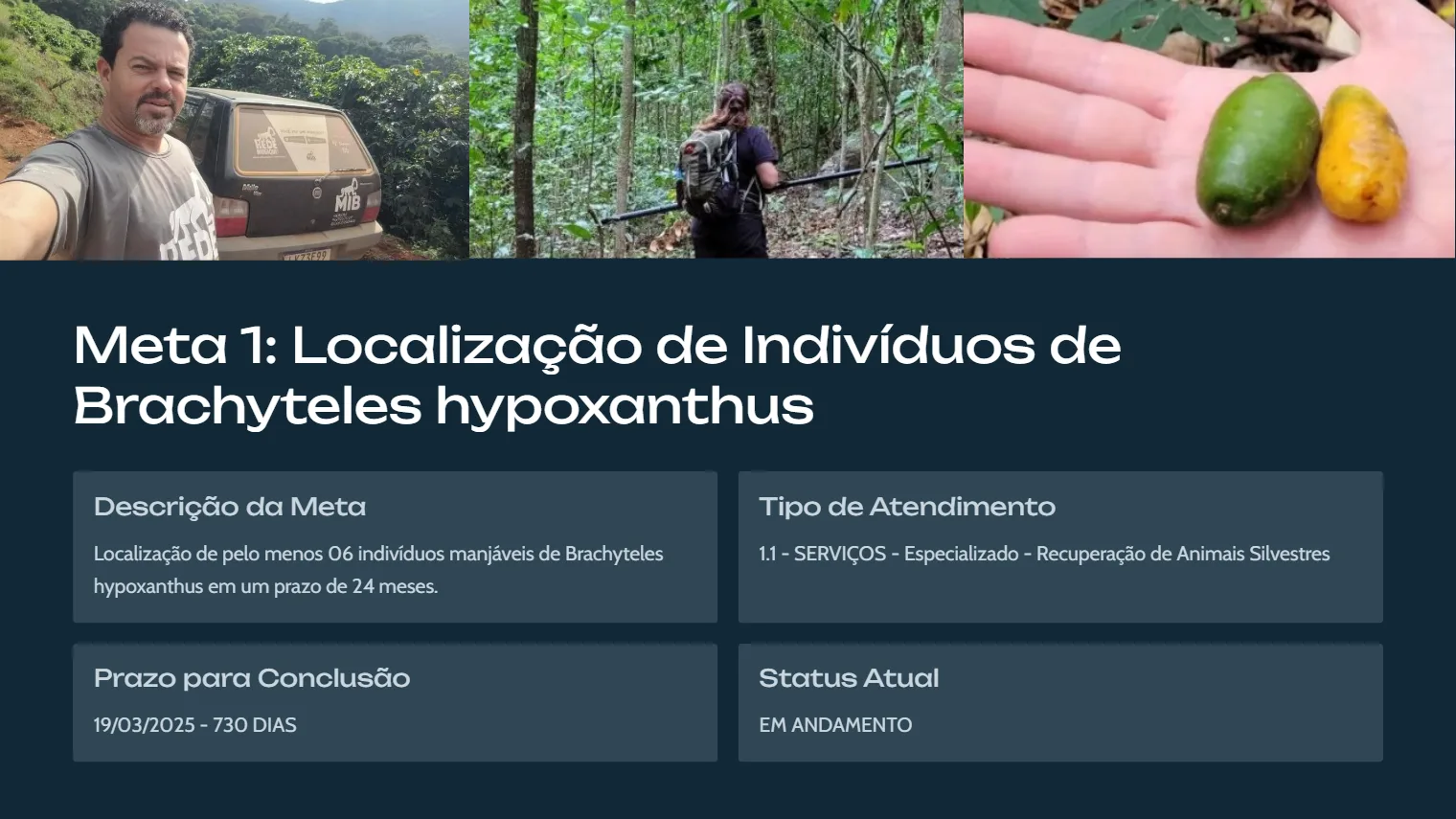
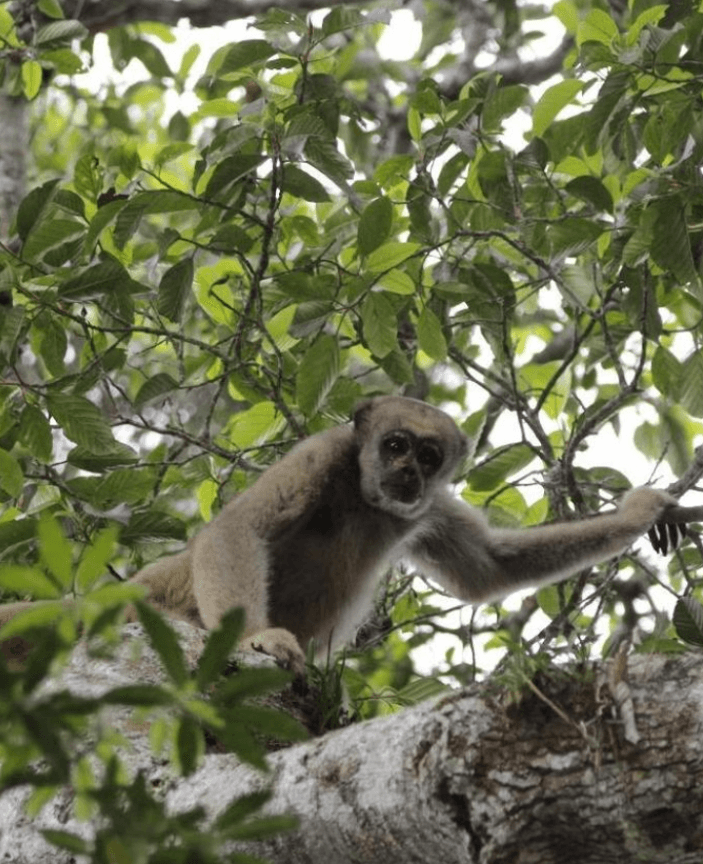
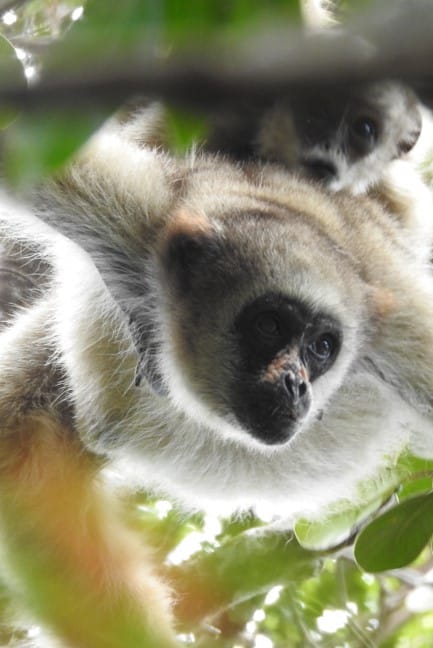
Northern muriquis (Brachyteles hypoxanthus) are among the most threatened primates on the planet. That is why locating at least six manageable individuals within 24 months became the central goal of this project, which seeks to reverse the species’ population decline in specific areas.
First Achievements: A Path of Hope
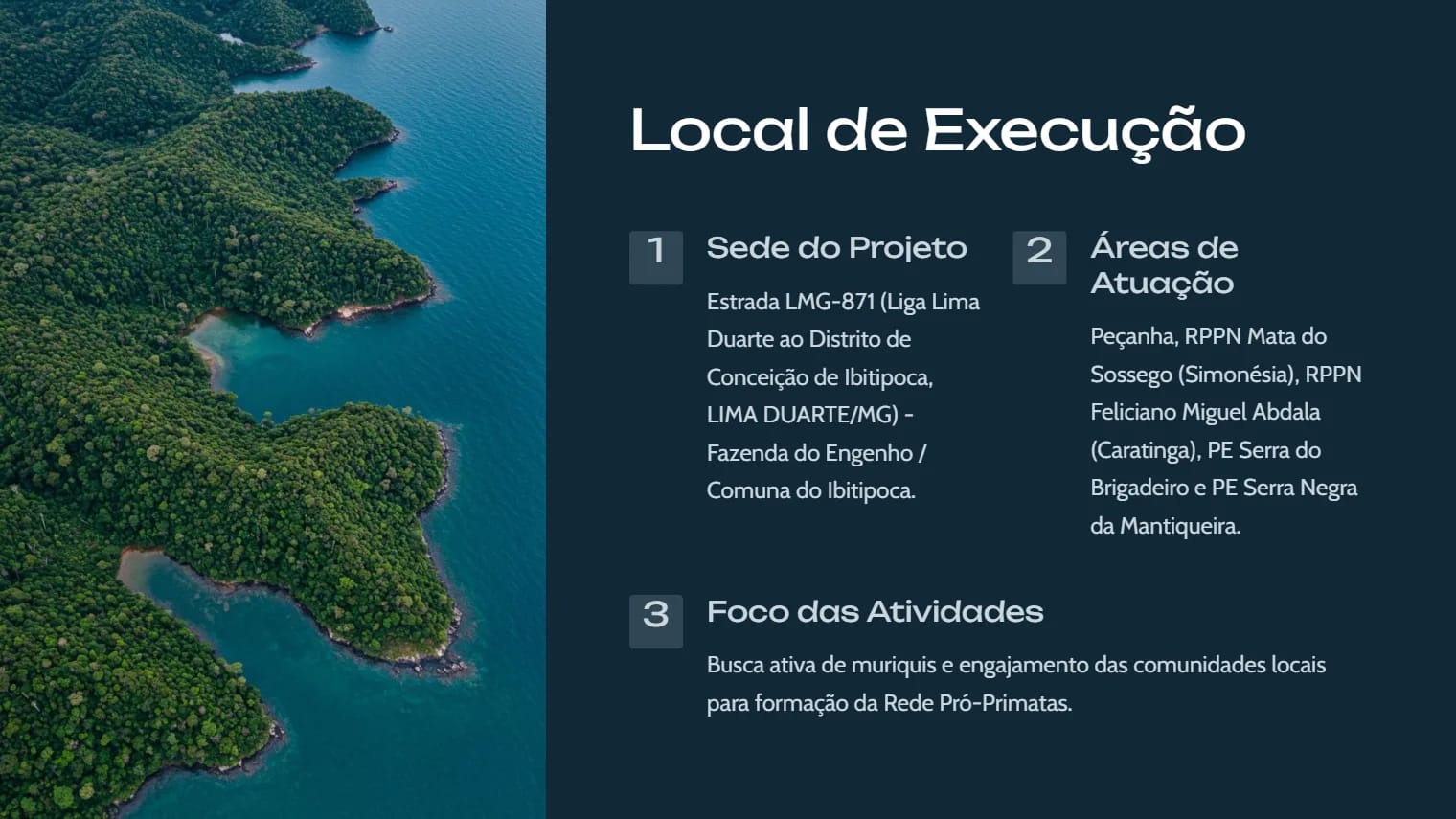
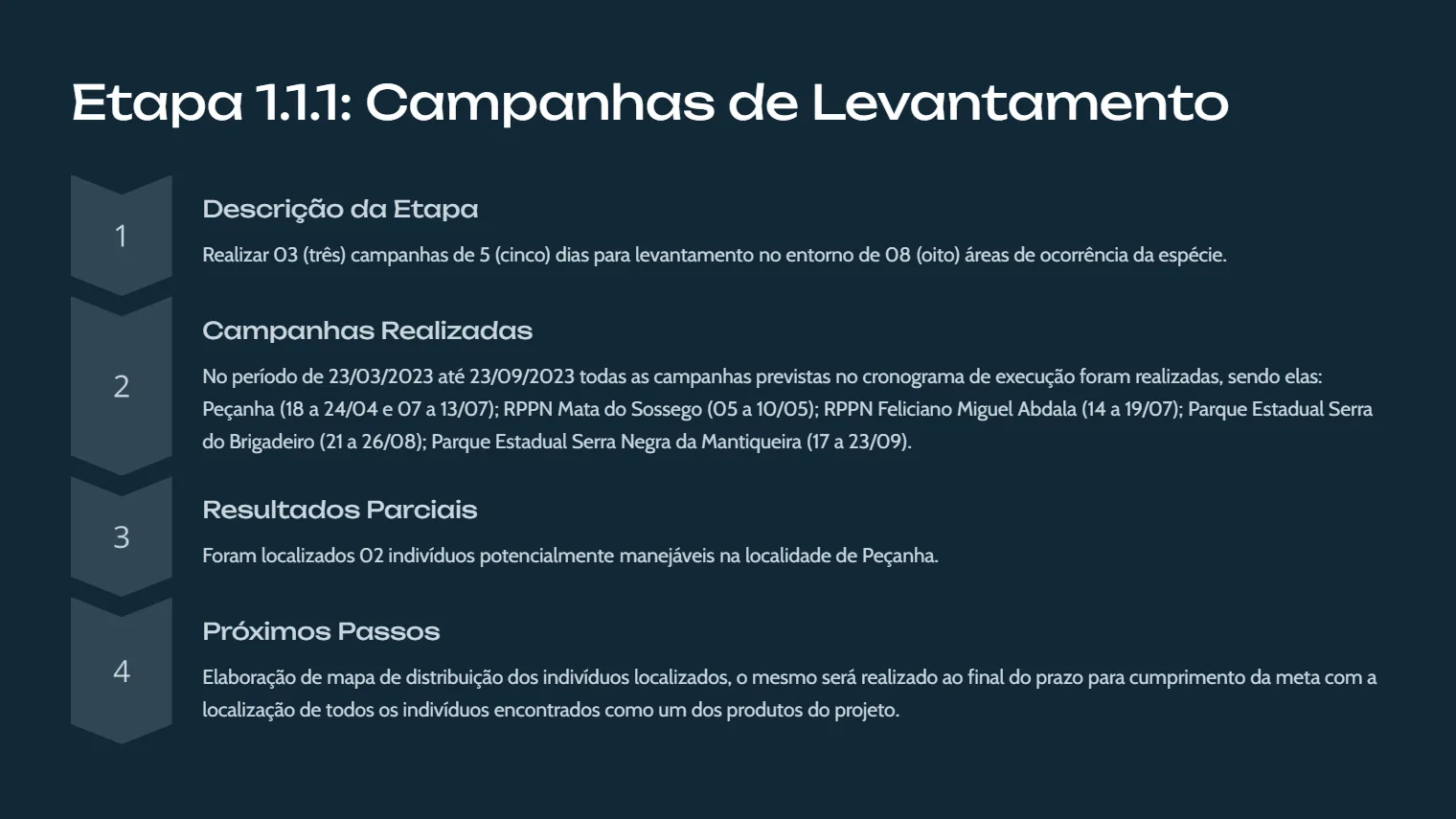
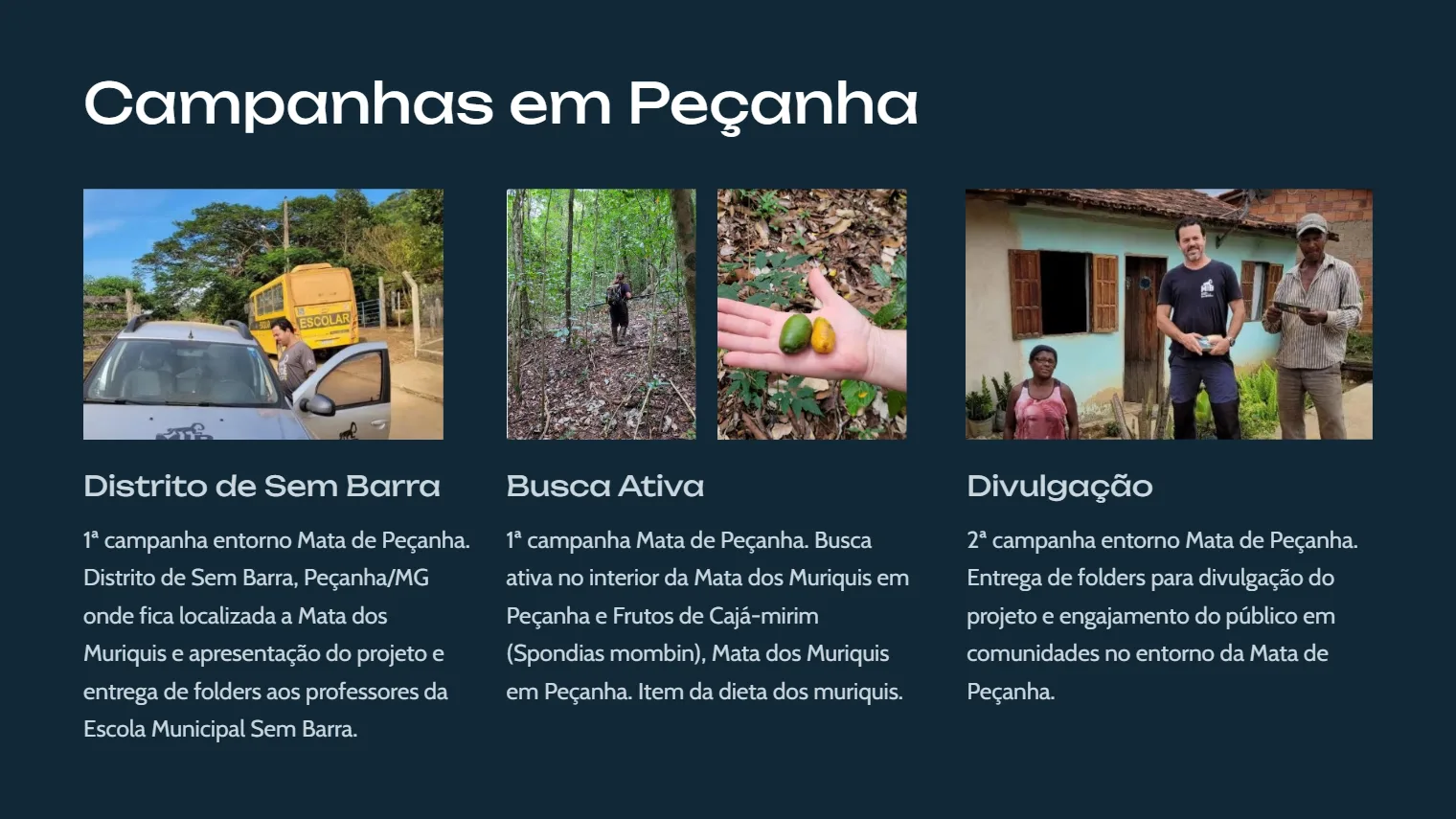
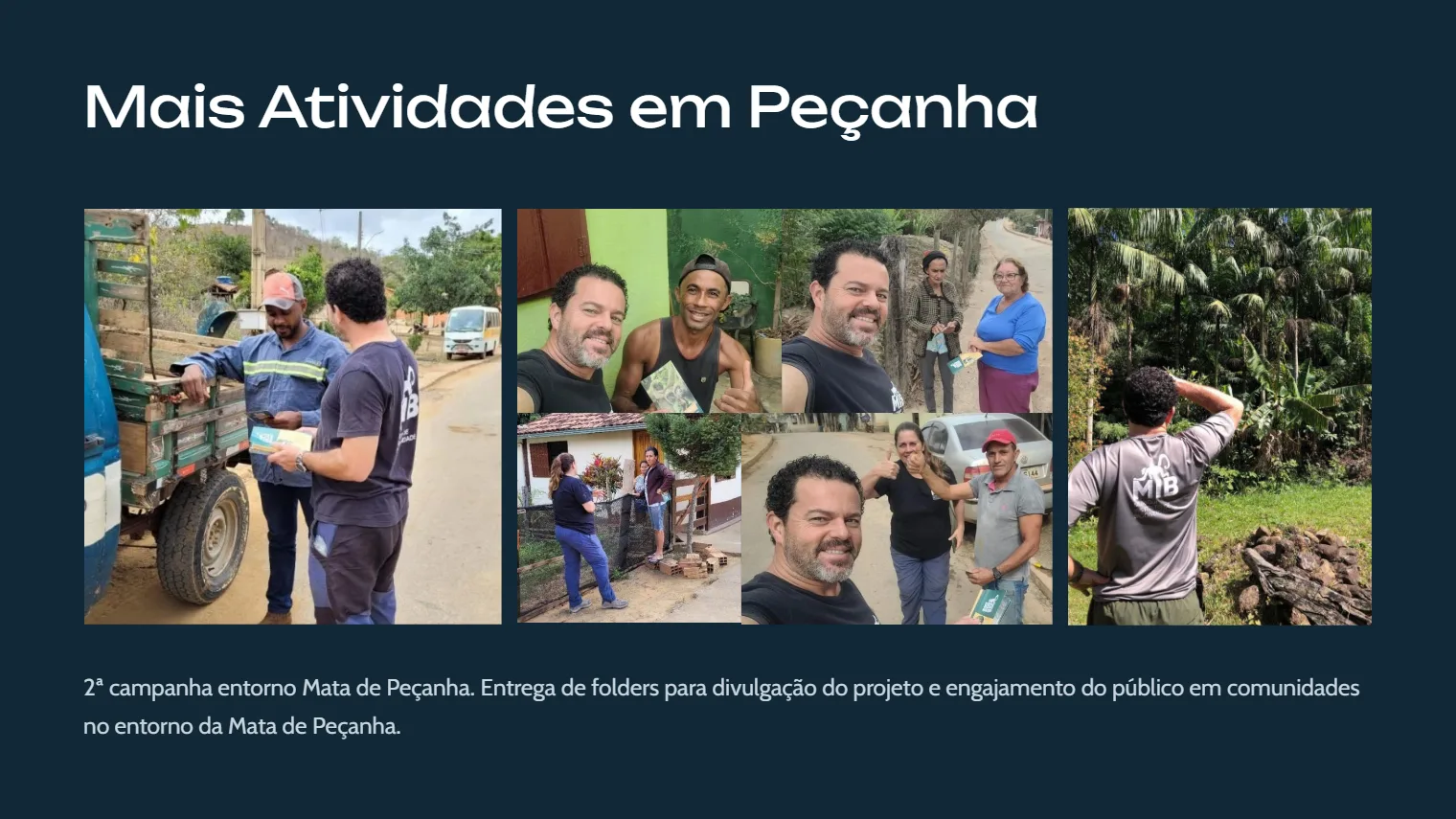
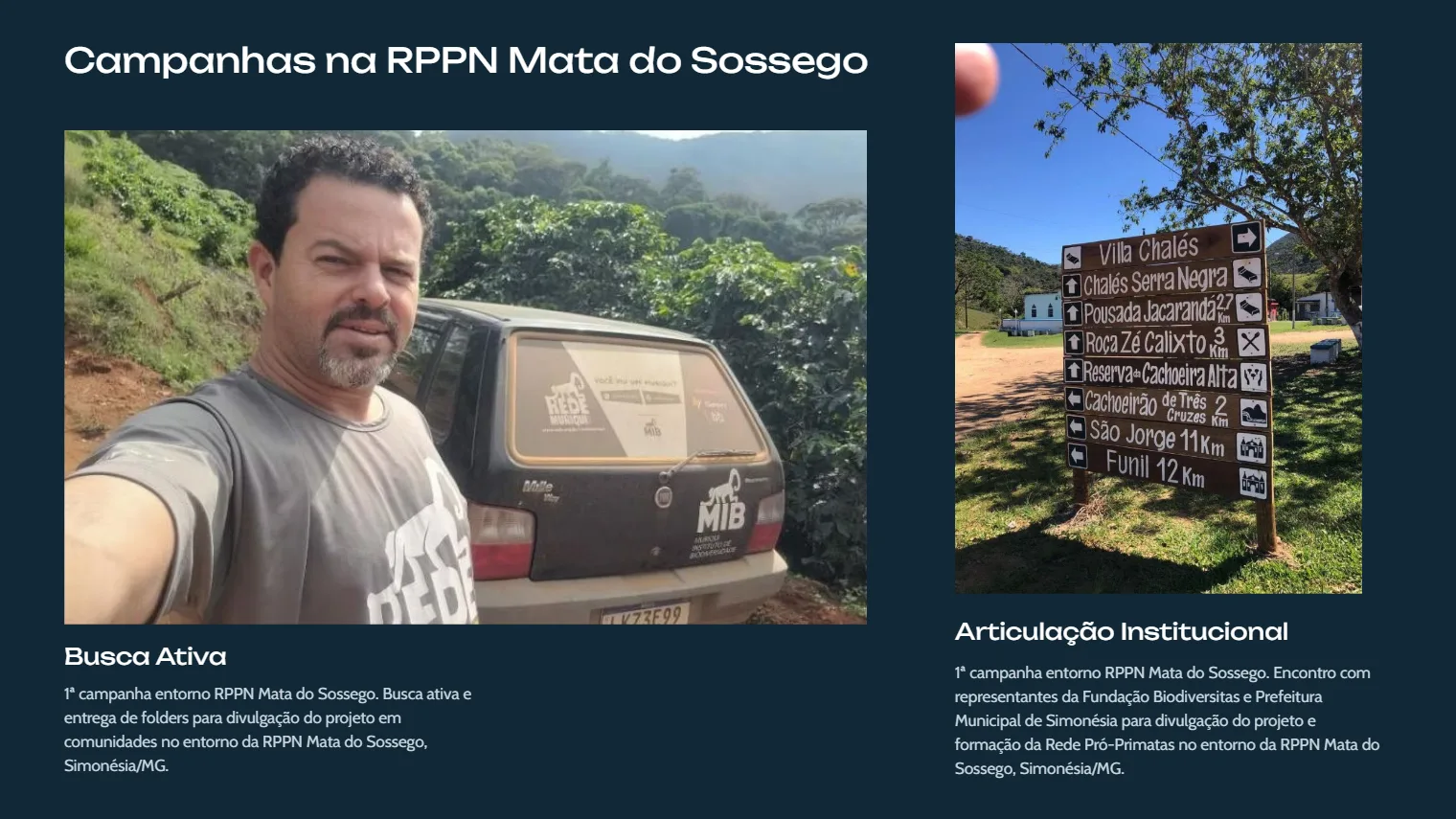
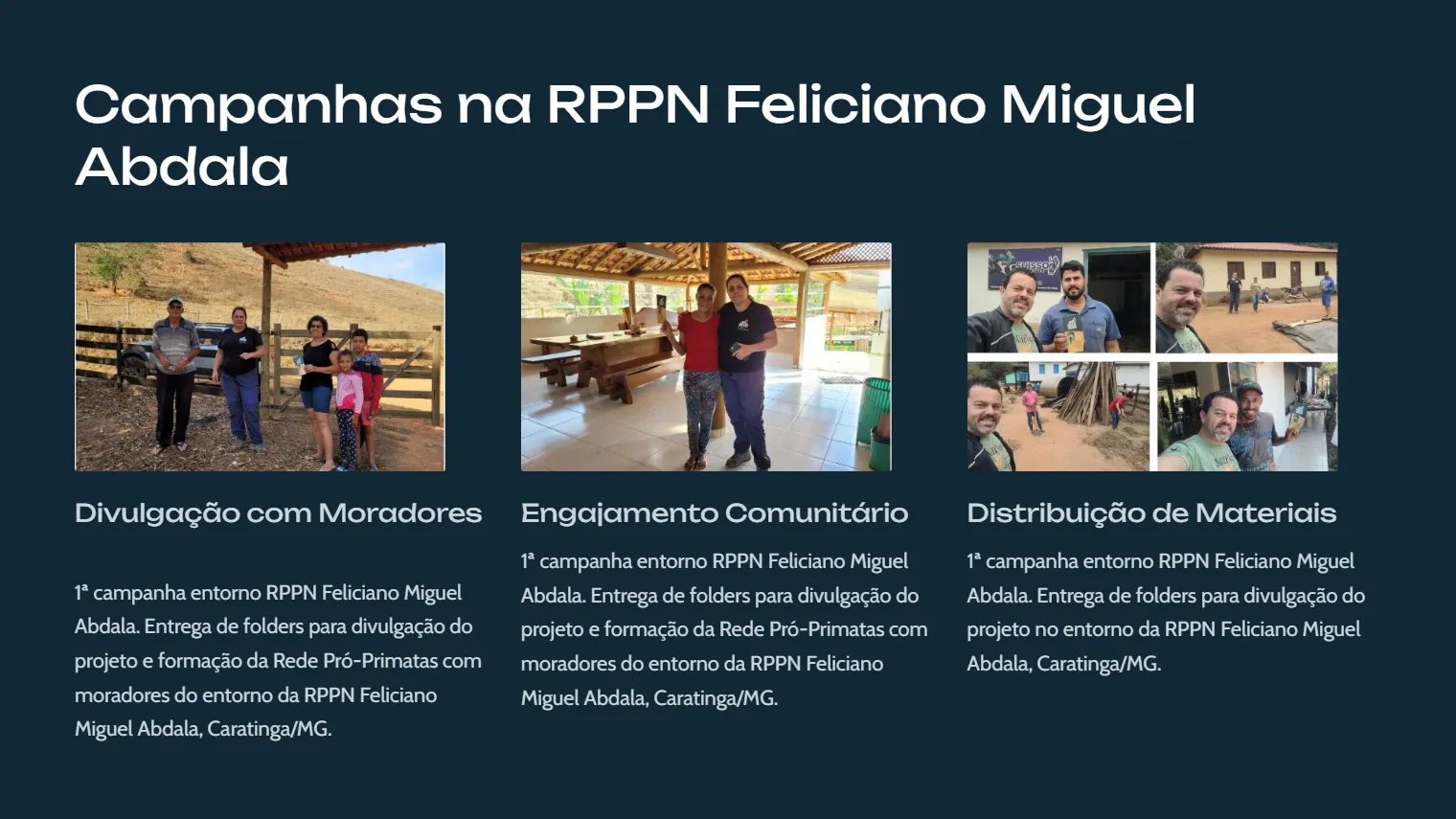
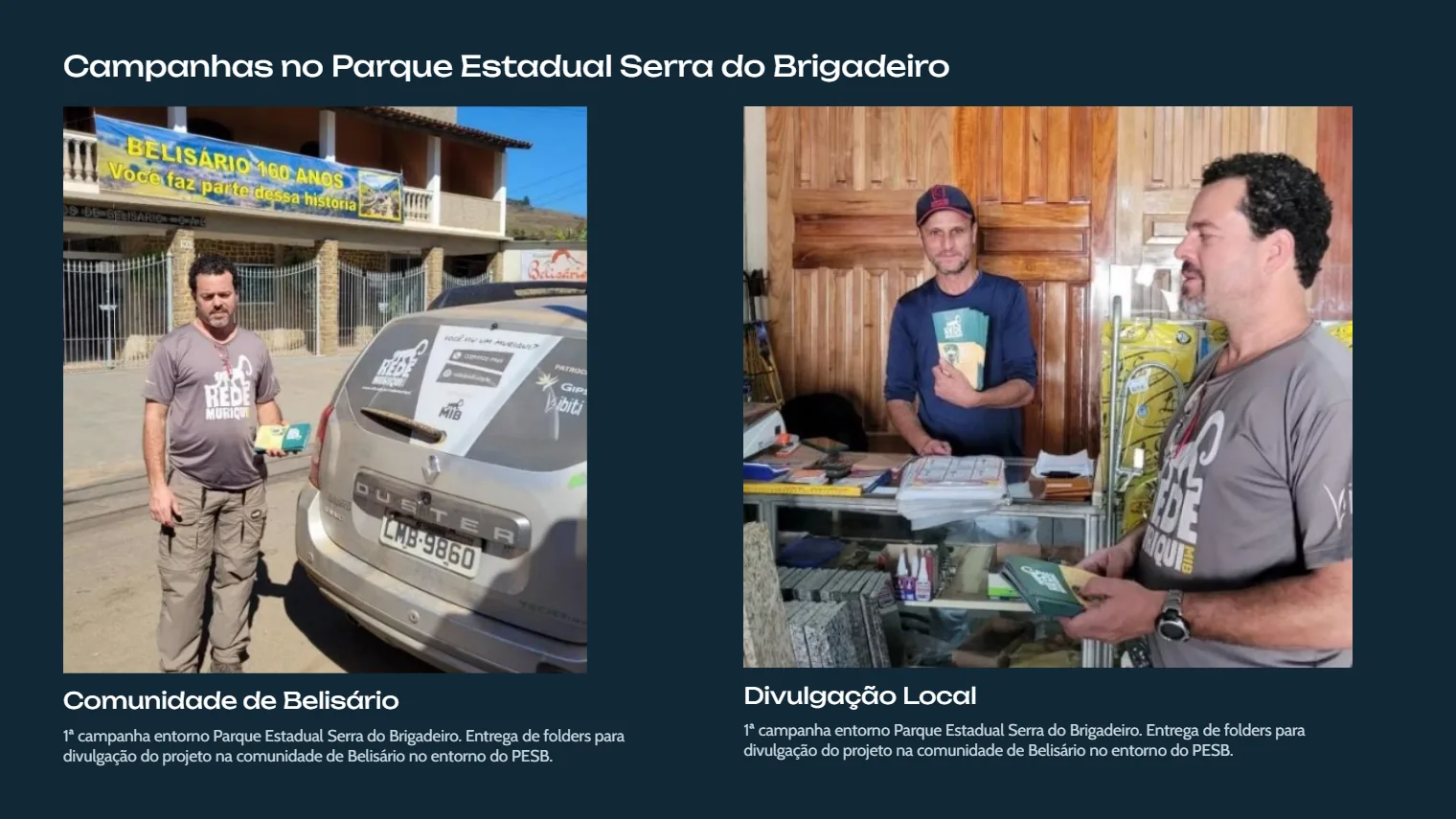
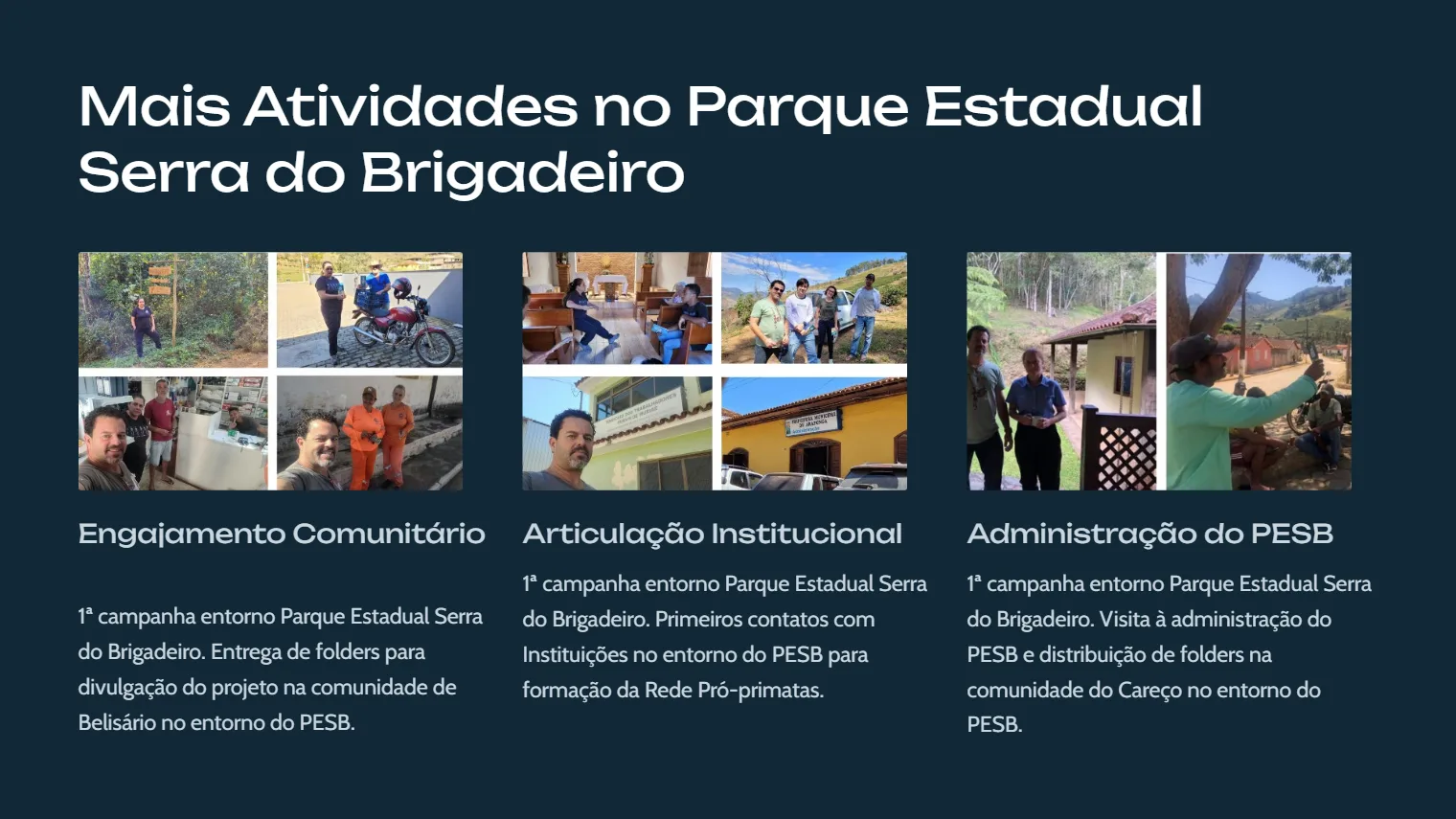
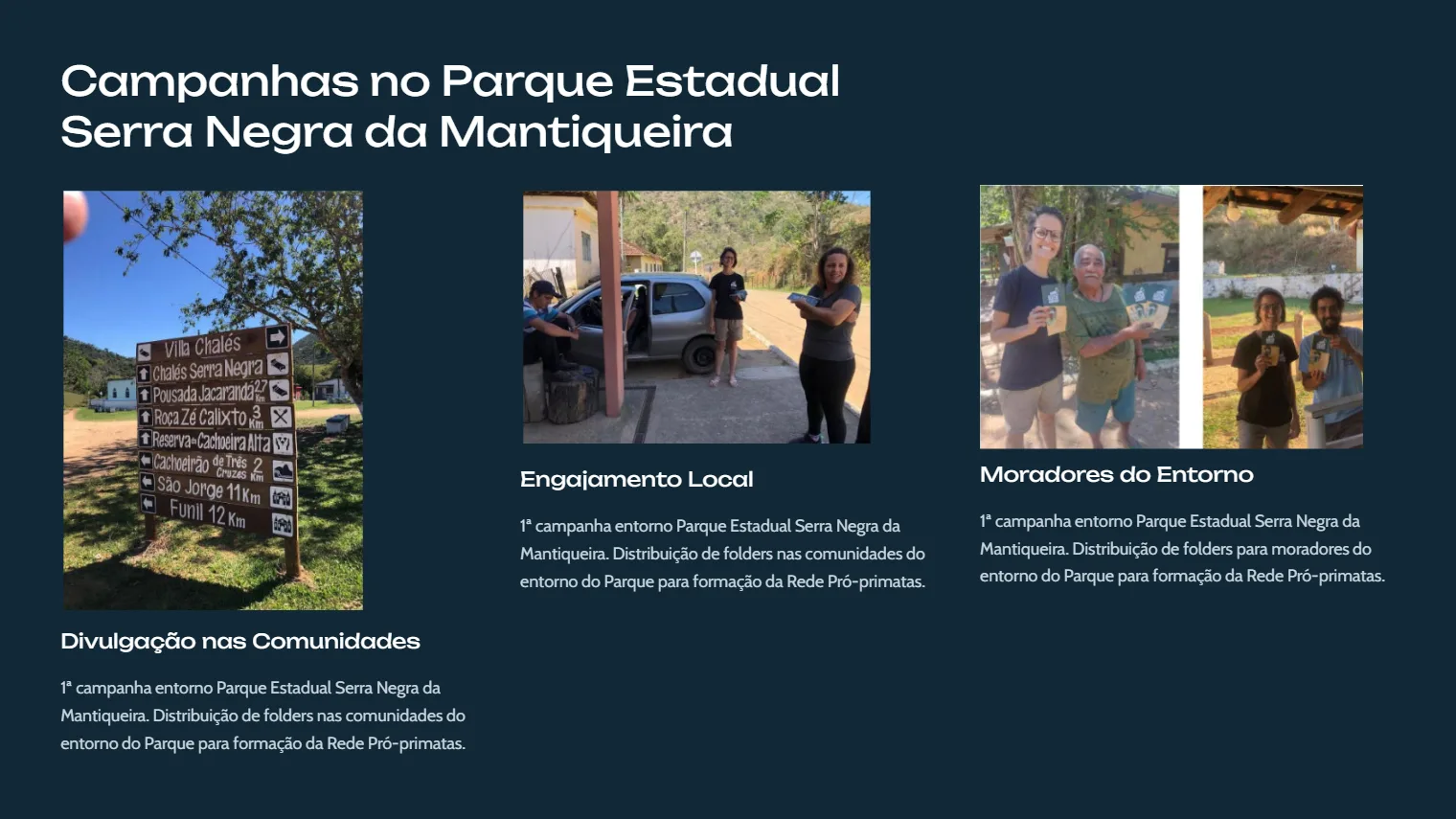
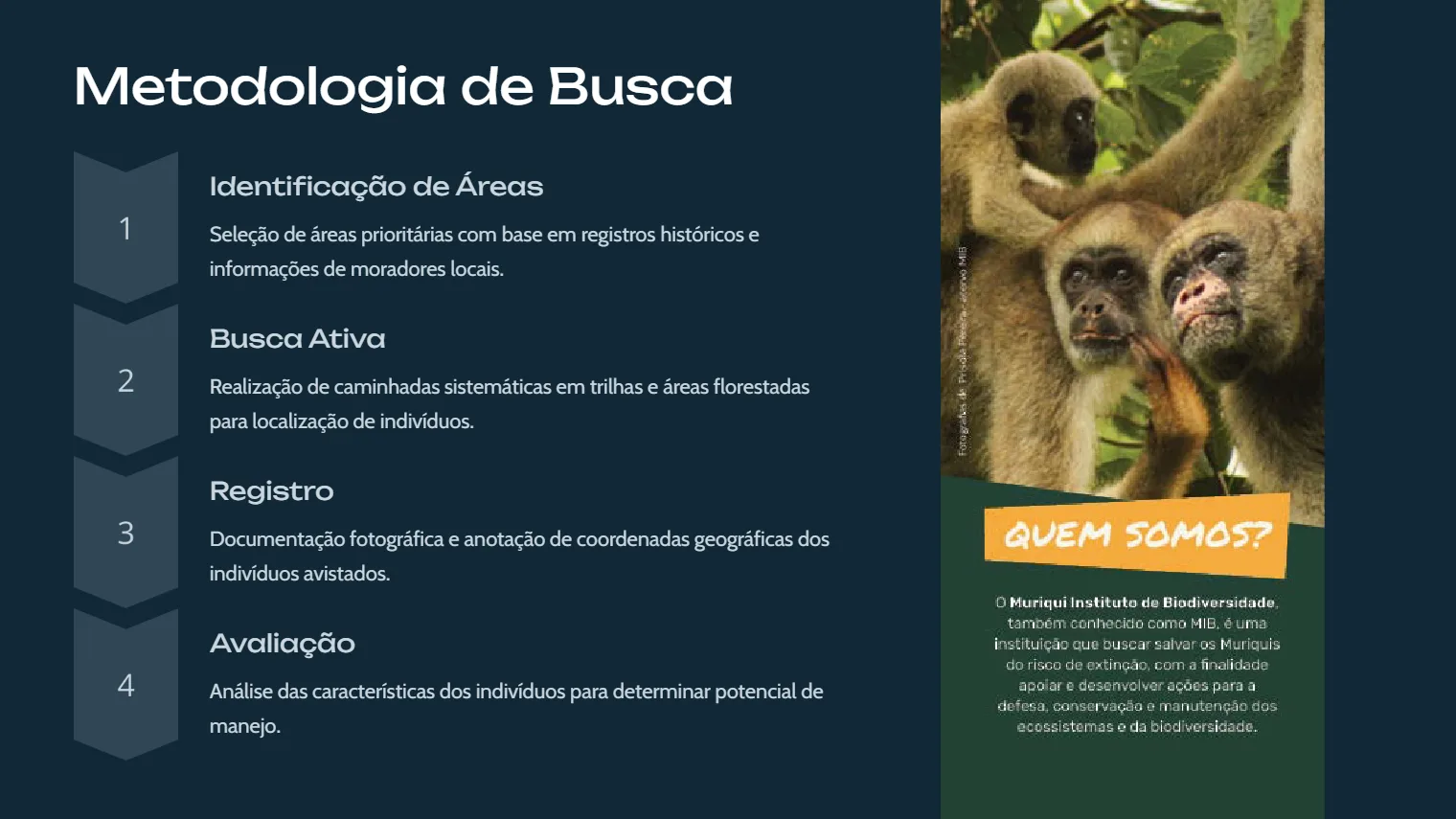
After six months of intense work, the project is already showing promising results. Field campaigns were carried out in several strategic areas: Peçanha, RPPN Mata do Sossego (Simonésia), RPPN Feliciano Miguel Abdala (Caratinga), Parque Estadual Serra do Brigadeiro and Parque Estadual Serra Negra da Mantiqueira.
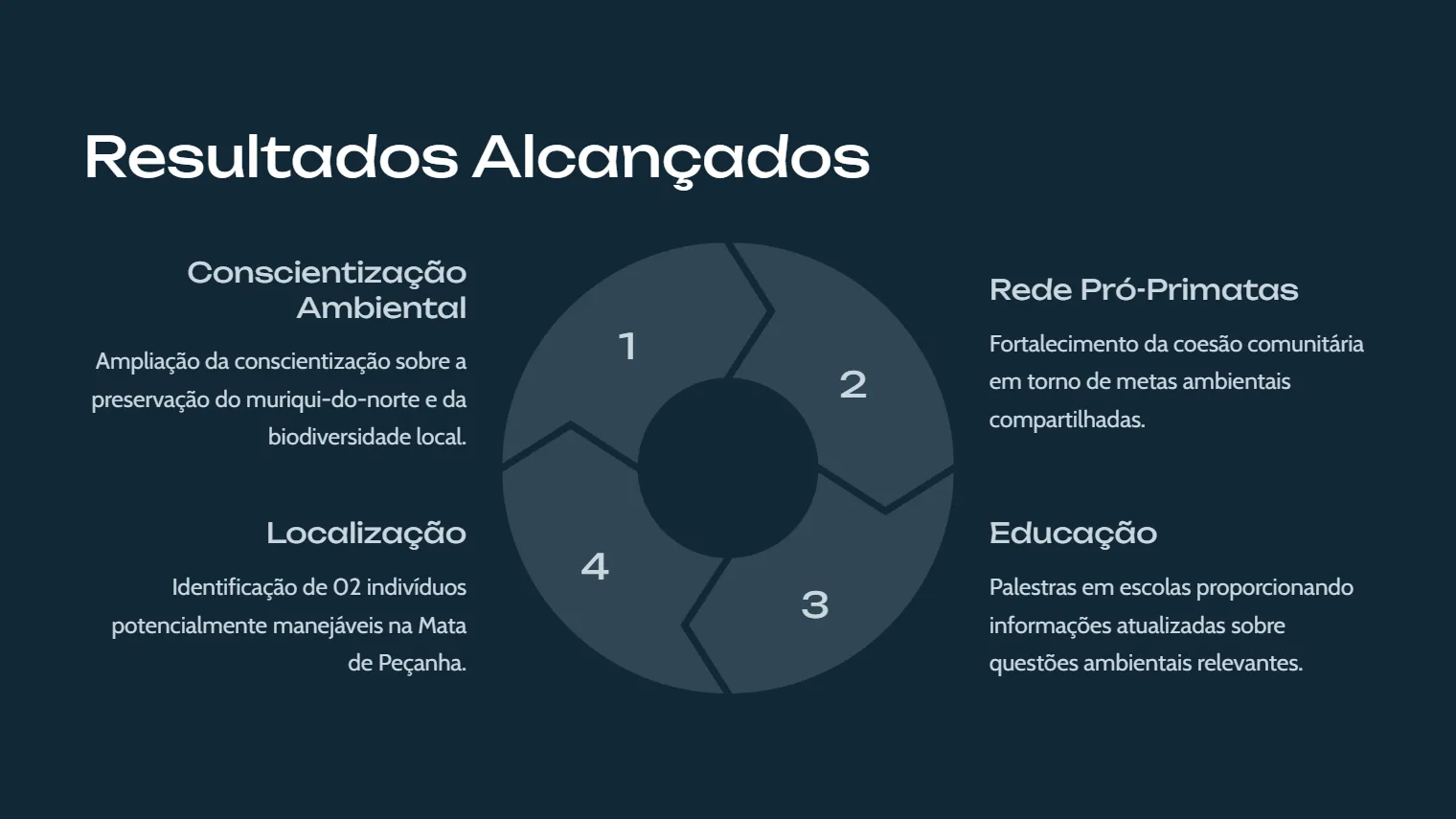
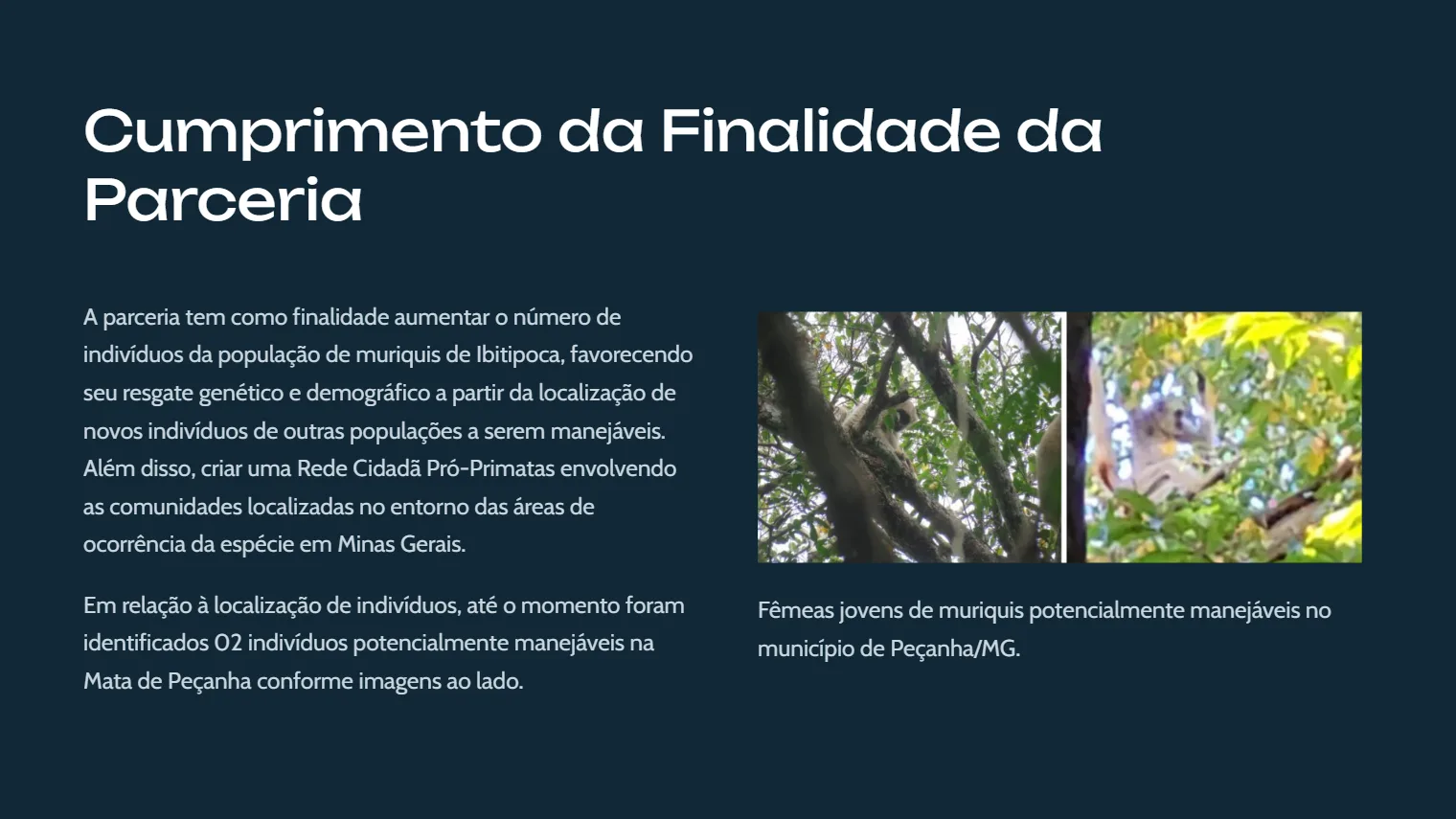
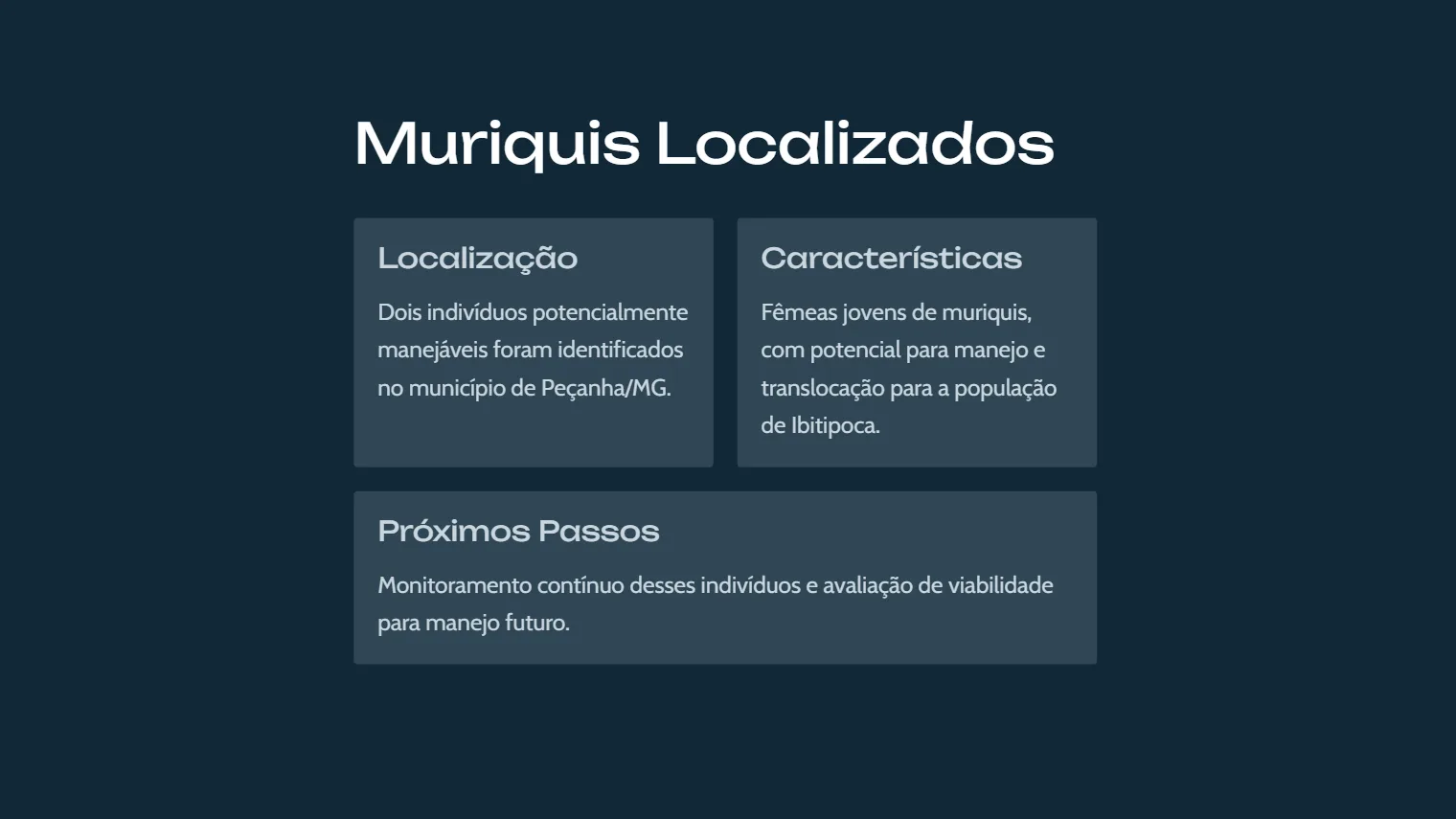
One of the most significant milestones so far was the identification of two potentially manageable individuals in Peçanha – young females who may be key to the future management and translocation program aimed at genetically strengthening the Ibitipoca population.
Building the Rede Pró-Primatas
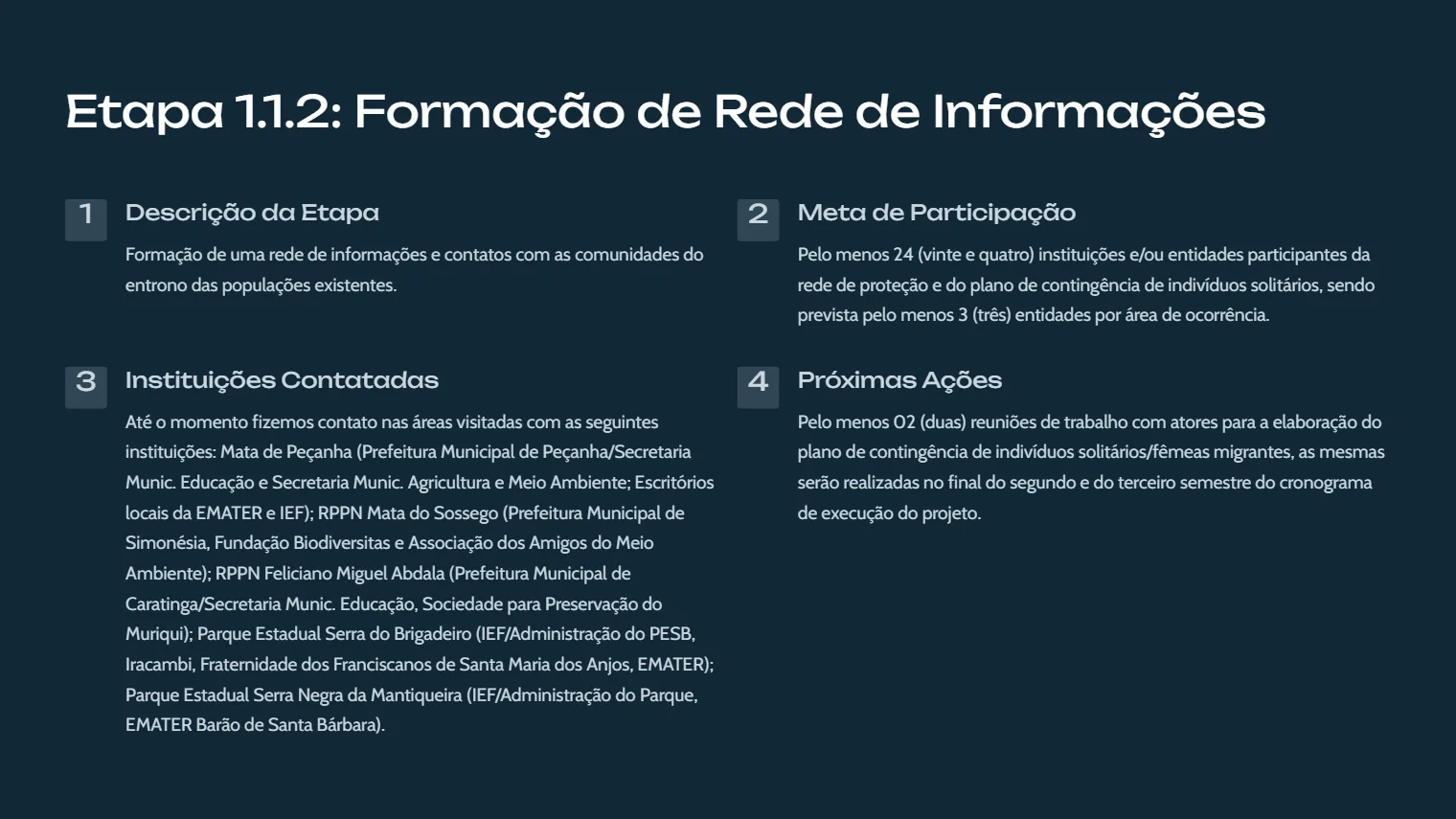
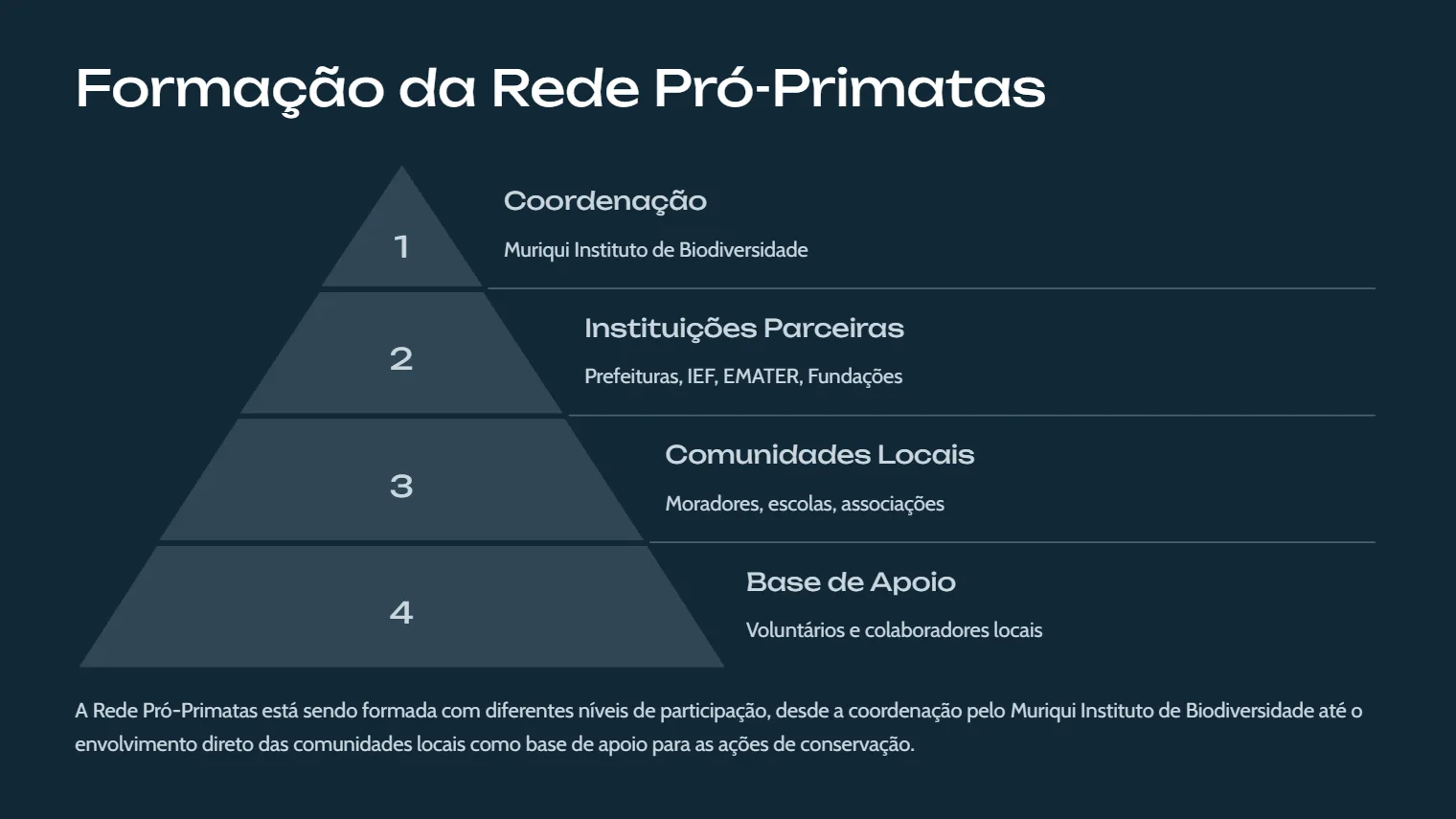
Alongside the search for the primates, the project has been weaving an important support and conservation network. Contacts have already been made with several local institutions in the areas visited, including:
- Municipal governments and their Education, Agriculture and Environment departments
- Local offices of EMATER and IEF
- Fundação Biodiversitas
- Associação dos Amigos do Meio Ambiente
- Sociedade para Preservação do Muriqui
- Iracambi
- Fraternidade dos Franciscanos de Santa Maria dos Anjos
This coordination is essential to ensure community engagement and the long-term sustainability of conservation actions.
Impacts on Communities
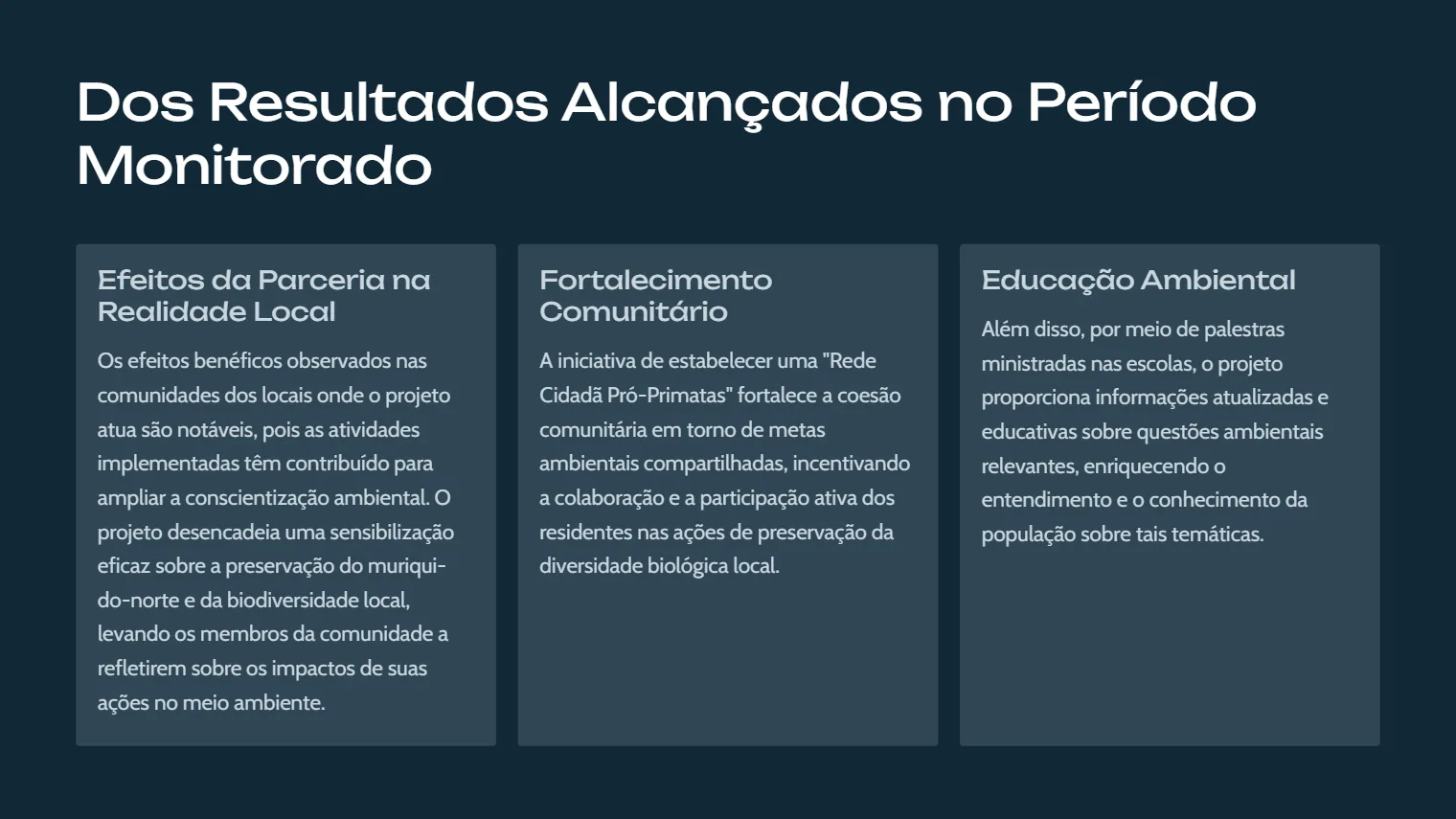
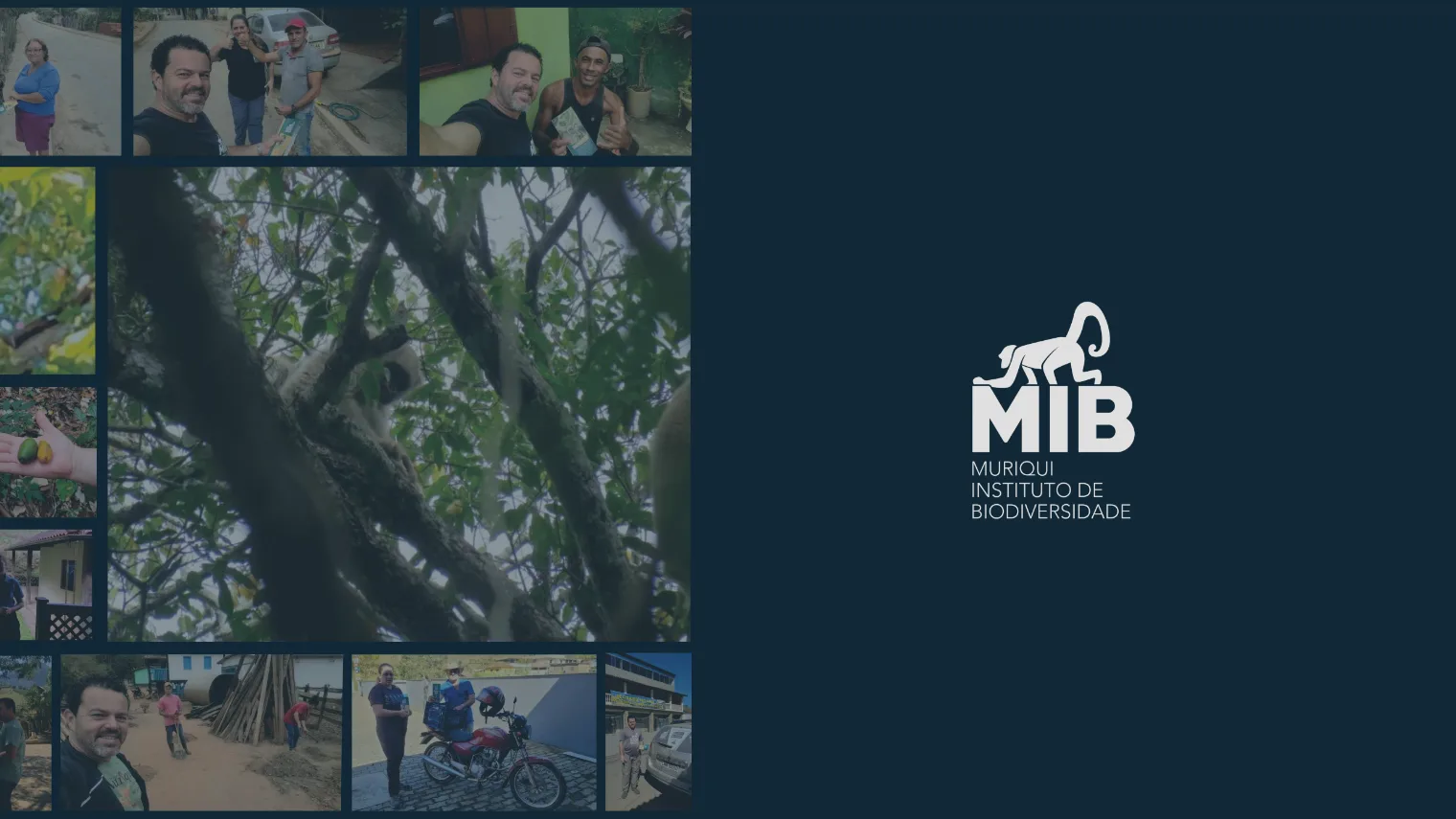
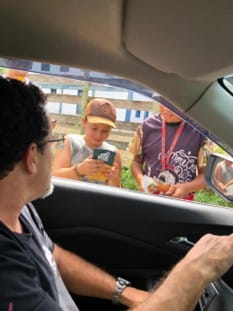
The project’s positive effects are already noticeable in the communities visited. Greater environmental awareness, especially about the importance of the northern muriqui and local biodiversity, has led residents to reflect on their actions and their role in conservation.
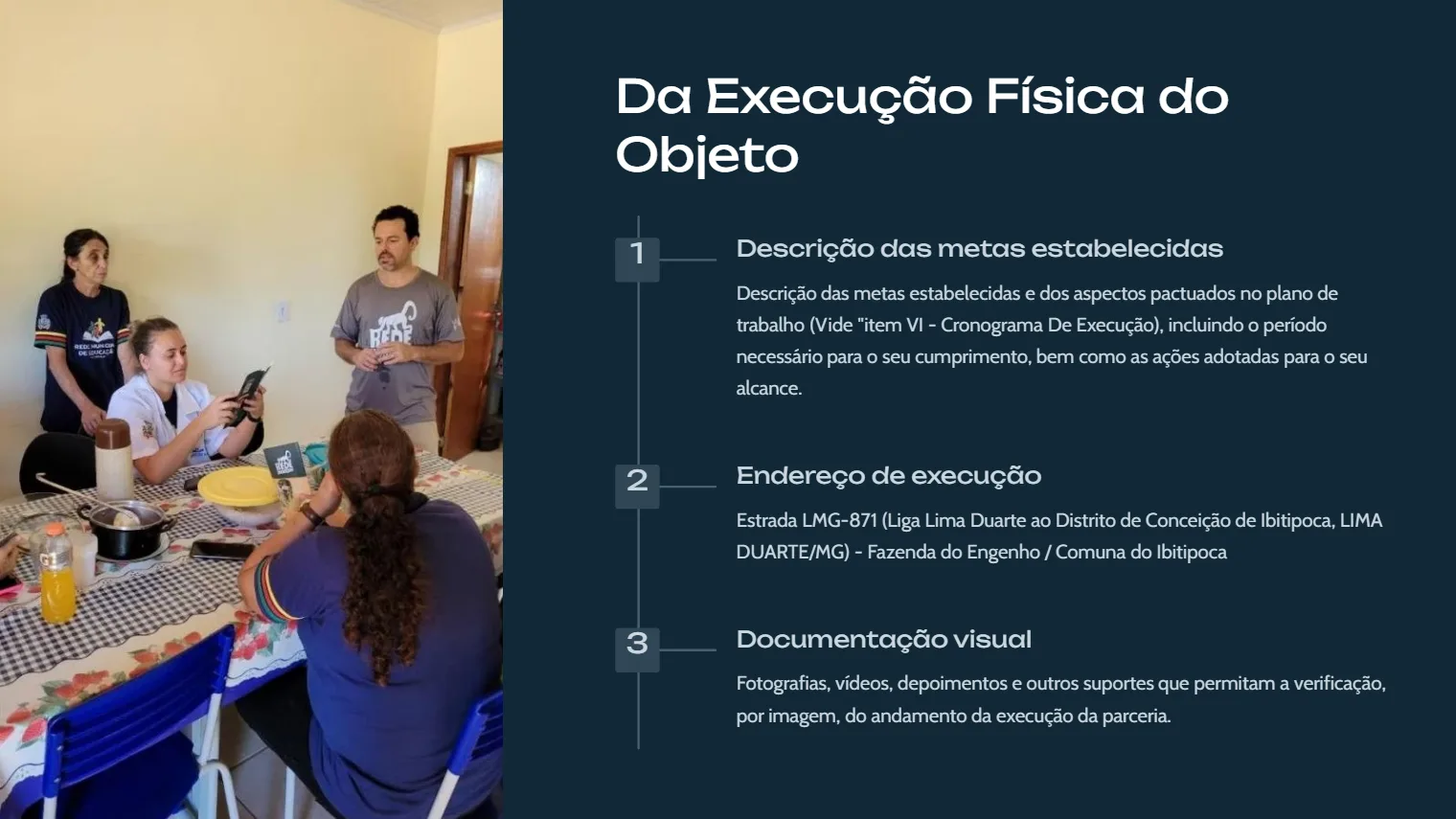
Educational activities in schools, with the distribution of informational materials and talks, have provided up-to-date information on relevant environmental issues, enriching the population’s knowledge of these important topics.
The creation of the “Rede Cidadã Pró-Primatas” strengthens community cohesion around shared environmental goals, encouraging collaboration and active participation in preserving local biodiversity.
Challenges and Next Steps
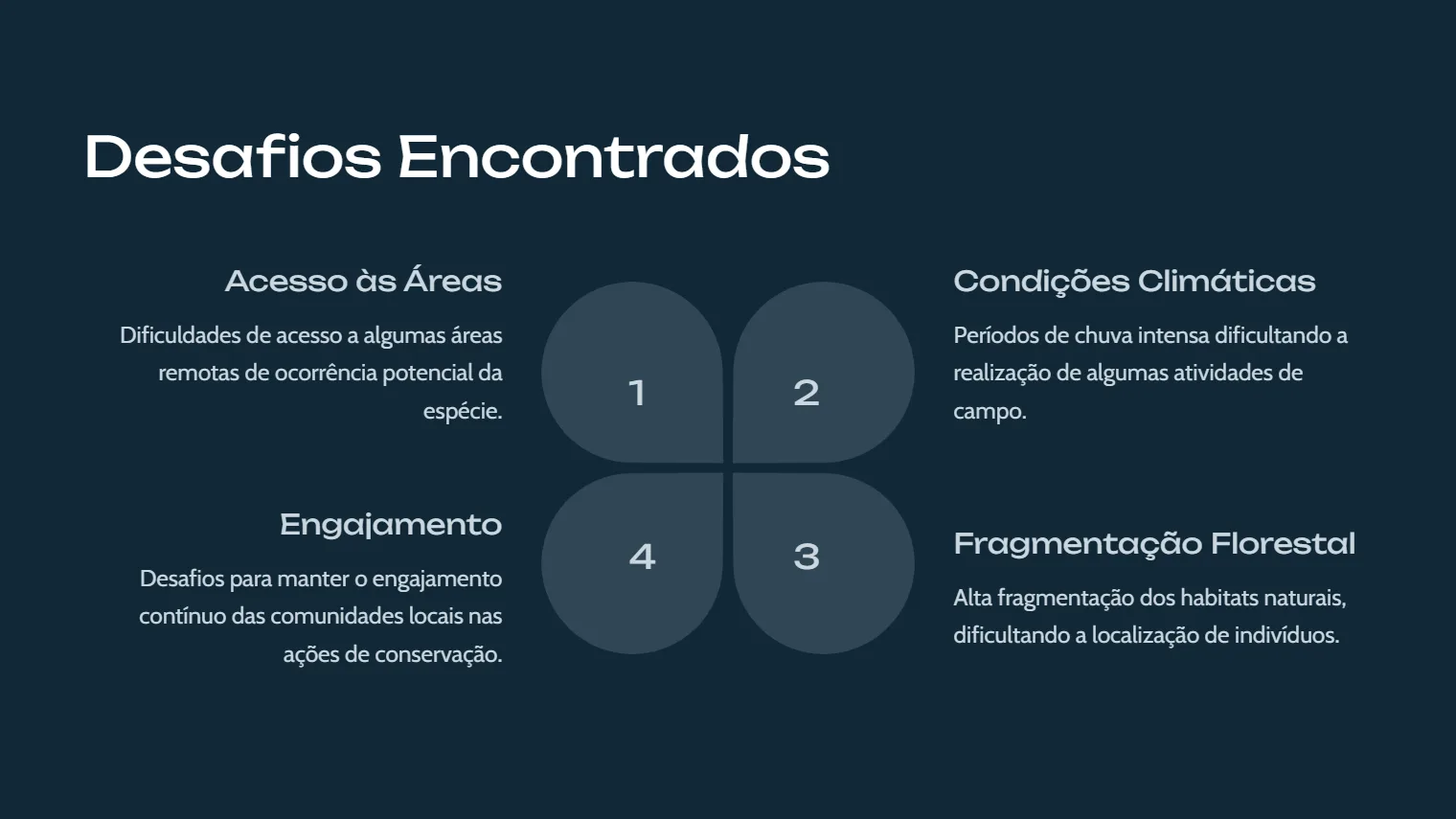
Like any ambitious conservation project, the Muriqui Project faces significant challenges, including:
- Difficult access to remote areas
- Adverse weather conditions during field campaigns
- High fragmentation of natural habitats
- Challenges in maintaining ongoing community engagement
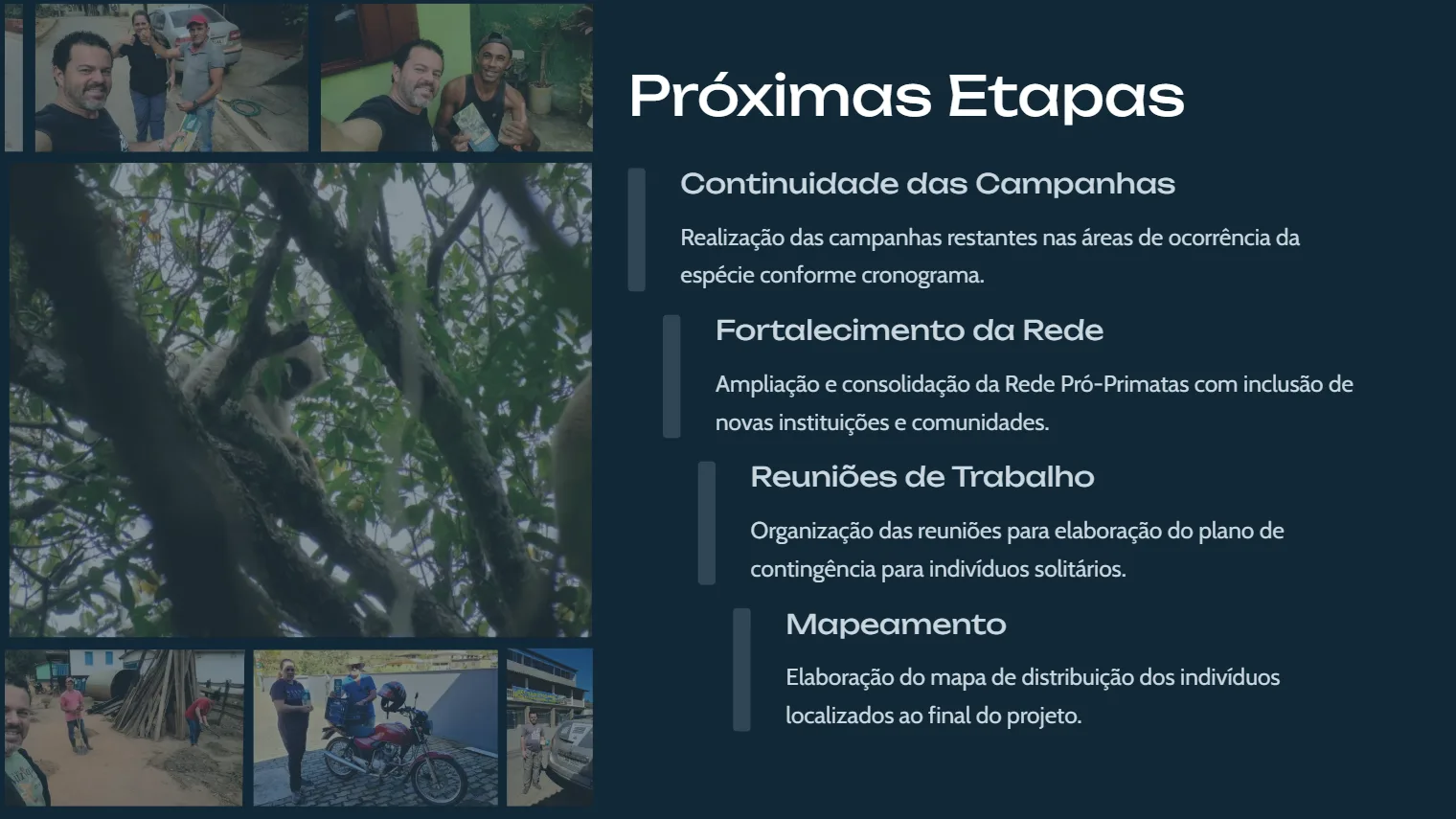
Despite these obstacles, the team remains determined to carry out the next steps:
- Continuing field campaigns in the other areas where the species occurs
- Expanding and consolidating the Rede Pró-Primatas
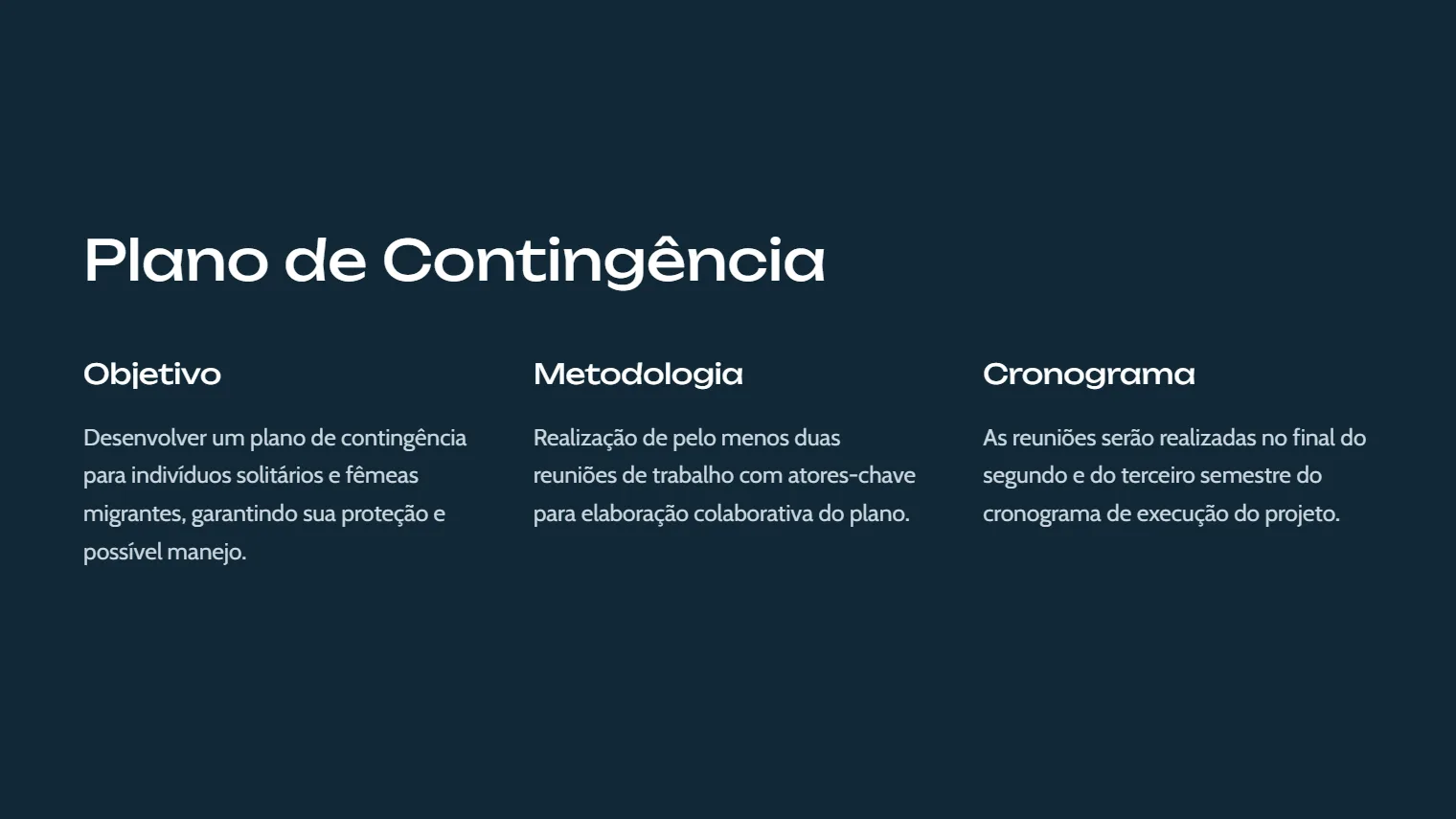
- Holding meetings to draft the contingency plan for solitary individuals
- Preparing the distribution map of the individuals located
A Brighter Future for the Muriquis
The expected impacts once the project is completed are transformative:
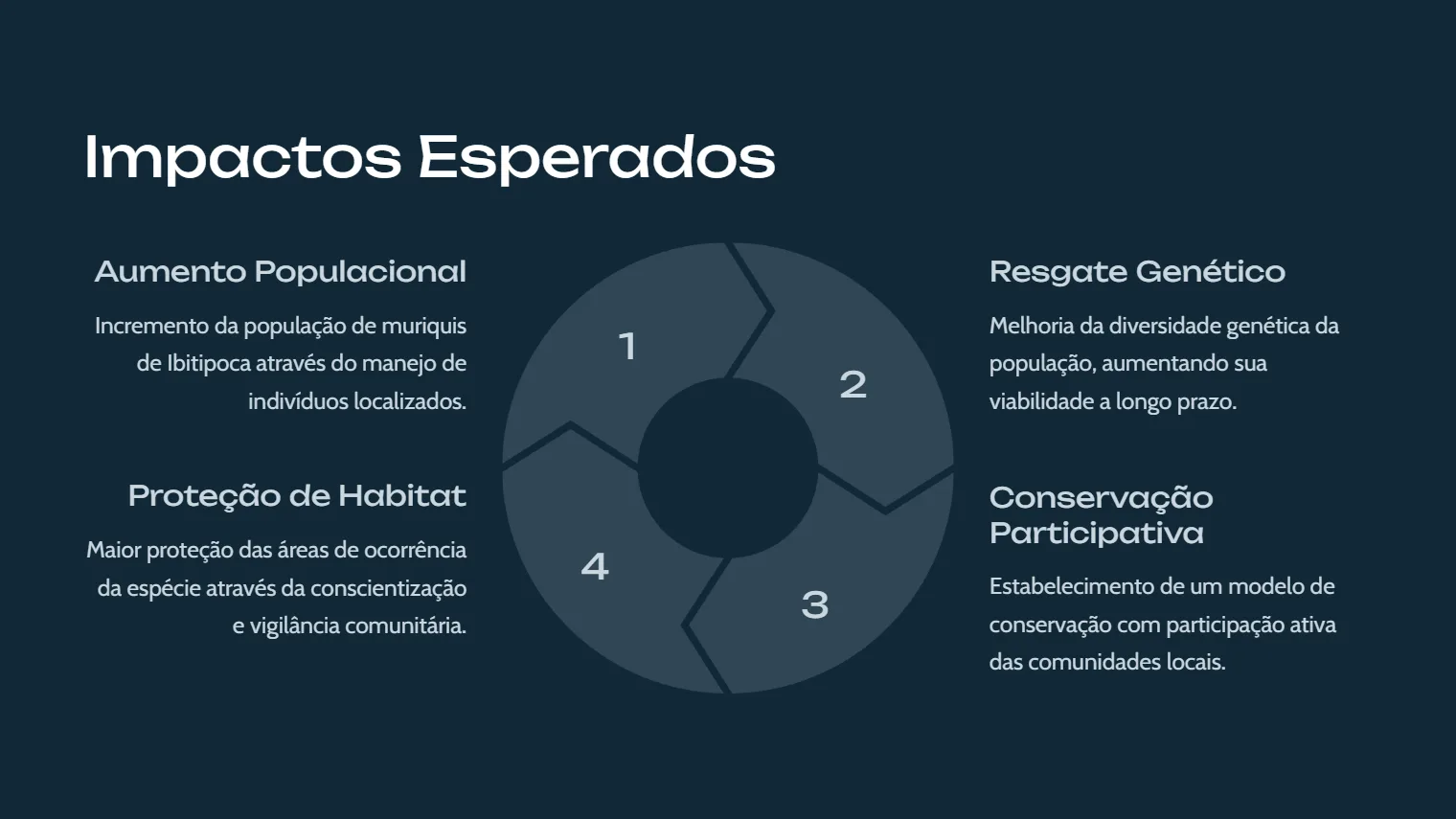
- Growth of the Ibitipoca muriqui population
- Improved genetic diversity, increasing long-term viability
- Greater protection of the areas where the species occurs
- Establishment of a participatory conservation model
The Muriqui Project represents not only hope for the survival of one of Brazil’s most threatened primate species, but also an example of how effective conservation depends on bringing scientific research and community involvement together.
The journey is only beginning, but every step forward is a victory for Brazil’s biodiversity and for the communities that live alongside this priceless natural heritage.
See the presentation of this report below: