The tool that connects communities and protects muriquis in situations...
Read more
Menu
REDE MURIQUI PROJECT
Muriqui: The Gentle Giant of the Atlantic Forest
Discover the story of the muriquis, the largest primates in the Americas, and how you can help save them from extinction.
Project Team
Coordinator Marcello S. Nery
MSc in Animal Biology. Specialist in research, conservation and management of northern muriquis, and in citizen science.
Collaborator Fabiano R. de Melo
PhD in Ecology, postdoctoral fellow in Anthropology. Specialist in animal conservation, field research and advanced technologies.
Collaborator Fernanda P. Tabacow
MSc in Animal Biology, UFV. Member of the Specialist Group of the PAN for Atlantic Forest Primates and of the IUCN SSC Primate Specialist Group Neotropics – Brazil/Guianas.
Collaborator Leandro S. Moreira
Who Are the Muriquis?
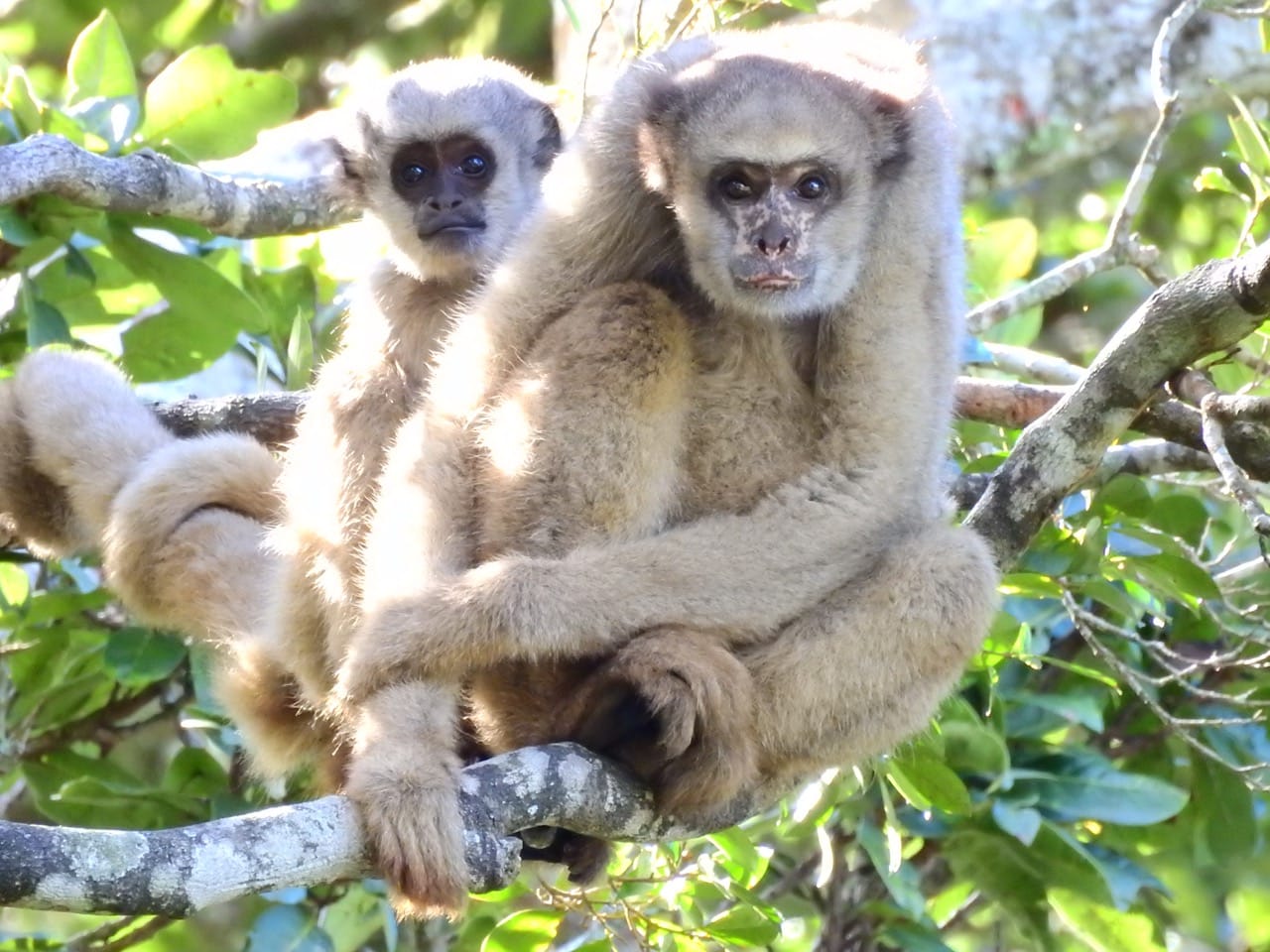
Muriquis are more than primates; they are symbols of peace and unity. Known for their hugs and peaceful behavior, they live in large social groups, a reflection of the harmony they seek in nature.
Peaceful Giants
They are the largest primates in the Americas, with an imposing yet gentle presence in the Atlantic Forest.
Threat of Extinction
Just under 1,000 individuals remain, and their population continues to decline sharply due to habitat loss.
An Essential Diet
They feed on fruit, leaves, flowers and lianas, playing a crucial role in seed dispersal in the forest.
A Threatened Home: The Atlantic Forest
Muriquis are native to Brazil and live only in the Atlantic Forest, one of the most threatened biomes in the world. They are found in the states of Minas Gerais, Espírito Santo and Rio de Janeiro.
The greatest threat to their survival is rampant deforestation, which fragments their habitat and isolates them.
Photo: Leandro Moreira
Life Cycle and Reproductive Challenges
Female Migration
Before reaching reproductive age, females leave their birth groups in search of new groups in which to breed. This is a critical and dangerous period.
Gestation and Infants
Gestation lasts about seven and a half months and usually results in a single infant. The interval between pregnancies is two to three years, which makes population recovery slow.
Maternal Care
Infants stay with their mothers for a long period, between 18 and 24 months, until weaning. This prolonged dependence makes them vulnerable during infancy.
The Challenge of Isolated Females
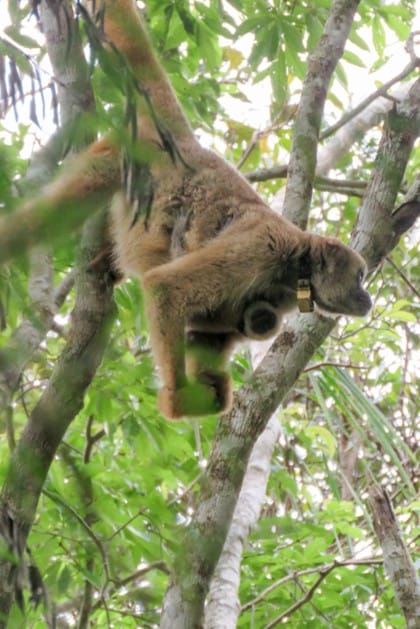
While migrating to new groups, many muriqui females get lost and end up isolated and vulnerable, which often leads to their death.
In 2006, the rescue of Eduarda, who was taken to Mata do Sossego, became a symbol of hope: she went on to have six infants. But most are not so lucky.
Hope for the Species
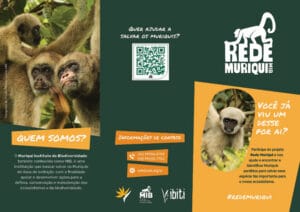
The REDE MURIQUI (Muriqui Network) Project was born from the urgent need to protect these isolated females and save the species from extinction. Our goal is to mobilize as many people as possible to help identify and locate these primates.
Every piece of information is crucial to guide our rescue and conservation efforts.
How Can You Help?
If you live in an Atlantic Forest community and believe you have seen a muriqui, especially a lone female, your help is invaluable.
Get in touch with the REDE MURIQUI Project! Your sighting could make the difference between life and death for one of these animals.
Every piece of information is essential to our search!
Partnerships and Project Expansion
MIB (Muriqui Instituto de Biodiversidade) has a long track record in identifying, managing and translocating northern muriquis. REDE MURIQUI expands this work, focusing on community expeditions that promote education and awareness. Local communities become essential allies in identifying and locating muriquis. This initiative is strengthened by partnerships with Gipsyy and Ibiti Projeto, broadening our reach and impact.
Other Institute Projects
MIB's commitment to muriqui conservation goes beyond REDE MURIQUI. Several projects began before MIB was founded and now rely on its support, strengthening the protection network.
- Muriqui House: Population reinforcement in IBITIPOCA.
- Monitoring in Peçanha: Ongoing population monitoring.
- Muriqui do Sossego: Coordinated by Fernanda Tabacow.
- Muriquis da Serra do Brigadeiro: Focused on monitoring and conservation.
- Citizen Science: Primate monitoring in Caratinga.
- PCMM: Muriqui Conservation Program in Minas Gerais.
Join REDE MURIQUI!
Every day, hope for the muriquis is renewed thanks to the support of people like you. Become a guardian of the Atlantic Forest and help secure a future for the largest primates in the Americas.
Volunteer
Join our expeditions and awareness campaigns.
Donate
Your financial contribution is vital to keeping our projects going.
Share
Spread the word and help expand REDE MURIQUI.
Preserving the muriquis is everyone's responsibility.
stay updated

SOS Muriqui – the power of citizen science to save the muriquis
SOS Muriqui is more than a project, it is a living movement...
Read more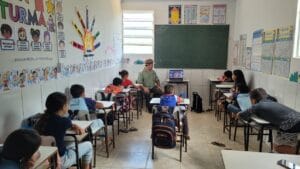
Rede Muriqui (Muriqui Network) – planting seeds of conservation in schools
At the Muriqui Instituto de Biodiversidade, in addition to the urgent work of rescuing...
Read more